
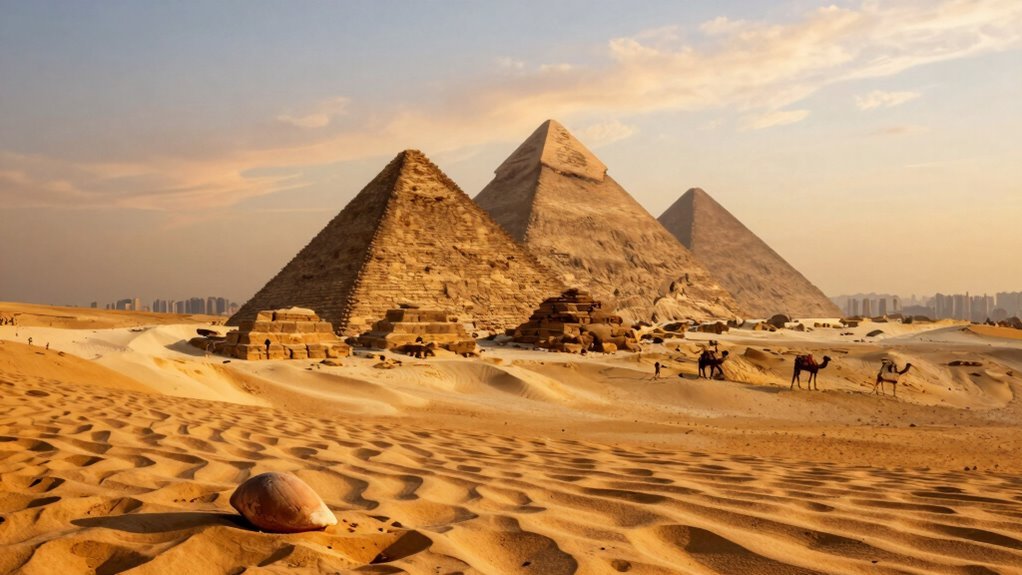

You’ll time your trip for cooler mornings and golden evenings—October–April is ideal—then pack layers for desert nights and sunscreen for temple photos.
Start in Cairo for pyramids, the Grand Egyptian Museum and Khan el-Khalili, fly or take a sleeper train to Luxor and Aswan, and add a Nile cruise, Abu Simbel, Siwa or the White Desert for contrast.
Learn local customs, bargain kindly, try koshari, and follow practical tips so your journey runs smoothly as you explore further.
Key Takeaways
- Best travel months: October–April for milder temperatures, clearer skies, and ideal sightseeing and photography conditions.
- Prioritize must-sees: Giza pyramids, Egyptian Museum/Grand Egyptian Museum, Karnak, Valley of the Kings, and Abu Simbel.
- Choose transport by priorities: overnight sleeper trains, short domestic flights, or a Luxor–Aswan Nile cruise for immersive travel.
- Time activities: visit monuments at dawn/dusk for softer light, fewer crowds, and better photography; check balloon safety and weather.
- Pack and prep: secure visas/insurance, bring sunscreen, sturdy shoes, layers for desert nights, cash/ATM plans, and vaccinations/mosquito protection.
Best Time to Visit Egypt (Climate & Trip Planning)
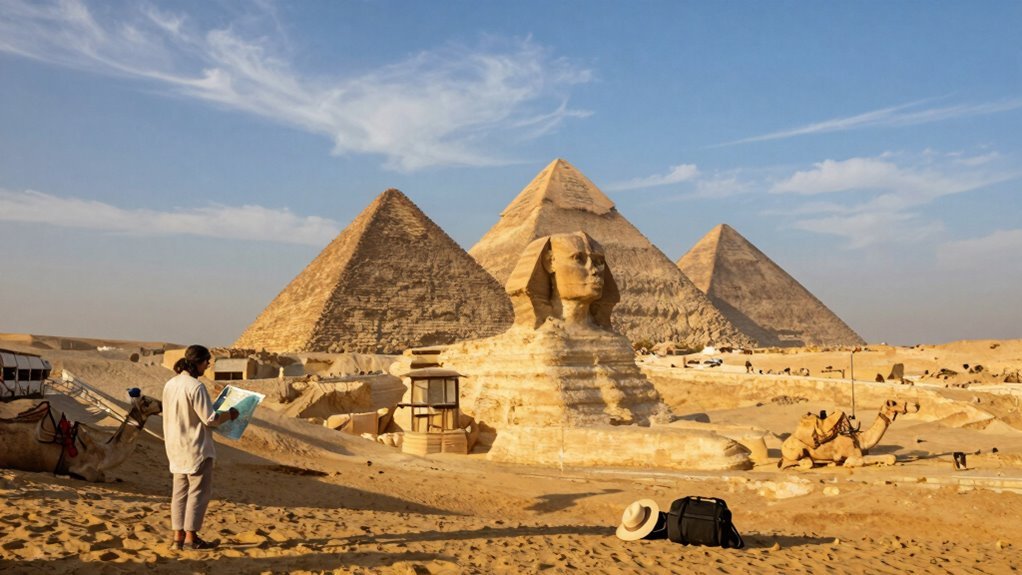
Although Egypt’s sun seems constant, you’ll have a far better trip if you time it: visit between October and April when temperatures cool and days stay pleasant for sightseeing.
Although Egypt feels endlessly sunny, plan October–April visits for cooler, clearer days perfect for sightseeing and photos
You’ll find mornings ideal for the Giza plateau and Cairo’s museum crowds thinest in the shoulder season, when light is crisp and photo opportunities sharpen.
Plan Nile-side evenings in Luxor and Aswan to savor mild breezes and felucca sunsets.
If you crave desert immersion, book White Desert hikes or Siwa oasis stays with local desert workshops that teach navigation, stargazing, and survival skills.
Travel logistics are smoother off-peak: trains and flights are less crowded, accommodations drop in price, and guided tours offer more personalized attention for your best historical encounters.
Many visitors pair their trip with a visit to the Grand Egyptian Museum to see the complete Tutankhamun collection and other preserved artifacts.
Sample 5–12 Day Itineraries (Quick Picks)
Plan your trip around what you want to feel: a compact 5-day crash course that hits Cairo and Luxor, a relaxed 7-day Nile cruise between Luxor and Aswan, or a two-week journey that layers desert oases, Red Sea diving, and Cairo’s museums.
Choose a 5–6 day option to see Giza, the Egyptian Museum, Luxor’s Karnak and Valley of the Kings, with Day trip variations to Saqqara or a hot-air balloon at dawn.
Pick seven days to savor a Nile rhythm—temples, felucca sunsets and Nubian village visits.
For 10–12 days, add Siwa or the White Desert and Red Sea reefs.
Each sample itinerary offers Customizable pacing so you can slow mornings, pack action into afternoons, or extend stays where you want more time.
Note that Cairo’s Museum of Egyptian Antiquities houses over 120,000 artifacts, including iconic Royal Mummies that may require a separate ticket and which sometimes travel to newer institutions.
Getting Between Cairo, Luxor & Aswan (Planes, Trains, Cruises)

Hop between Egypt’s major hubs by air, rail or river to fit your pace—each option delivers a different slice of the country: quick domestic flights cut travel time so you can wake up in Cairo and be wandering Luxor’s temples by afternoon; overnight sleeper trains let you sleep through the miles and arrive rested; and Nile cruises turn transit into the centerpiece, drifting past timeless scenery while you move between Aswan and Luxor at a relaxed, unhurried rhythm.
Choose flights for speed and frequent departures, using airport lounges to recharge; pick sleeper cabins for comfort on the train; or slow down on a cruise to watch daily life along the Nile. Consider schedules, luggage limits, and scenic priorities.
- Fly: fastest, ideal for tight itineraries
- Train: authentic, nights in sleeper cabins
- Cruise: immersive, daytime shore excursions
- Private car: flexible stops, pastoral views
- Ferry/felucca: short, atmospheric river hops
Sunrise hot air balloon rides over Luxor’s West Bank offer a memorable early-morning panorama of the Nile ribbon and temple complexes as part of a full Luxor experience.
Where to Stay: Neighborhoods, Pyramid Views & Cruises
When you’re choosing where to stay in Egypt, think about what you want to wake up to—pyramid silhouettes at dawn, the bustle of Cairo neighborhoods, or the gentle sway of a Nile cruise cabin—and pick your base to match that mood.
Stay in Giza for sunrise views and small boutique hotels with intimate service; Cairo’s Zamalek and Islamic Cairo offer leafy streets and rooftop terraces overlooking minarets; Luxor and Aswan favor riverfront lodgings and felucca-accessible guesthouses.
If you want ease and storytelling, book a Nile cruise cabin that becomes your moving hotel.
Consider nightlife, markets, and proximity to transport when choosing.
Balance comfort, view, and vibe to make your stay part of the adventure.
Plan visits during the winter months to enjoy milder weather ideal for outdoor exploring.
| Location | Why stay |
|---|---|
| Giza | Pyramid views |
| Zamalek | Calm, cafes |
| Islamic Cairo | Historic feel |
| Luxor | Temple access |
| Nile Cruise | Seamless travel |
Cairo Highlights: Pyramids, Museum & Khan El Khalili
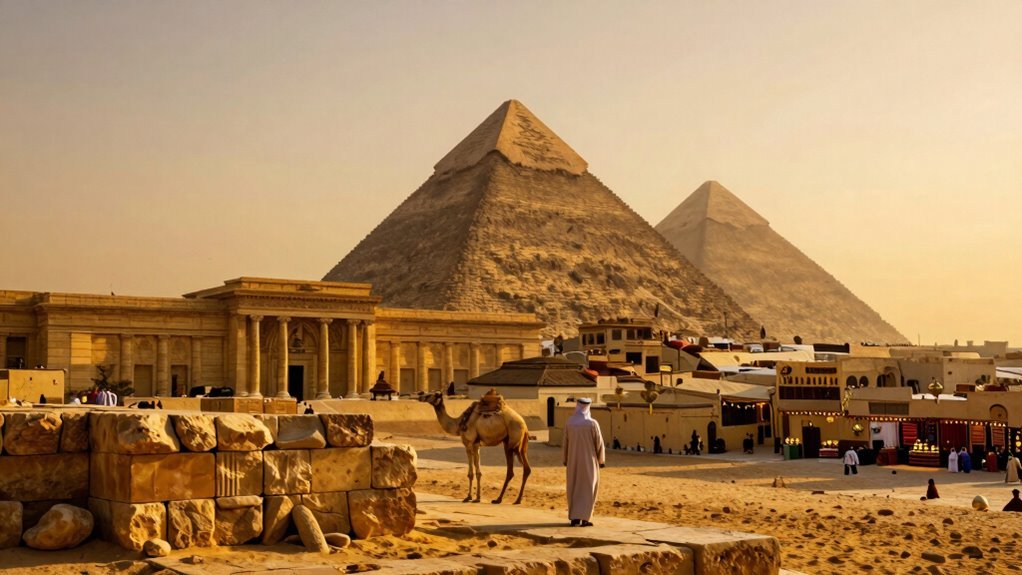
Although the city can feel overwhelming, Cairo rewards curious travelers with jaw-dropping contrasts: towering pyramids that anchor the desert horizon, corridors of priceless artifacts in the Egyptian Museum, and the clamor and color of Khan El Khalili where you can haggle for brass lamps and sip mint tea while soaking up centuries of urban life.
You’ll stand before the Great Pyramid, sense a hidden necropolis beneath and spot unexpected modern graffiti near busy streets, reminders that history and city life entwine.
Wander the museum’s rooms to trace pharaohs’ lives, then lose yourself in Khan El Khalili’s lanes where sensory riches unfold.
- Watch sunrise over Giza for softer light
- Inspect King Tut relics closely
- Bargain respectfully in the bazaar
- Photograph alleyway contrasts
- Try local mint tea and koshari
You can also stroll along the Red Sea Corniche to enjoy waterfront views and landscaped gardens with palm trees, perfect for sunset photography and peaceful reflection, especially after a day of sightseeing and markets near the city’s heart where many visitors relax by the water and watch the sky change colors around sunset photography.
Exploring Luxor: Valley of the Kings, Temples & Balloon Rides
Step into Luxor and you’ll feel history open around you: the west bank’s Valley of the Kings hides painted tombs of pharaohs beneath a stark desert sky, while along the Nile the monumental pylons and colonnades of Karnak and Luxor temples rise with carved reliefs that reward a slow, observant gaze.
You’ll follow a local guide into cool, dim chambers where royal sarcophagi and vivid wall scenes teach you rituals of death and rebirth.
Plan early for sunrise photography over the Nile and temples; soft light reveals textures modern bulbs can’t.
For a different perspective, book a morning balloon ride but check balloon safety records and weather briefings.
Move slowly, listen, and let Luxor’s layers unfold.
For an unforgettable contrast between ancient monuments and vast natural landscapes, consider combining your trip with a visit to glacial landscapes for dramatic scenery and wildlife encounters.
Aswan & Abu Simbel: Nile Cruises, Feluccas & Nubian Villages
Drift into Aswan’s gentle rhythm and you’ll find the Nile widening into a calm, sunlit expanse where feluccas slip by, Nubian villages bloom in color along the banks, and the promise of Abu Simbel’s colossal façades looms downstream.
Drift into Aswan’s gentle rhythm where feluccas glide, Nubian colors bloom, and Abu Simbel waits downstream.
You’ll glide on traditional feluccas at dawn, listen to Nubian music in riverside courtyards, and explore markets scented with spices. Abu Simbel rewards an early arrival for light that animates the rock-cut gods.
Take a Nile cruise between Luxor and Aswan for relaxed sightseeing.
Sail a felucca at sunset for perfect Sunset photography.
Visit a Nubian village to meet artisans and hear live Nubian music.
Time Abu Simbel for cooler morning visits.
Pack sun protection and a lightweight scarf.
For broader trip planning, consider the best times to travel for milder weather and avoid the intense summer heat by visiting in spring or autumn.
Western Desert & Sinai Day Trips: Siwa, White Desert, Mount Sinai
Head west and you’ll come across Siwa’s palm-fringed springs, salt lakes and that ancient oracle temple — it really feels a world away from Cairo.
Then head into the White Desert to wander among surreal chalk formations carved by wind and time.
After that, make your way to Sinai for a pre-dawn climb up Mount Sinai and stay for a blazing sunrise that paints the rugged peaks.
Explore nearby coastal and inland oases and conservancies where community-led conservation supports wildlife and local cultures.
Siwa Oasis Highlights
Although tucked deep in Egypt’s Western Desert, Siwa Oasis feels like a world apart, where palm-fringed springs, salt flats and ancient mud-brick settlements invite you to slow down and explore both natural beauty and Berber culture.
You wander palm groves, soak in Cleopatra’s spring, and watch light trace the jagged outline of the Great Sand Sea. The desert saltpans glitter at sunrise; their mineral crusts frame quiet reflections. You meet locals who sell berber handicrafts, taste olive oil, and tell stories of oracle temples. Short treks reveal old fortresses and quiet date groves, all without crowds. The region’s varied habitats support unique wildlife and plant life, much like the diverse ecosystems found in protected areas such as Jigme Dorji National Park in Bhutan.
- Swim in freshwater springs
- Visit Shali Fortress ruins
- Browse berber handicrafts stalls
- Sunrise over saltpans
- Short desert treks and local olive tasting
White Desert Wonders
From Siwa’s palm gardens and saltpans you can push further into landscapes that feel sculpted by another planet: the White Desert’s chalky mushroom rocks, bleached plains and silent amphitheaters of stone invite exploration on foot or by 4×4, while Mount Sinai’s stony ridges and monastery-clustered valleys offer a very different, sacred kind of solitude.
You’ll wander among surreal sandstone sculptures carved by wind and time, each formation promising a new angle for observation.
Camps under vast skies let you stargaze and practice night photography, capturing milky swirls above ghostly silhouettes.
Guides point out geological history and safe routes; pack warm layers, water and sturdy boots.
The mood here is quiet, elemental and unforgettable—perfect for reflective travelers seeking raw desert beauty.
Many visitors also combine desert outings with nearby mountain peaks and alpine lakes for extended trekking and varied scenery.
Mount Sinai Sunrise Hike
Rise before dawn and join the steady stream of hikers winding up Mount Sinai, where a cool, lamp-lit ascent rewards you with a crimson and gold sunrise that has drawn pilgrims for millennia.
You’ll feel the hush as stars fade and Bedouin guides share soft bedouin storytelling, linking desert myths to sacred stones.
Pace yourself on stone steps, carry water, and respect stargazing etiquette before the sun rises.
The summit’s panorama frames Sinai’s rugged folds and St. Catherine’s monastery below—an intimate, ancient moment.
- Start early and wear layers
- Hire a licensed Bedouin guide
- Bring a headlamp and sturdy shoes
- Stay quiet; preserve the sacred atmosphere
- Hydrate and pack out all trash
Egypt Practical Tips: Visas, Safety, Health, Money & Tipping
When you plan your trip to Egypt, get your practicalities sorted early — visas, safety precautions, health measures, money matters and tipping customs will shape how smoothly your visit goes.
You’ll arrange visas (e‑visa or embassy), sort travel insurance essentials, and consider digital nomadism logistics if you’ll work on the road.
Stay aware: pick well-reviewed transport, avoid sketchy areas at night, and carry copies of documents.
| What to pack | Where to withdraw | Tip guide |
|---|---|---|
| Medicines, sunscreen | ATMs in cities | 5–10% restaurants |
| Masks, sanitizer | Airport rates higher | Small notes for guides |
Vaccinations, mosquito protection and bottled water keep you healthy; register with your embassy and trust local advice.
Food, Shopping & Local Etiquette: What to Eat and How to Behave
Taste Egypt’s pulse through plates like koshari and ful medames — street stalls and Nile-side cafés tell as much history as any museum.
When you haggle in markets like Khan El Khalili, start low, smile, and be ready to walk away; it keeps things friendly and fun.
Also, stick to simple courtesies — dress modestly at religious sites, accept offers with your right hand, and be mindful of prayer times — and you’ll find people will welcome you everywhere.
Must-Try Egyptian Dishes
A handful of must-try Egyptian dishes will change how you think about street food and homestyle cooking. Start with koshari, a hearty mix of rice, lentils, pasta and spicy tomato sauce topped with crispy onions, then sample ful medames for a simple, comforting fava-bean breakfast.
Wander markets and modern streetfood carts to taste ta’ameya (Egyptian falafel), shawarma, and slow-cooked molokhia. Don’t miss seasonal desserts like basbousa and konafa after a Nile-side meal.
- Koshari: filling, cheap, utterly satisfying
- Ful medames: staple breakfast, often with olive oil and lemon
- Ta’ameya: herbaceous, crisp outside, soft inside
- Molokhia: silky, garlicky stew served with rice or bread
- Konafa: syrupy, shredded pastry dessert
Market Bargaining Tips
Although markets brim with color and call-outs, you’ll find bargaining is as much about respect and rhythm as it is about price. Listen, smile, and offer a counter that shows you value the item but not the first tag.
You’ll use haggling psychology: anchor low, then concede slowly, watching the vendor’s cues. Learn price anchoring by asking a high initial number from the seller’s perspective, then suggest a sensible middle.
Sample street snacks before buying packaged goods; that shared moment builds rapport. Walk away if the mood sours — vendors often call you back with better offers.
Trust your instincts, keep transactions friendly, and tip small when service exceeds expectations.
| Item type | Typical strategy | Quick tip |
|---|---|---|
| Textiles | Start 40% lower | Inspect quality |
| Jewelry | Ask for certification | Check weight |
| Spices | Smell first | Buy small |
| Street food | Haggle lightly | Eat nearby |
| Souvenirs | Bundle items | Walk away |
Respectful Local Customs
Respect fosters smoother encounters in Egypt, so learn a few local customs before you plunge into food, shopping, or street interactions. You’ll find warmth in modesty: female dress is conservative in many places, so cover shoulders and knees in religious sites and traditional neighborhoods.
Taste street koshari and ful medames, but accept food offers politely and use your right hand for eating or passing items. Bargain in bazaars with a smile, yet respect shopkeepers’ time. During religious festivals, observe processions from a distance unless invited.
- Cover shoulders and knees at mosques and churches.
- Use the right hand for eating and greetings.
- Try local dishes; decline offers gently if you must.
- Haggle respectfully in markets.
- Watch religious festivals quietly and respectfully.
Frequently Asked Questions
Can I Enter Tombs or Temples With a Large Backpack or Tripod?
Usually you can’t — sites often ban large backpacks and enforce tripod restrictions.
You’ll be asked to leave bulky bags at lockers, ticket offices, or the entrance; small daypacks are sometimes allowed if worn in front.
Tripods are frequently prohibited inside tombs and some temples, or need special permits and fees.
You’ll want to check each site’s rules in advance, travel light, and use a handheld camera or monopod where allowed.
Are There Female-Only Tour Groups or Women-Only Accommodations?
Yes you can find women only tours and women-only accommodations in Egypt. You’ll spot female guides leading small groups through Cairo, Luxor and Aswan, offering insider stories and safer, comfortable experiences.
You’ll enjoy tailored itineraries, social camaraderie and cultural sensitivity, plus female-staffed hotels or women-only floors in larger hotels. You’ll want to book through reputable agencies that advertise women only options and confirm female guides and safety measures in advance.
What Are Rules for Drone Use Over Archaeological Sites?
Like walking on ancient breath, you must get drone permits and follow strict no flyzones around pyramids, temples and museums.
You’ll respect altitude limits, avoid museum drones indoors, and carry proof of operator qualifications plus insurance requirements.
Authorities may ban flights entirely at some sites and impose fines or equipment seizure.
Always check local aviation and antiquities rules, book official guided ops when available, and never assume laissez‑faire.
How Can I Arrange a Private Pharaonic-Themed Photoshoot?
You can hire a local photographer and scout locations, but get Heritage permissions for any archaeological or museum sites first.
Rent authentic outfits from Costume rentals in Cairo or Luxor, and arrange hair, makeup, and props through your stylist.
Book a permit-aware photographer who’ll coordinate timing, lighting, and respectful staging.
Confirm transport, backup weather plans, and clear rules about touching artifacts.
You’ll capture evocative, responsible Pharaonic images.
Are There Reliable Mobile Sim/eSIMs for Extended Nile Cruises?
Yes — you’ll usually find reliable mobile SIMs and eSIMs for extended Nile cruises.
Investigating rumors about dead zones shows coastal towns and larger boats keep good coverage.
Use local providers for best rates and buy data bundles before boarding; they’ll cover streaming maps and photos.
Expect occasional drops in remote stretches, so download offline maps and extra credit before departure.
Stay observant, top up regularly, and enjoy uninterrupted sharing.
Conclusion
You’ve only skimmed Egypt’s surface; its deserts whisper and the Nile remembers. Let the pyramids rearrange your sense of time, taste ful medames and sugared hibiscus, haggle in Khan el-Khalili, then drift on a felucca as the sun erases the horizon.
Plan around heat, pack patience, respect local customs, and savor surprises. When you go, bring curiosity—Egypt rewards those who listen closely to stones, stories, and the slow, generous flow of the river.
0 Comment