
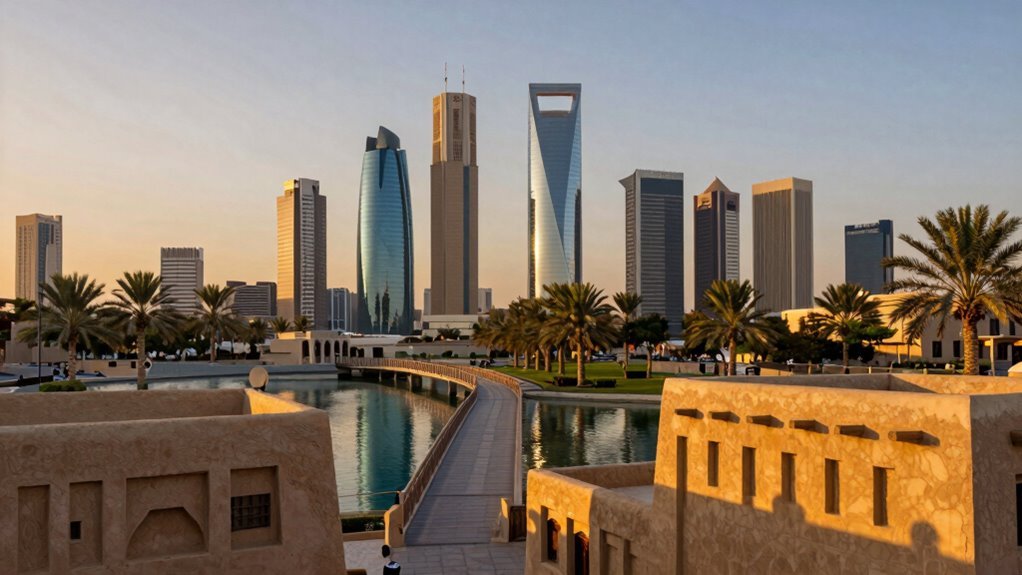

You’ll wander centuries in Diriyah’s restored mudbrick lanes, feel Najdi life at Murabba and Masmak, and immerse in the National Museum’s galleries.
Hunt antiques in Souq Al Zal, savor kabsa and Arabic coffee in traditional cafés, then catch sunset from Kingdom Centre’s skybridge or KAFD rooftops.
Venture to Tuwaiq escarpment or the Edge of the World for desert panoramas, and follow city art trails and seasonal festivals for local flavor, keep going to reveal practical tips, routes and dining picks.
Key Takeaways
- Start with Diriyah’s At‑Turaif and Salwa Palace to experience restored Najdi palaces and the Diriyah Museum.
- Visit the National Museum and Kingdom Unification Gallery for immersive, chronological exhibits on Saudi history.
- Explore Masmak Fortress, nearby incense‑scented alleys, and Souq Al Zal for heritage, crafts, and traditional markets.
- Enjoy modern Riyadh: Kingdom Centre Skybridge, KAFD skyline, Riyadh Metro connectivity, and citywide public art installations.
- Take outdoor trips to Edge of the World, Tuwaiq Escarpment, Wadi Hanifa, and red dunes for hikes, sunset views, and desert adventures.
Best Historic Sites in Riyadh: Diriyah, Masmak & Murabba
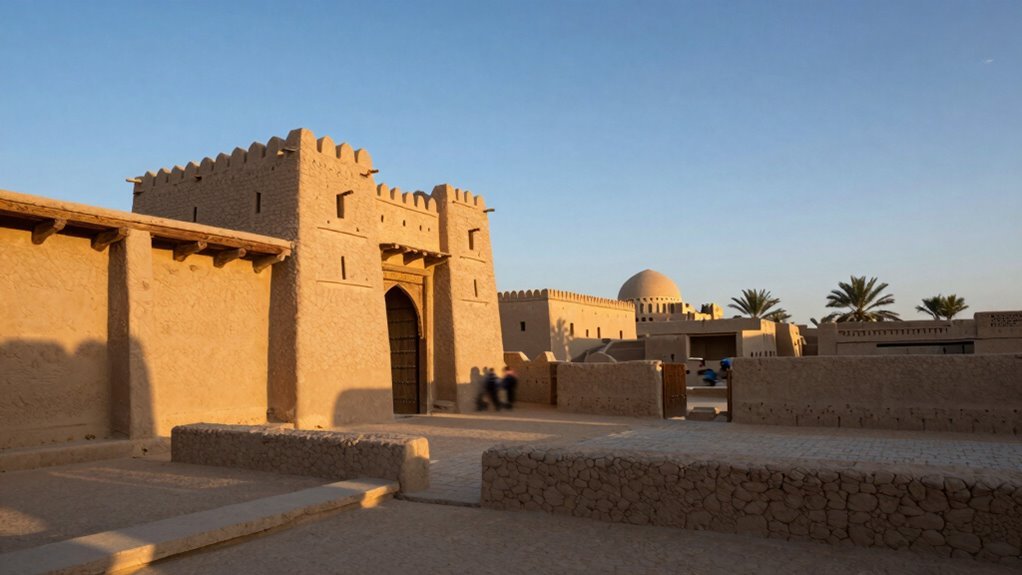
When you explore Riyadh’s historic trio—Diriyah, Masmak and Murabba, you’ll trace the city’s rise from an 18th‑century desert capital to the seat of a modern kingdom.
You’ll start at Diriyah’s At-Turaif District, a UNESCO site where restored mudbrick palaces and narrow lanes reveal the First Saudi State; the Salwa Palace now houses the Diriyah Museum and the Imam Abdullah bin Saud Palace recreates Najdi domestic life. Nearby Al Bujairi’s heritage park offers green respite.
In Old Riyadh, Masmak Fortress’s clay walls and four watchtowers tell the 1902 recapture story.
Murabba Palace, part of the King Abdulaziz Historical Center, displays Najdi architecture, 32 rooms, royal cars and artifacts that illuminate mid‑20th‑century governance and daily life.
These sites connect visitors to Saudi Arabia’s broader cultural landscape, echoing regional market traditions and living heritage found in places like Madinah’s Hakaya Heritage.
Riyadh Museums & Public Art: National Museum & Riyadh Art
Plunge into Riyadh’s cultural heartbeat by pairing the National Museum’s immersive galleries, which trace Saudi history from prehistoric rock carvings to the Kingdom’s unification, with the citywide energy of Riyadh Art, a vast public art program that turns streets, parks and heritage districts into open‑air galleries.
You’ll explore eight galleries at the National Museum within the King Abdulaziz Historical Center, from archaeological artifacts and multimedia to the Kingdom Unification Gallery and a full‑scale Nabatean tomb recreation—immersive exhibits that can take hours.
Then step outside: Riyadh Art projects, including massive murals, installations and Noor Riyadh light artworks, activate streets, parks and Diriyah, linking contemporary commissions to historic sites.
Together they preserve heritage indoors and democratize art across the city.
Enjoy nearby waterfront promenades like the Red Sea Corniche for scenic reflection and sunset photography with vibrant orange and pink skies and landscaped gardens to relax after museum visits.
Modern Landmarks & Skyline Views (Kingdom Centre, KAFD, Metro)
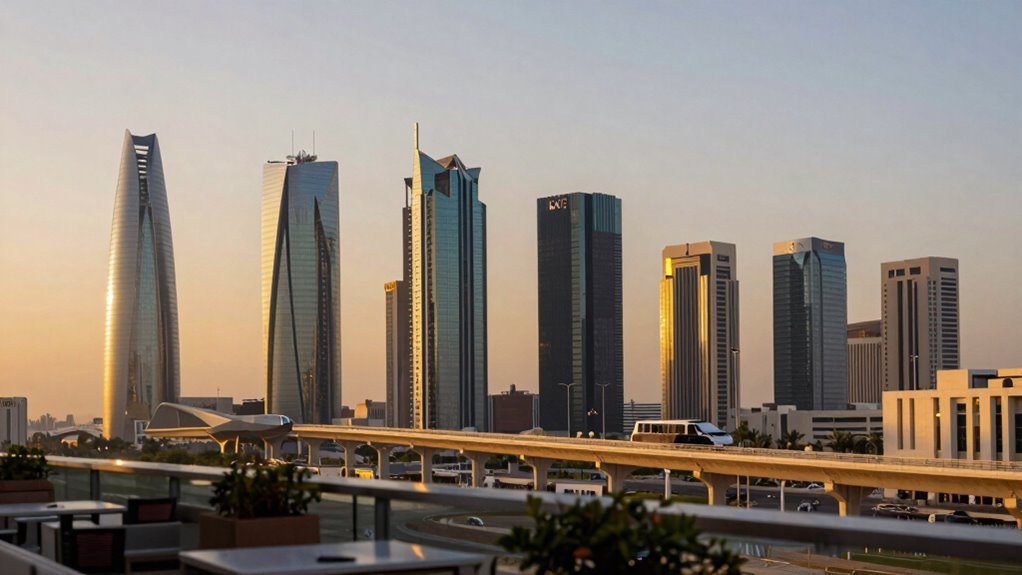
Though modern Riyadh keeps one foot in tradition, its skyline now reads like a bold statement of contemporary ambition: you’ll spot the slashed silhouette of the Kingdom Centre with its sky bridge perched near 300 metres, the geometric towers of the King Abdullah Financial District (KAFD), and new hubs linked by the driverless Riyadh Metro — all designed to be seen, experienced and navigated with ease.
You can time a visit to Kingdom Centre’s Sky Bridge for sunset to watch the city glow.
In KAFD you’ll stroll air‑conditioned skywalks connecting KAFD retail, restaurants and the Kimpton KAFD Riyadh, or head up to rooftop public spaces and a sky‑high fitness center.
The Riyadh Metro ties these sights together, making modern exploration seamless.
In the cooler months, visiting these outdoor viewpoints is especially pleasant and ideal for sightseeing winter months.
Where to Eat in Riyadh: Local Dishes, Cafés & Michelin Picks
You’ll find Riyadh’s food scene strikes a nice balance between deep Najdi traditions and cutting‑edge dining.
Think kabsa and jareesh at Najd Village, alongside date‑based desserts that really celebrate local ingredients.
For high‑end nights, try Michelin‑highlighted spots like MYAZIU or Botanica.
Kimpton KAFD and the surrounding retail precincts are great for stylish lounges, poolside mocktails and lively evening people‑watching.
If you’re after caffeine culture, Al Massa and the city’s specialty cafés showcase a thriving, zero‑alcohol social scene that pairs nicely with both casual bites and fine dining.
Singapore’s hawker centers are a model for vibrant, affordable street food scenes that celebrate multicultural culinary traditions, from dishes like Hainanese Chicken Rice to laksa and chilli crab.
Traditional Saudi Flavors
Taste Riyadh’s culinary heart through its savory Najdi stews, aromatic street snacks, and refined hotel dining that all reflect the city’s culture and sobriety. You’ll find Najd Village serving traditional Saudi kabsa, jareesh and lamb stews with floor seating and Arabic coffee, giving you a true home-cooked experience. Souq Al Zal and Taibah Souq let you sample dates, oud sweets and spice blends while watching local customs in action. Café culture, from Al Massa’s views to specialty spots, emphasizes Arabic coffee rituals and zero-proof botanical drinks. While the Michelin Guide Saudi Arabia highlights Riyadh’s breadth, your focus here is on authentic flavors and everyday rituals that define the city. For those seeking nearby shopping experiences, consider exploring modern malls like Yas Mall for a wide range of dining and family entertainment options.
| Where to go | What to try |
|---|---|
| Najd Village | Kabsa, jareesh, Arabic coffee |
| Souq Al Zal / Taibah Souq | Dates, oud sweets, spices |
Michelin And Fine Dining
When you want to pair Riyadh’s deep culinary traditions with contemporary creativity, the city’s fine-dining scene delivers, from Michelin-recognized innovators to refined hotel kitchens that respect local norms.
You’ll find the MICHELIN Guide highlighting standout spots like MYAZIU, a contemporary Japanese experience that blends precision with regional produce.
Botanica, led by a Neapolitan chef, reimagines Italian technique through Khaleeji ingredients—expect inventive plates that nod to local taste.
Base yourself at Kimpton KAFD to access multiple upscale venues via its skywalk and explore diverse menus in one go.
Since alcohol’s banned, top restaurants spotlight zero-proof cocktails and artisanal mocktails, so you won’t miss ritual or sophistication.
These venues show Riyadh’s evolving palate, where tradition and innovation dine together.
Many visitors who enjoy regional specialties also appreciate exploring nearby natural and cultural attractions like diverse landscapes that reflect a country’s wide-ranging environments.
Cafés, Lounges & Zero-Proof
Often found where tradition meets modern leisure, Riyadh’s cafés and lounges serve as social hubs that celebrate specialty coffee, botanical interiors and sophisticated zero-proof cocktails tailored to local norms. You’ll find botanical lounges and sleek cafés across KAFD and Via Riyadh, blending contemporary design with local hospitality.
Sip specialty brews at Al Massa Café near Kingdom Tower, touted as the world’s largest coffee shop, or relax in hotel lounges offering panoramic views. Zero-proof culture is creative: Kanza Pool Lounge and Ziya Lounge at Kimpton KAFD Riyadh craft balanced mocktails and non-alcoholic aperitifs that pair well with kabsa, jareesh and regional mezze.
Whether you prefer a quiet coffee ritual or an evening of mocktails in lush surroundings, Riyadh’s scene feels both modern and respectful of tradition. The city’s dining and lounge scene is also increasingly influenced by regional culinary traditions such as kabsa and mezze, which shape menu offerings and pairings.
Parks, Desert Day Trips & Outdoor Activities From Riyadh
While Riyadh’s skyline signals a modern metropolis, its nearby parks, escarpments and desert trails invite you outdoors for wide skies, dramatic geology and easy family recreation. You can hike sections of the Tuwaiq Escarpment for cliff‑top panoramas and ancient caves, or drive about two hours to the Edge of the World for sunset views, stargazing and dinner camps.
Riyadh’s modern skyline meets wild desert: cliff-top hikes, ancient caves and sunset camps at the Edge of the World
Wadi Hanifa threads the city with 120 km of green, walking trails, picnic spots and birdwatching. For more adventure, join Red Sand Dunes and Hidden Valley desert safaris: expect 4×4 dune‑bashing, sandboarding, camel rides and golden hour photography.
Back in town, King Abdullah Park offers gardens, cycling paths and an evening fountain show that families enjoy.
- Cliff walks at Tuwaiq
- Desert safaris & sandboarding
- Wadi Hanifa leisure trails
The region also offers access to significant natural habitats like the Pantanal, renowned for wildlife viewing.
Shopping, Festivals & Events in Riyadh (Souqs to Malls)
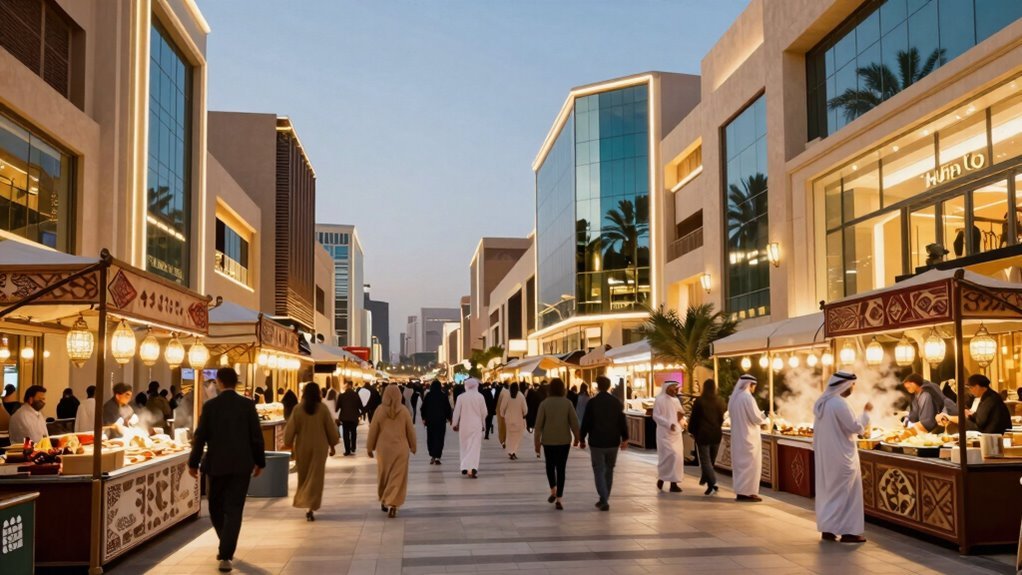
You’ll find Riyadh’s shopping scene ranges from bustling souqs near Masmak Fortress—where antiques, oud, spices, thobes and silver jewelry invite bargaining—to sprawling malls with international brands, cinemas and rooftop dining.
Luxury districts like Via Riyadh and KAFD mix designer concept stores and nightlife, while Centria, Riyadh Park and Kingdom Centre (with its 300m Skybridge) offer polished retail experiences.
Yearly events such as Riyadh Season and MDLBEAST Soundstorm add themed markets, illuminated art and pop-ups that turn shopping into major cultural nights out.
For a more exclusive experience, consider booking private or VIP shopping tours that offer personalized service and luxury amenities.
Souqs And Traditional Markets
Step into Riyadh’s souqs and you’ll find a living tapestry of the city’s past and present, where narrow, incense-scented alleys around Masmak Fortress spill into bustling stalls of antiques, silver and oud while modern retail precincts and weekend concept markets offer designer pop-ups and luxury finds.
You’ll wander Souq Al Zal for traditional daggers, antique silver and oud; the atmosphere feels timeless as vendors share stories of craftsmanship.
At Al Maigliah Market Center you’ll browse over a thousand shops for jewelry, gold and perfumes.
For contemporary luxury and curated pop-ups, Via Riyadh blends high-end boutiques with dining.
Seek out Eastway Market and Pattern for rotating vintage and designer stalls that connect heritage with today’s creative scene.
- Souq Al Zal: antiques, daggers, oud
- Al Maigliah: jewelry, gold, perfumes
- Via Riyadh: designer pop-ups, luxury
Visitors to Riyadh can also plan seasonal visits to enjoy milder weather in spring when outdoor markets and festivals are most pleasant.
Malls, Festivals And Events
Riyadh blends old and new shopping cultures into lively experiences you can plan around—by day explore air-conditioned malls like Kingdom Centre and Riyadh Park for international brands and dining, and by night or in cooler months plunge into festival-driven pop-ups at Via Riyadh or KAFD that turn retail into entertainment.
You’ll find traditional souqs—Souq Al Zal and Al Thumairi—selling rugs, oud and spices, while Kingdom Centre Mall and Riyadh Park host luxury labels and food halls.
Time visits for November–March evenings when Riyadh Season and MDLBEAST Soundstorm animate streets with concerts and themed zones. Al Janadriyah brings deep cultural fairs.
Seasonal markets and specialty stalls, from gold at Al Maigliah to vintage concept markets, often coincide with festivals—carry cash for small vendors, use cards in malls.
Practical Tips for Visiting Riyadh: Visas, Transport, Timing
While planning your trip, sort visas, timing, and transport first so your days in the city go smoothly: most nationalities can get a Saudi e‑Visa online (about SAR 535) with decisions in 24–72 hours, while a few countries qualify for visa on arrival (roughly SAR 480).
Visit October–March—the best time—when temperatures sit around 20–30°C; avoid June–September’s 40°C+ heat for sightseeing.
Dress modestly in public and carry some SAR for small souqs.
- Use the Riyadh Metro for central routes and ride‑hail apps (Uber/Careem) for longer trips; combine both for efficiency.
- Prebook airport transfers or hail one on arrival; cashless payment is common but keep some cash.
- Get offline maps or an eSIM (Airalo) to book rides and navigate reliably.
Frequently Asked Questions
What Are Typical Tipping Customs in Riyadh Restaurants and Services?
You’ll find tipping varies: restaurants often include a Service charge, but you can leave Cash tips or Round up payments for extra goodwill.
For Taxi tipping, you’ll typically round up or add a small amount.
Hotel housekeeping and Bellhop gratuities are appreciated—leave modest Cash tips.
For tours, Guide rewards are customary if service’s good.
Restaurant etiquette favors discretion; don’t insist on tipping where Service charge is clear.
Are Public Displays of Affection Legally Restricted for Tourists?
Yes — you should avoid public affection; public conduct in Riyadh follows conservative cultural norms and tourist behavior is expected to respect modest dress and restrained displays.
Hand holding between married couples is often tolerated, but overt public affection can attract attention, photography etiquette scrutiny, or legal penalties.
You’ll want to act discreetly, follow local cues, and prioritize respect for traditions to prevent misunderstandings or enforcement actions.
How Do I Access Emergency Medical Care and Pharmacies After Hours?
You’ll find after hours clinics and 24 hour pharmacies in major districts; call emergency hotlines or arrange a private ambulance through your hotel.
Use hotel medical staff to guide you to nearby walk in centers or urgent care.
Telemedicine services and pharmacy delivery work well overnight; download local apps and save hotline numbers.
Be aware of cultural norms when seeking care, and carry ID, insurance info, and any medical notes.
What Are Phone SIM Options and Internet Costs for Short Stays?
You’ll find cheap, flexible options. Pause, decide fast: Prepaid SIMs and Tourist eSIMs suit short stays; Mobile providers sell Data bundles and offer Airport kiosks for easy pickup.
Expect SIM registration on arrival, and watch Roaming charges if you keep your home SIM. Use local Wi‑Fi hotspots in cafes and malls to save data.
Compare prices from major carriers, pick a bundle that matches streaming or maps use, and top up as needed.
Are Alcohol, Certain Foods, or Religious Items Restricted to Import?
Yes—you’ll face import restrictions: alcohol policies ban personal alcohol import, and food prohibitions bar pork and some pork products.
Religious items are allowed but avoid proselytizing materials; certain religious items tied to non-Islamic worship can trigger scrutiny.
Bring prescription medicines with prescriptions and original packaging.
Respect cultural sensitivities to avoid customs fines for prohibited imports.
Check Saudi customs lists before travel to confirm current rules and limits.
Conclusion
You’ve got a rich itinerary now—historic Diriyah, vibrant museums, sleek skyscrapers and delicious local eats.
Did you know Riyadh attracts over 12 million visitors a year, with cultural tourism growing fastest?
That means more events, restaurants and restored sites for you to explore.
Plan around cooler months, use the metro and mix museums with souqs and desert trips to savor both modern and traditional Riyadh.
Enjoy every discovery.
0 Comment