
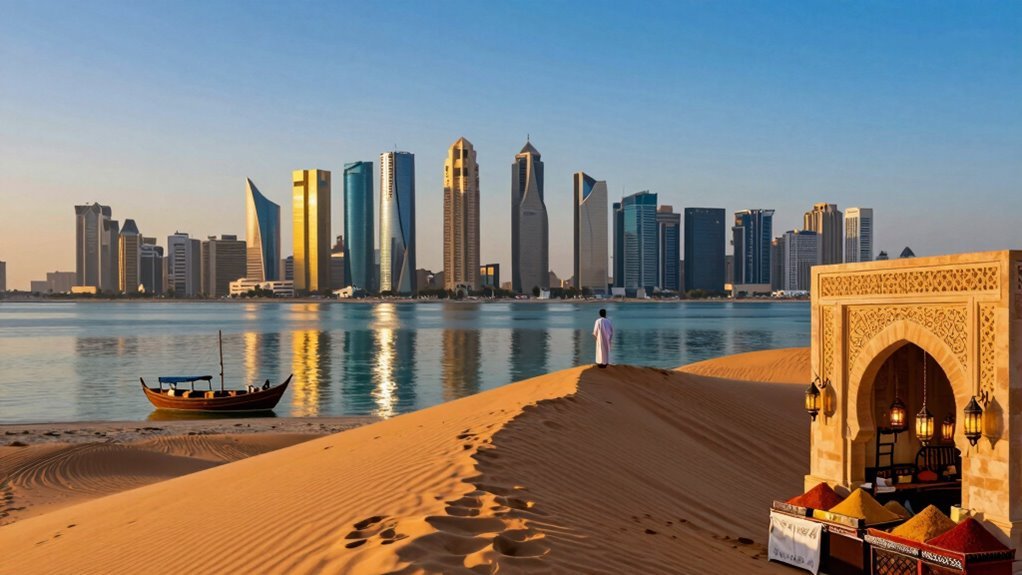

You’ll find Qatar best from November to March, when mild weather suits museum visits, souq strolls and calm mangrove paddles. Fly into Hamad International and arrange visas or Hayya entry, then prebook transfers and guided tours for Al Zubarah, Purple Island and Khor Al Adaid. Rent a 4×4 or join reputable operators for dunes and sinkholes, and stay in Al Khor for mangroves or Doha for culture. Keep going to uncover practical tips and booking suggestions.
Key Takeaways
- Visit Doha’s cultural core: Museum of Islamic Art, National Museum of Qatar, Souq Waqif, Katara Cultural Village, and the Corniche.
- Plan travel November–March for mild weather, calm seas, festivals, and safe desert and coastal activities.
- Book guided mangrove kayaking at Al Thakira and Purple Island, and reserve staging locations and transfers from Al Khor.
- Arrange 4×4 guided transfers or reputable tour operators for Ras Abrouq, Khor Al Adaid, Dahl Al Misfir, and Al Zubarah.
- Coordinate accommodations and activity packages (desert camping, heritage transfers) to include safety gear, meals, and prebooked transport.
Best Time to Visit Qatar (Seasons & Highlights)
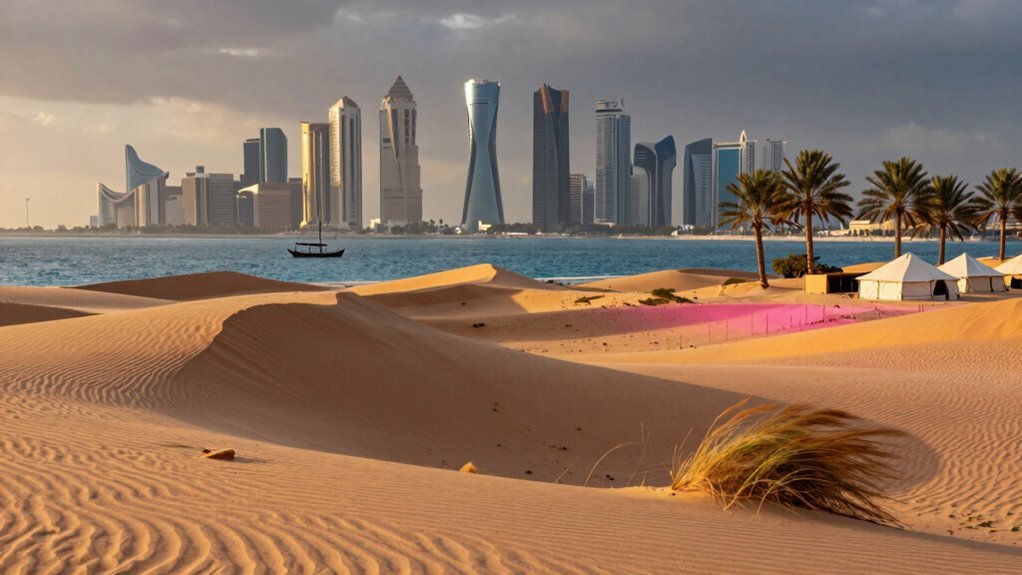
Although summers can be intense, the best time to visit Qatar is clearly winter (November–March), when mild temperatures, major festivals, and calm seas make outdoor pursuits, from desert safaris and dune bashing to mangrove kayaking and flamingo watching, far more enjoyable.
Winter (November–March) is prime for Qatar: mild weather, festivals, calm seas—perfect for desert safaris, mangrove kayaking, and flamingo watching.
You’ll plan most active days between November–March, when desert safaris and dune bashing feel exhilarating rather than exhausting, and coastal activities deliver clear skies and calm waters for wildlife viewing.
Visit Khor Al Adaid and remote reserves in this window for easier access and comfortable exploration.
If you prefer fewer crowds, try the shoulder seasons (April–May, Sept–Oct), when weather’s still reasonable and many sites remain pleasant, though the coolest months are best for strenuous adventures.
Summer temperatures often exceed 40°C, so avoid the peak months for outdoor excursions and desert activities, especially between May and September, when heat and humidity can be extreme and uncomfortable for most visitors; see seasonal temperatures for details.
Getting to Qatar: Flights, Visas & Airport Transfers
Getting into Qatar is straightforward: most international flights land at Hamad International Airport (DOH), Doha’s modern gateway located roughly 15–30 km from the city center, with a smaller nearby facility handling limited traffic. You’ll find DOH efficient and signposted.
Check visa rules early — many nationalities qualify for visa-on-arrival or an e-visa, and event or match visitors may use the Hayya platform; always verify via Qatar’s official immigration site.
Ground options are plentiful: airport transfers include metered taxis and ride-hailing, car hire counters, and prebooked private transfers; fares to central Doha typically sit around QAR 50–100.
If you’re heading to remote sites, arrange a 4×4 or guided tour in advance, and consider prebooking transfers for late arrivals or peak season.
Winter months in the region offer milder weather ideal for sightseeing and outdoor activities, so plan accordingly and check seasonal schedules for attractions like Global Village and gardens.
Doha Highlights: Museums, Souqs & Cultural Hotspots
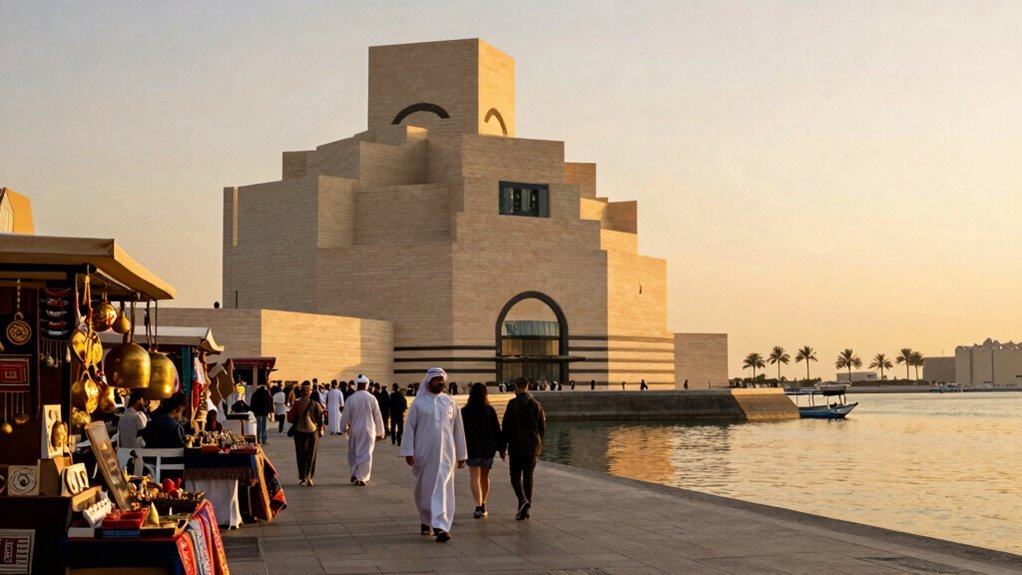
Plunge into Doha’s cultural heart where world‑class museums, winding souqs and waterfront promenades sit within easy reach of one another; start at the Museum of Islamic Art for its luminous galleries and bay views, then move on to Jean Nouvel’s National Museum for immersive Qatari history, wander Souq Waqif’s alleys at dusk to haggle for spices and watch falcon handlers, and finish with a stroll along the Corniche or a calm morning at Katara Cultural Village to soak up architecture, galleries and seaside light.
You’ll spend hours appreciating highlights: the Blue Quran and suspended MIA Café, Pearl Carpet of Baroda and Al Zubarah exhibits. Walk the Doha Corniche toward West Bay, pop into Katara at sunrise, and note easy onward connections via Hamad International Airport. Relax along the nearby Red Sea Corniche to enjoy waterfront promenades, shaded paths and sunset views.
Coastal Escapes in Qatar: Mangroves, Purple Island & The Pearl
After you’ve soaked up Doha’s museums and souqs, head north and along the coast where Qatar’s quieter aquatic landscapes await: mangrove forests, sheltered bays and a polished reclaimed island each offer a very different seaside rhythm.
After exploring Doha’s souqs and museums, head north to serene mangroves, sheltered bays and a sleek reclaimed island.
You’ll find Al Thakira Mangrove Forest near Al Khor, a biodiversity hotspot of Avicennia marina where guided kayaking in tidal creeks often reveals flamingos and herons.
A short trip brings you to Purple Island, with dense mangroves, a wooden boardwalk, ancient remains and calm bays perfect for picnics and paddling.
Back toward the city, The Pearl-Qatar spans 4 million m² with Porto Arabia marinas, Qanat Quartier’s canals, waterfront dining and paddleboarding or cruises to Al Safiya Island.
Visit November–March for the mildest conditions.
Singapore is known as a City in a Garden for its meticulously planned green spaces and nature reserves.
Qatar Desert Adventures: Khor Al Adaid, Ras Abrouq & Dahl Al Misfir
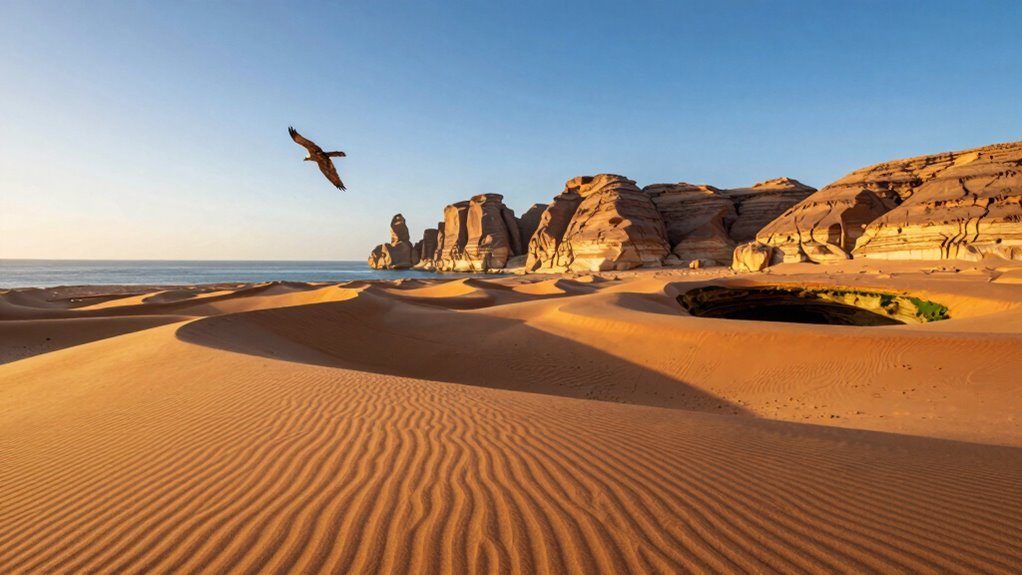
When you head into Qatar’s deserts, expect dramatic contrasts: wind‑sculpted dunes and tidal creeks at Khor Al Adaid, otherworldly limestone spires at Ras Abrouq and the deep, fibrous gypsum sinkhole of Dahl Al Misfir each offer distinct terrain and activities—from sunset dune‑bashing and quad biking to guided nature walks and careful exploration with torches—best attempted November–March and usually reached by 4×4 with experienced operators. You’ll find mobile dunes rising to 40 m at Khor Al Adaid for dune bashing and Bedouin‑style dinners; Ras Abrouq’s spires, wildlife and the East–West sculpture reward slow walks and photography; Dahl Al Misfir demands torches, warm clothes and sturdy shoes. Book desert tours with reputable operators and stay nearby for early departures. For quieter coastal scenery and snorkeling opportunities, consider visiting nearby islands such as Koh Sak known for excellent snorkeling in tranquil settings.
| Site | Activity | Access |
|---|---|---|
| Khor Al Adaid | dune bashing, quad biking | 4×4 |
| Ras Abrouq | rock walks, wildlife viewing | 4×4 |
| Dahl Al Misfir | sinkhole exploration | 4×4 |
Family Activities in Doha: Parks, Attractions & Indoor Fun
Get the whole family out and about in Doha, where green parks, splashy waterparks and big indoor play zones make it easy to plan a day that suits every age.
You’ll stroll Aspire Park‘s expansive lawns and lakeside paths, letting kids burn energy on playgrounds while you enjoy shaded picnic spots.
When weather’s unpredictable, head to Doha Quest, a 32,000 m² indoor theme park filled with rides, simulators and VR for teens and younger children.
Gondolania Family Entertainment Centre on The Pearl mixes ice-skating, bowling and arcades for varied interests.
For water fun, Aqua Park Qatar delivers slides, pools and lazy rivers best in cooler months.
Younger kids love Jungle Zone and Circus Land Park soft-play areas.
Many family-friendly hotels offer kids’ clubs and easy access to these attractions.
The UK is known for its stunning natural beauty, offering landscapes from the Scottish Highlands to the Lake District that inspire outdoor family adventures.
Where to Stay & Book Tours for Remote Sites
If you’re planning to explore Qatar’s more remote natural and heritage sites beyond Doha’s parks and indoor attractions, choosing the right base and booking the proper tour makes all the difference.
You’ll want to book accommodation near departure points, such as Sharq Village & Spa or The Outpost Al Barari for Khor Al Adaid, Our Habitas Ras Abrouq or Heenat Salma Farm for Zekreet, to cut transfers. Rent or make certain operators provide a four-wheel-drive for dunes and peninsulas, and confirm guided 4×4 tours with experienced drivers.
For mangroves and islands (Al Thakira, Purple Island), stay in Al Khor/Al Ghariya and reserve kayak or mangrove-guided trips.
For heritage sites (Al Zubarah), arrange guided transfers from Doha.
For overnight desert camping, pick packages including safety gear, meals and transfers.
Make sure you can demonstrate strong ties and meet any health and documentation requirements if your travel plans involve extended stays or cross-border formalities.
Frequently Asked Questions
What Traditional Qatari Dishes Should I Try and Where to Find Them?
Like a traveler with a pocket watch, you’ll want to try machbous, harees, and thareed, traditional dishes found at Souq Waqif and local family restaurants.
Must try desserts include luqaimat at street stalls. Seafood specialties shine in Al Khor and coastal cafés.
Grab shawarma and samboosa as street snacks. Seek Bedouin recipes in heritage villages, savor spice blends at spice souqs, enjoy festive foods during Eid, and follow local dining etiquette.
Are There Any Photography Restrictions at Cultural Sites and Souqs?
Yes you should follow rules at cultural sites and souqs. You’ll see no flash and drone bans in many areas; respect restricted zones and religious sensitivity near mosques.
Check tripod rules and permit requirements before shooting professionally. Ask for vendor consent when photographing stalls and follow museum policies, which often limit photos or require approvals.
Stay observant, polite, and ready to adjust if staff request changes.
How Safe Is Solo Female Travel Across Qatar?
Think Odysseus with modern maps—you’ll find Qatar generally safe for solo female travel.
You’ll practice cultural awareness, pick accommodation selection wisely, use public transport and guided tours, and rely on women only spaces when you want comfort.
You’ll take nighttime precautions, keep emergency contacts handy, and trust local norms.
Incidents are rare, but staying vigilant and respecting customs will keep you secure and free to explore confidently.
What Local Customs and Dress Codes Should Visitors Respect?
You should wear modest attire, covering shoulders and knees, and follow public behavior norms by avoiding loud displays.
Learn greetings etiquette; handshakes may differ by gender norms, and respect prayer observance times and spaces.
Note alcohol regulations in licensed venues only. Practice respectful posing for photos, asking permission first.
Join cultural celebrations when invited, observe local customs, and you’ll navigate social expectations politely and confidently.
Can I Use Ride-Hailing Apps and What Are Typical Fares?
Yes you can use ride-hailing apps, and you’ll find clear ride hailing etiquette, peak hour pricing, app payment methods, airport transfer rates, shared ride options, surge pricing alerts, driver verification features, and luggage fee policies.
You’ll expect reasonable fares, higher during peaks, cheaper with shared rides, and fixed airport rates; you’ll pay by card or wallet in-app, watch for surge alerts, check driver verification, and confirm luggage fees before boarding to avoid surprises.
Conclusion
You’ve barely scratched the surface of Qatar’s surprises, but you’ve seen enough to feel its pull. With over 40% of the country covered by desert and dramatic coastlines, you’ll understand why every dune, dhow and museum visit feels like a discovery.
Plan for sun, sudden winds and unexpected hospitality, and you’ll leave with stories of serene mangroves, bustling souqs and moonlit deserts that keep you coming back. Ready to explore?
0 Comment