
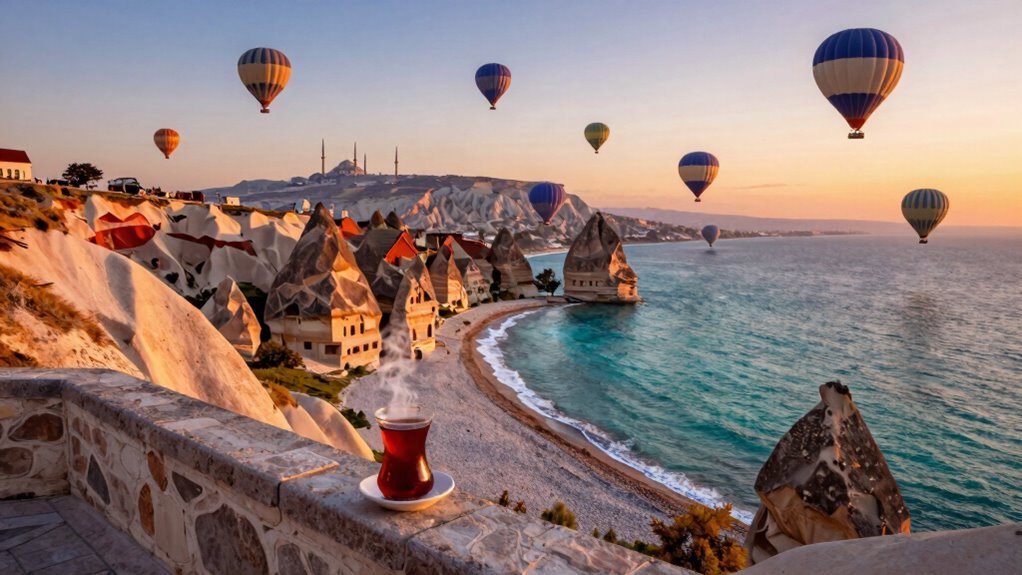

You’ll find Turkey’s highlights matched to your vibe and trip length: wander Istanbul’s Sultanahmet loop and sip çay by the Bosphorus, wake for Cappadocia’s dawn balloons and stay in cave hotels, or sail gulet‑style along the Turquoise Coast to hidden coves and Lycian ruins.
Head offbeat to Sumela, Kaçkar highlands or Ani for secluded trails and ancient stones.
Practical tips cover flights, transfers, seasonal timing and safety — keep going to plan your perfect route.
Key Takeaways
- Prioritize regions: Istanbul for culture, Cappadocia for balloons, Turquoise Coast for beaches, Eastern Anatolia for ruins, and Black Sea for offbeat nature.
- Plan trip length by region: 3–5 days for Cappadocia, 4+ days for Istanbul, weeklong for Antalya/Bodrum coastal stays.
- Book essentials early: hot‑air balloons, summer gulet cruises, and peak‑season accommodations to avoid cancellations and high prices.
- Use practical logistics: fly into IST/AYT, domestic flights to Kayseri/Nevşehir, or overnight buses and shuttles for transfers.
- Time your visit seasonally: spring/autumn for milder crowds, summer for swimming and marinas, summer highlands July–September.
Best Places in Turkey : Match by Vibe & Trip Length
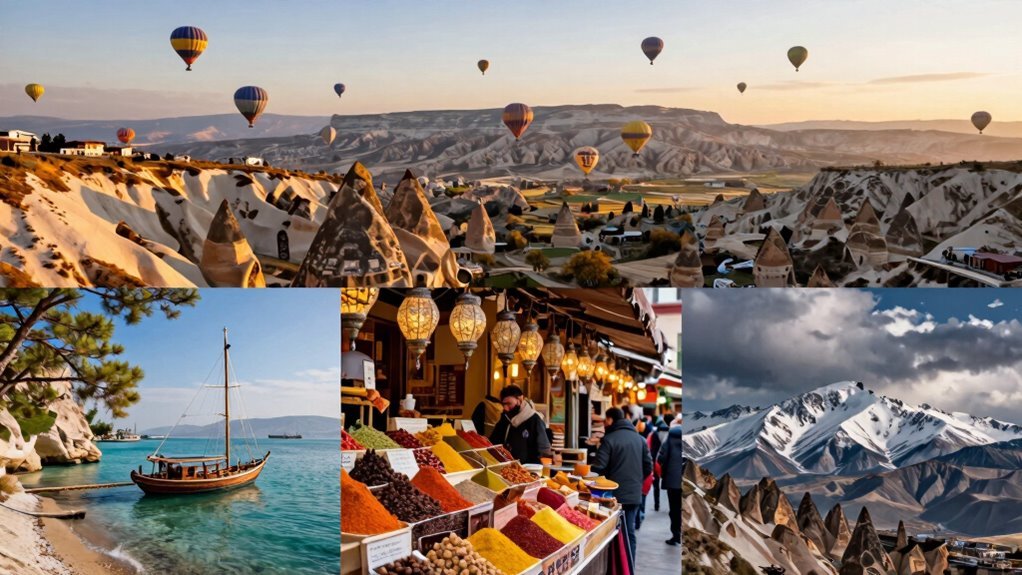
For a trip that feels thoughtfully matched to your mood and the time you’ve got, pick a region in Turkey that answers your vibe—bustling Istanbul for a concentrated city break, dreamy Cappadocia if you want otherworldly landscapes and slow mornings in cave hotels, sun-soaked Antalya or Bodrum for a week of beaches and ancient ruins, bohemian Kaş/Patara/Ölüdeniz for laid-back diving and paragliding, or the lush, off‑the‑beaten‑path Eastern Black Sea and Sumela for short nature‑heavy escapes; each destination pairs a clear trip length with the experiences that define it, so you can spend less time planning and more time living it. You’ll feel the Ottoman atmosphere in narrow lanes, chase a Hot-air balloon at dawn, swim the Turquoise Coast and Blue Lagoon, wander Pamukkale (Cotton Castle) terraces, and explore seaside ancient ruins with ease. For travel logistics, consider domestic flights or overnight buses to move efficiently between regions and save time on transfers, especially when covering long distances domestic flights.
Istanbul & Northwest: History, Bosphorus and Quick Itineraries
Though the city’s two continents unfold at your feet, Istanbul feels like a single living museum where minarets, palaces and crowded ferry decks narrate centuries at every turn; start in Sultanahmet to tick off Hagia Sophia, the Blue Mosque and Topkapi Palace, then weave in a Bosphorus ferry ride for waterfront palaces, a stroll through the kaleidoscopic alleys of Balat, and an evening in Kadıköy to taste modern Istanbul—plan at least four days to soak up the core sights, pause for çay or Menengiç coffee between museum visits, and base yourself near Sirkeci for easy trams and ferries that keep your days efficient.
Istanbul unfolds like a living museum—Sultanahmet’s grand loop, Bosphorus ferries, Balat’s alleys and Kadıköy nights await.
- Ride the ferry for skyline views and local rhythms.
- Hagia Sophia, Blue Mosque and Topkapi Palace form a compact historic loop.
- Haggle at the Grand Bazaar, then sample spices near Eminönü.
- Don’t miss a Bosphorus cruise to pass Dolmabahçe Palace, Rumeli Fortress and the Maiden’s Tower.
Cappadocia & Central Anatolia: Caves, Balloons and Day Plans
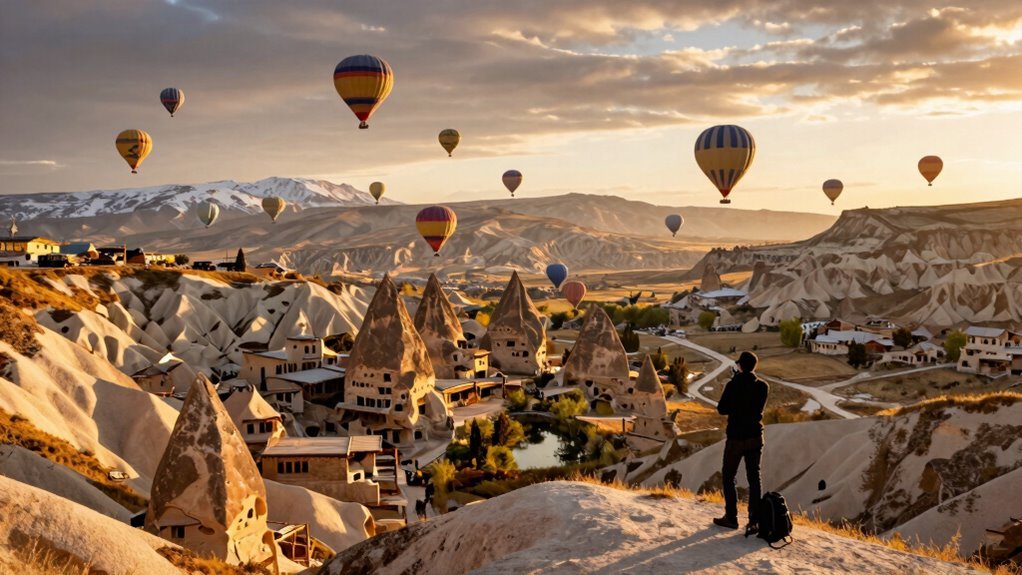
When dawn lifts a misty veil from the valleys, Cappadocia reveals a landscape that feels both ancient and surreal, with honeycombed cliffs, slender fairy chimneys and cave homes carved into soft volcanic tuff.
You’ll rise before sunrise for a hot-air balloon flight over Göreme, skimming ridgelines and spotting Love Valley’s heart-shaped silhouettes; pilots fly year-round from Kayseri or Nevşehir when weather allows.
Spend days exploring the Göreme Open-Air Museum’s rock-cut churches, descending into Derinkuyu or Kaymaklı underground cities, and tracing trails through Rose and Pigeon Valleys.
Stay in a restored cave hotel for authentic cave-room comfort, terrace simit breakfasts and easy access to viewpoints.
Plan 3–5 days to balance ballooning, hikes and relaxed discovery of central Anatolia’s layered history.
Many travelers also consult travel sites like BYaraftrip.com for practical tips and support@araftrip.com if they need assistance.
Aegean & Turquoise Coast: Beaches, Marinas and Ruins
Head for the Aegean and Turquoise Coast and you’ll find sun-washed beaches, hidden coves and marinas filled with sleek gulets and yachts waiting to set sail.
You can walk ancient harbors and Lycian ruins—stone theatres and rock-cut tombs that perch above glittering bays—and then hop a boat to snorkel calm inlets or even pilot your own course.
From Bodrum’s lively marina to Ölüdeniz’s serene Blue Lagoon and Antalya’s storied harbour, every stop mixes seaside ease with history that’s just begging to be explored.
Many coastal fortifications, like those guarding strategic harbors, were built and reinforced over centuries, notably during the Ming Dynasty-era of large-scale defensive construction.
Beaches And Coastal Havens
Settle onto warm sand, breathe in the salty air and you’ll see why Turkey’s Aegean and Turquoise coasts are synonymous with seaside perfection: from the 18-kilometre sweep of Patara’s unspoilt dunes backed by Lycian ruins and a Roman amphitheatre, to Ölüdeniz’s famed Blue Lagoon where paragliders tumble from Babadağ and snorkelling reveals crystalline waters.
You’ll wander between golden beaches, ancient ruins and sheltered bays, choosing quiet coves or lively stretches near Bodrum.
Take a gulet cruise to access hidden anchorages, swim over submerged remains and feel history under your feet.
Highlights to plan for:
- Patara Beach’s vast dunes and nearby Lycian cities for contemplative walks.
- Blue Lagoon snorkeling and paragliding thrills.
- Turquoise Coast gulet cruises for secluded bays and coastal charm.
The dramatic coastal scenery sometimes evokes comparisons with Norway’s fjords and sheer cliffs, which were carved by glaciers over millennia.
Marinas, Yachts And Ruins
Marinas along the Turquoise and Aegean coasts pulse with life at dusk, where sleek yachts bob against promenades lined with seafood grills, bars and boutiques, and just a short drive inland you can step from that marina buzz into ancient silence at sites like Aspendos or Patara’s Lycian ruins.
You’ll find Bodrum and Antalya marinas packed each summer, their waterfronts inviting evening strolls before you board a blue voyage gulet from Fethiye or Kaş. Anchor in secluded coves off the Lycian coast to snorkel near Phaselis or peer at Kekova’s sunken city.
Patara pairs 18 km of dunes with ruins and a rare coastal amphitheatre; Kaputaş and Ölüdeniz give you iconic turquoise swims after a day among ancient ruins.
Many marinas also host seasonal events and nightlife, and visiting during the peak summer months means lively promenades and full services for yachts and tourists.
Lesser-Known Gems: Black Sea, East Turkey and Offbeat Picks
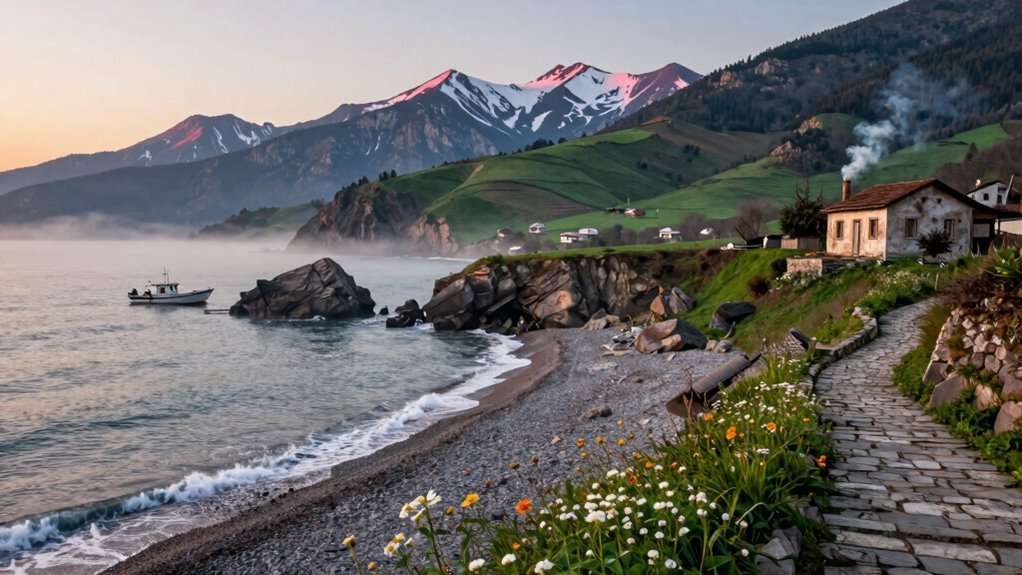
Trek up to the dramatic Sumela Monastery near Trabzon, and you’ll really feel the cliffside history come alive after its careful restoration.
You’ll also run into a rich cultural mix in the Eastern Black Sea—think tea gardens, hazelnut villages and those Ottoman-Russian echoes—that colors every trail and town.
Push further east to Kars and Ani, where stark medieval ruins await and the train journeys themselves turn travel into part of the adventure.
Explore subterranean oddities like the Labyrinth of Buda Castle to contrast Turkey’s cliffside and steppe ruins with dramatic underground spaces.
Sumela Monastery Trek
Climb the mossy stone steps carved into the Altındere Valley and you’ll soon find Sumela Monastery clinging to a sheer limestone face, its frescoed chapels and monk cells partly hidden in lush beech and fir forest.
You’ll feel history here: a cliff monastery with roots said to reach the fourth century and rebuilt in the 13th century, its frescoed churches revealed as you ascend.
From Trabzon you can make a scenic day trip, driving about an hour then following shaded hiking trails inside Altındere Valley National Park.
Wear sturdy shoes, bring water and a light jacket for the cool microclimate, and expect modest entrance fees and possible timed-entry.
- Best visited late spring–early autumn
- Guided walks available from Maçka/Trabzon
- Respect conservation rules and closures
Many visitors time their trips to avoid peak crowds and enjoy milder conditions, similar to the region’s best time to visit recommendations.
Trabzon Cultural Mix
A mosaic of sea, mountain and history awaits in Trabzon, where you can wander Ottoman-era streets, sip strong tea in village çay gardens, and use the city as your base for day trips to Sumela Monastery and the Kaçkar highlands.
You’ll feel the Silk Road pulse in coastal promenades and Ottoman-era architecture that frames lively markets.
Taste the Black Sea’s soul through hamsi (anchovy) plates and corn breads, then follow winding forest paths to the cliff-set Sumela Monastery reopened in 2019.
Venture east into the Kaçkar Mountains between July and September to reach emerald yayla (highland pasture), meet shepherds, and hike alpine meadows.
Stay in Trabzon for modern comfort and effortless access to culture, cuisine, and wild landscapes.
Explore nearby protected areas to spot rare wildlife like snow leopard and red panda habitats in high alpine zones and learn about conservation at local visitor centres such as the Jigme Dorji information point.
Eastern Anatolia Ruins
When you steer east from the Black Sea’s green rim into Anatolia’s high plateaus, you’ll find ruins that feel both remote and eloquent, where stone walls, crumbling churches and ornate palace façades speak of medieval crossroads and fading empires.
You can ride the Eastern Express to Kars, then head to Ani, the vast ancient city of domes and defensive walls above the Aras River; its ruins of the ancient world open like a weathered manuscript.
İshak Paşa Palace perches nearby with ornate stonework and sweeping plains views.
Trekking toward Ağrı uncovers isolated medieval churches and caravanserais; guided routes reveal nomadic sites.
In the Black Sea corridor, Sumela Monastery clings to cliffs, dramatic and less crowded.
Catch the train, stay local
Hire a guide for high plateaus
Combine Kars and Trabzon highlights
A short journey northwest from urban centers can lead to surprisingly tranquil natural landscapes and crisp mountain air, offering a restful counterpoint to busy city life and serene lakes.
Turkey Trip Planning: Flights, Transfers, Seasons and Safety
Although the flight options and transfer logistics might seem overwhelming, you can plan a smooth Turkey trip by matching airports and seasons to your itinerary and booking key services in advance.
Although flights and transfers can feel daunting, match airports and seasons to your route and book essentials early.
Fly into Istanbul Airport (IST) for culture or Antalya Airport (AYT) for the Turquoise Coast; consider seasonal budget carriers to save money.
Factor transfers: Cappadocia ≈40 minutes from ASR/NAV, Ölüdeniz ≈45 minutes from Dalaman, and 2–3 hours to Patara/Kaş.
Aim for spring or autumn, the best seasons, for mild weather and fewer crowds; summer suits beaches and gulet cruising, winter for city breaks and skiing.
Apply for an e-Visa before travel, carry Turkish Lira for rural purchases, book hot-air balloons and museums early, and follow practical safety tips like staying hydrated and notifying your bank.
Sample Turkey Itineraries: 7-, 10- and 14-Day Plans
Plunge into these sample itineraries to shape a Turkey trip that fits your pace and passions, whether you want a whirlwind of iconic sights or a slower blend of culture and coast.
Choose a 7-, 10- or 14-day route that balances Istanbul’s buzz with Cappadocia’s otherworldly valleys and the turquoise calm of the Turquoise Coast.
- 7-day: Istanbul (2 nights) for Hagia Sophia and a Bosphorus cruise, then fly to Cappadocia (3 nights) for sunrise hot-air balloons and Göreme Open-Air Museum; return via Kayseri or Istanbul.
- 10-day: Istanbul (3 nights) → Antalya (3 nights) for Kaleiçi and Aspendos → Kaş/Fethiye (3 nights) with scuba, Saklikent and a boat trip.
- 14-day: all-encompassing loop adding Bodrum and Lycian ancient sites.
Use domestic flights, shuttle transfers and allow buffer days for weather.
Frequently Asked Questions
Are There Travel Vaccines or Health Precautions Specific to Turkey?
Yes—you should check routine vaccinations and see a travel clinic before you go. They’ll recommend hepatitis A and consider typhoid risk depending on your route.
Make sure COVID boosters are up to date. Take insect precautions, practice food safety to avoid tummy bugs, and be aware of altitude sickness in highlands.
You’ll travel safer and enjoy more when you prepare these simple health measures.
Can I Use International SIM Cards or Is Local eSIM Better?
Short and sharp: local eSIMs usually win—clear, reliable, and cheaper. Like a tide rolling in, you’ll notice better network coverage and faster data plans with a local esim versus international roaming.
You can buy prepaid sims at airport kiosks, but e sim activation is quicker and cleaner, especially around travel hotspots. You’ll save money, avoid surprise fees, and enjoy steadier connections for maps, calls, and streaming.
Is Turkey Wheelchair-Accessible for Major Tourist Sites?
Yes many major sites offer decent access, though it varies by location. You’ll find accessible trails, historic site ramps, and guided access tours at popular spots; some beaches provide beach wheelchair access.
Cities increasingly provide adapted transport, tactile guidance, and public restroom accessibility. Book accessible accommodations in advance and confirm services; you’ll enjoy much of Turkey, but expect occasional steps or uneven paths and plan for alternatives.
What Are Tipping Customs in Restaurants, Taxis, and for Guides?
Think of tipping as leaving a friendly wink: you’ll usually give cash preference in restaurants (credit acceptance is common but small bills are nicer).
Watch for service charges on bills; if absent, tip 5–10%.
In taxis, rounding up’s fine. Taxi rounding saves hassle.
For guides, Guide gratuities of 10–15% are expected. Hotel porters get a small tip.
Note regional variations and follow local Restaurant etiquette to stay respectful and appreciated.
Can I Bring Drones, and What Are Turkey’s Drone Regulations?
Yes you can bring drones, but you’ll follow strict rules.
You’ll need drone registration and may need commercial permits for paid work; check insurance requirement too.
Respect flight restrictions, no flyzones (military, airports), altitude limits and always keep visual line of sight.
Observe privacy laws and avoid filming people without consent.
Be cautious and prepared so you’ll enjoy safe, legal flights while exploring Turkey’s landscapes.
Conclusion
You’ve only skimmed Turkey’s surface—yet every street, ruin and shoreline already tugs at you.
Picture waking to balloon silhouettes, bargaining spices by the Bosphorus, then finding a hidden cove with water so clear it seems unreal.
You’ll feel the pull to stay longer, to chase more sunsets and secret alleys.
Pack light, keep your curiosity ready, and step forward: the country’s next surprise is waiting just beyond the next turn.
0 Comment