
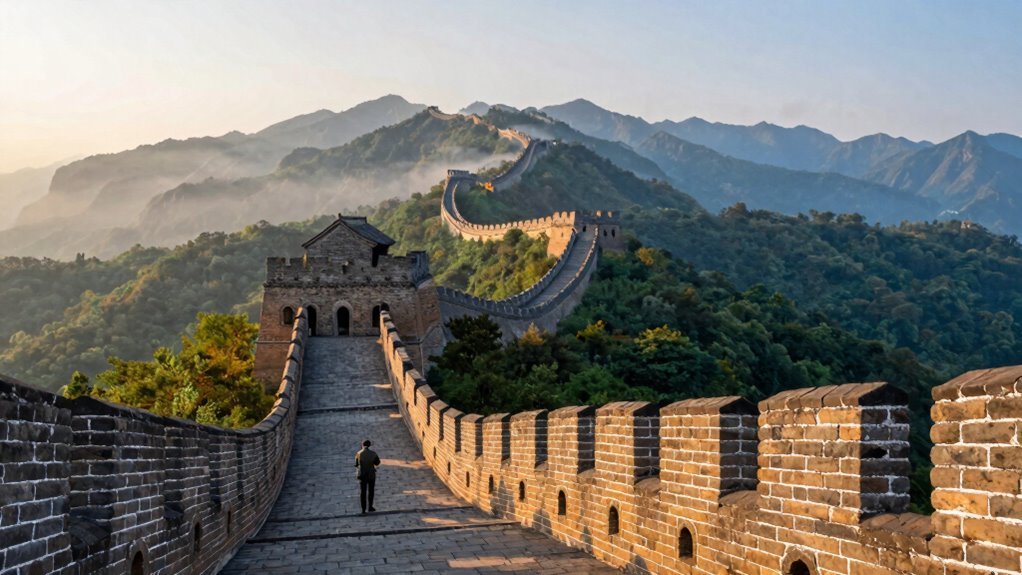

You’ll walk atop stone ramparts that curve over forested ridges, feel wind on narrow exposed ridgelines, and peer into watchtowers that once scanned deserts and plains. Choose restored Beijing sections for dramatic views, Jiayuguan for massive gates, or lonely Inner Mongolia earthworks for scale.
Go in spring or autumn, book timed tickets, wear sturdy shoes, and respect closures to help preserve this world-spanning monument. Keep going to learn practical tips, routes, and responsible-visit advice.
Key Takeaways
- Choose which section to visit: restored stone near Beijing, remote earthen stretches, Jiayuguan fortress, lakeside views, or Longqing Gorge.
- Visit in spring or autumn, and go mornings or late afternoons to avoid crowds and catch best light.
- Book tickets and timed entries online or through your hotel; remote sections require private transfer or regional buses.
- Wear sturdy shoes, bring water, layers, a first-aid kit, and trekking poles for steep, uneven, exposed terrain.
- Respect preservation rules: stay on marked paths, pack out waste, avoid removing bricks, and follow drone and closure regulations.
Top Sections to Visit: Beijing, Jiayuguan, Inner Mongolia
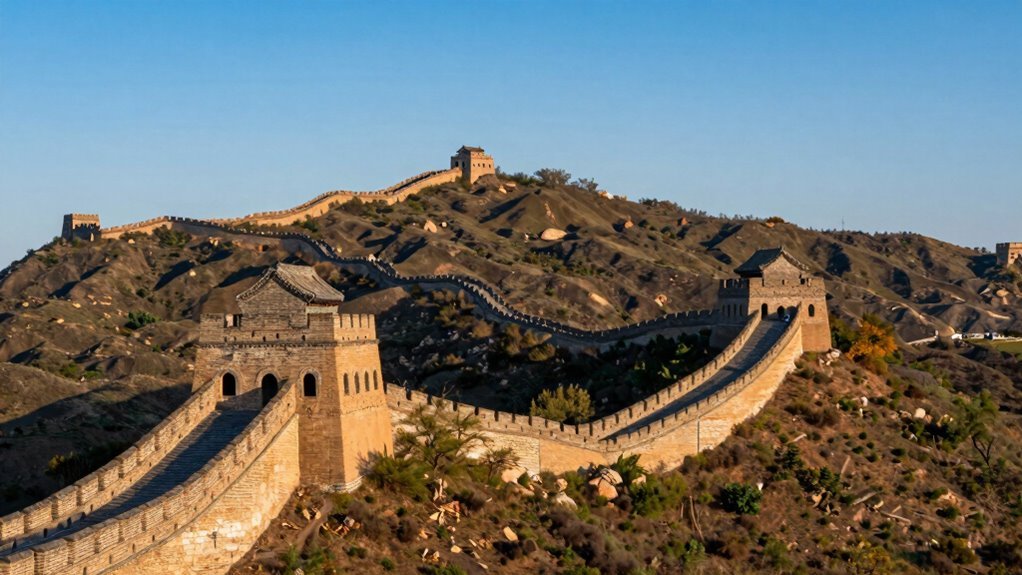
While each stretch of the Great Wall tells its own story, three regions stand out for the experiences they offer: the restored, bustling sections near Beijing where stone ramparts sweep over forested ridges; the stark, wind-swept fortress at Jiayuguan marking the historical western end; and the long, weathered earthen lines across Inner Mongolia that let you sense the wall’s vast, lonely scale.
Three Great Wall experiences: restored Beijing ramparts, Jiayuguan’s stern fortress, and lonely earthen lines of Inner Mongolia.
You’ll climb Ming-era towers near Beijing and watch Beijing sunsets paint bricks and pines in molten gold, feeling humanity’s reach into rugged peaks.
At Jiayuguan, you’ll study Jiayuguan fortifications, massive gates and bastions that once sealed a frontier, sensing frontier discipline and desert wind.
In Inner Mongolia, you’ll walk broken earthworks, listening to silence and imagining caravans threading endless steppe.
Nearby Beijing, you can also escape the city to find serene natural landscapes—lakes, gorges, and forested hills—that offer a tranquil counterpoint to urban life and great vantage points of the wall, such as the lakeside sections where the wall meets the water and the dramatic cliffs of Longqing Gorge with their emerald river views and scenic boat rides.
How to Plan Your Great Wall Visit: When, Tickets, and Transport
If you want to experience the Wall at its best, time your visit for crisp mornings or late afternoons when light sculpts the bricks and crowds thin, and plan transport and tickets in advance so you’re free to focus on the view rather than logistics.
Choose the best seasons—spring for blooming slopes, autumn for fiery foliage—and avoid national holidays when popular sections swell.
Book tickets online or through your hotel; many sites use timed entries.
For remote sections, arrange private transfer or take regional buses from nearby towns.
If you prefer ease and context, join group tours that handle permits, pickups, and local guides.
Pack water, layers, and a charged phone; you’ll arrive relaxed and ready to absorb the Wall’s sweep.
Many visitors focus on the Ming-era brick-and-stone sections for their impressive watchtowers and preservation.
What to Expect on the Wall: Terrain, Facilities, and Safety
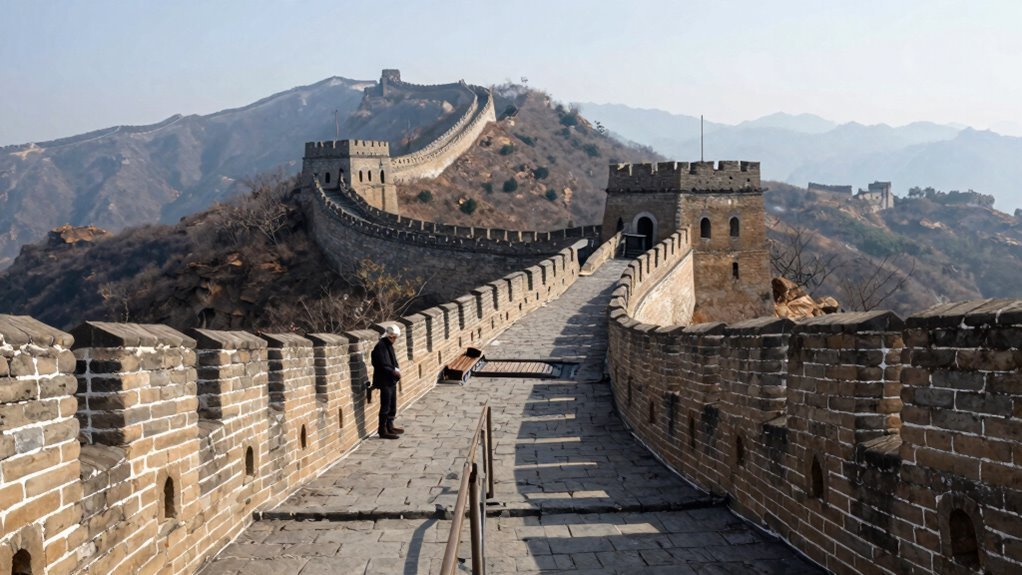
As you climb the steps and follow the crenelated ridge, expect a shifting landscape of steep stone stairways, uneven earthen ramps, and wind-buffed lookout platforms that test your balance and your breath. You’ll move between exposed ridgelines and sheltered stretches, so pack layers and focus on weather preparedness.
Facilities vary: some sections have restrooms, kiosks, and cable cars; others offer only stone benches and wide sky. Paths can be narrow, slippery after rain, and demanding on knees, so wear sturdy shoes and take slow, measured steps. Keep water, a basic first-aid kit, and a charged phone. Be mindful of edges, follow signage, and respect guided closures for your safety and the wall’s preservation. Consider planning travel during shoulder season to avoid peak crowds and enjoy milder weather.
| Terrain | Tip |
|---|---|
| Steep stairs | Pace yourself |
| Uneven terrain | Use trekking poles |
| Exposed ridges | Windproof layer |
| Minimal facilities | Carry essentials |
| Crowded sections | Yield and wait |
Why the Great Wall Was Built : Key Eras and Purpose
Because ancient rulers faced constant pressure from nomadic raids and border disputes, they turned stone, earth, and labor into a sprawling defensive system that would control movement, signal danger, and project imperial power across the frontier.
Faced with raids and disputes, rulers forged stone and earth into a vast frontier barrier that controlled movement and projected imperial power
You’ll sense eras layered in weathered brick: Qin unifying walls into a strategic spine, Han extending barriers for Silk Road control, and Ming refining stone battlements and watchtowers.
You can almost hear signal fires and troop boots, feel the scale of construction and the human cost—harsh labor conditions that forged ramparts from local materials.
More than military hardware, the Wall became imperial symbolism, a visible claim to territory and authority that shaped borders, trade, and the rhythms of frontier life.
How to Visit Responsibly : Preservation, Photography, and Local Impact
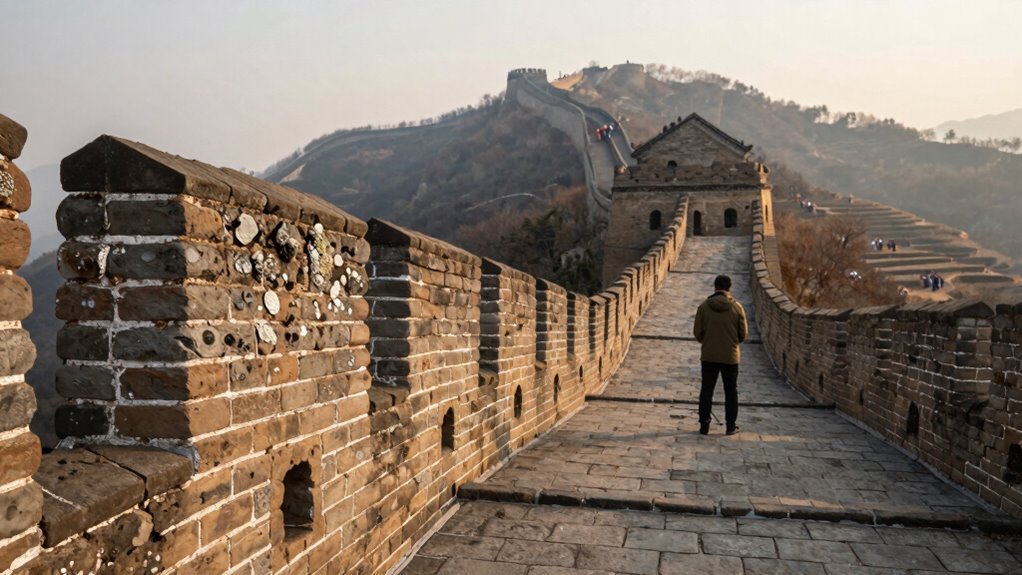
When you step onto the timeworn stones of the Great Wall, remember that every footprint touches centuries of labor and landscape; visiting responsibly means protecting those traces for the people and ecosystems that follow.
You move slowly, feeling ancient mortar underfoot, aware that simple choices matter: stay on marked paths, don’t remove bricks or carve names, and pack out what you bring.
Frame photographs with respect—capture distant towers and sweeping ridgelines rather than climbing fragile parapets.
Support sustainable tourism by choosing local guides and businesses that reinvest in conservation and communities.
Observe drone regulations to avoid disturbing wildlife, archaeology, and other visitors.
Your mindful presence preserves history, sustains livelihoods, and keeps the wall’s silence whole for those who come after you.
Consider planning your visit during off-peak times to minimize crowding and environmental impact, and consult official tourism resources for guidance.
Frequently Asked Questions
Can I Hike the Entire Great Wall End-To-End in One Trip?
No you can’t realistically through hike the entire Great Wall in one trip. The logistics are brutal: it’s a fragmented network spanning deserts, mountains and private land, with seasonal accessibility varying wildly.
You’ll plan sections, permits, and transport, savoring preserved Ming stretches near Beijing and remote ruined sweeps elsewhere. Expect changing trails, intense weather, and evocative solitude; piece together memorable multi-trip treks rather than a single continuous journey.
Are There Sections of the Wall Open at Night?
Want to wander under the stars? Yes, some popular sections offer night access and organized twilight walks, though availability varies by site and season.
You’ll feel ancient stones cool beneath your hands as lanterns or soft lighting trace watchtowers and crenellations. Book guided tours near Beijing for safer, permitted after-dark visits; other stretches close at dusk.
Check local regulations and tour operators so you don’t wander into restricted areas.
Can I Bring a Drone to Film From the Wall?
No, you generally can’t fly a drone without permission; drone regulations are strict around the Wall and nearby heritage zones. You’ll need filming permits from local authorities and sometimes from park administrations.
Imagine sweeping mountain vistas and ancient watchtowers captured legally, so contact the site office, apply for permits, follow no-fly zones, and respect preservation rules. Get approvals first, then you’ll safely film evocative aerial footage without harming the monument.
Are There Guided Tours in Minority Languages (E.G., Mongolian)?
Yes you can sometimes find minority guides offering tours in Mongolian and other languages. You’ll seek out minority guides through specialized agencies, local tour operators in Inner Mongolia, or cultural centers; language availability varies by site and season.
You’ll feel the landscape come alive as a guide narrates traditions, place names, and histories in your tongue, making the wall’s stones speak with layered cultural meaning and intimate local perspective.
What Medical or Emergency Services Exist Along Remote Sections?
You’ll find sparse medical support: occasional field clinics near popular checkpoints and ranger stations offer basic first aid, meds, and wound care, but remote stretches lack permanent clinics.
If something serious happens, park teams coordinate emergency evacuation by vehicle or helicopter to county hospitals.
You’ll rely on guides to flag help, carry first-aid kits, and use satellite phones; conditions feel raw and isolated, so preparedness becomes essential for safety.
Conclusion
You’ll feel history humming as you hike the Hand-hewn heights—breath brisk, boots brushing battlements.
Stand where sentinels stood, watch wind weave through watchtowers, and savor sweeping, sunlit scenes that stitch past to present.
Move mindful, minimize marks, and make memories that matter: photograph respectfully, follow footprints, and support local stewards.
With each careful step, you’ll keep the wall’s wonder whole for wandering souls who’ll come after you.
0 Comment