
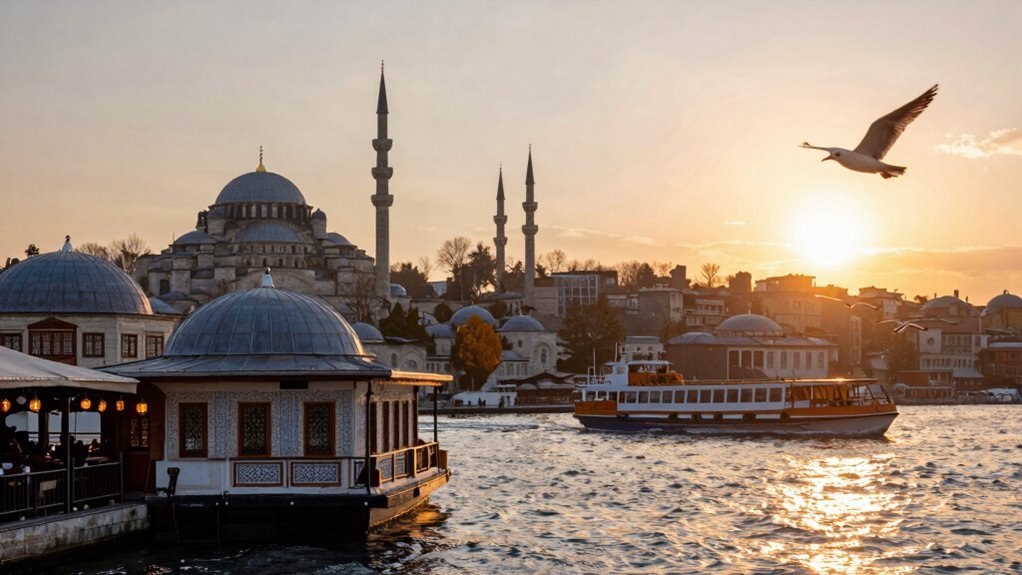

You’ll feel Istanbul’s layered history the moment you step from a mosque‑shadowed square onto a ferry gliding between continents. Wander under Hagia Sophia’s mosaics, haggle in the Grand Bazaar, and taste simit and baklava from street stalls.
Take a Bosphorus cruise at sunset, explore Galata’s cobbled lanes, then cross to Kadıköy for cafés and local markets. The city blends Byzantine, Ottoman and modern life at every turn—keep going and you’ll uncover pockets of magic, food and viewpoints to plan.
Key Takeaways
- Historic landmarks like Hagia Sophia, Blue Mosque and Topkapi Palace showcase Istanbul’s Byzantine and Ottoman fusion.
- The Bosphorus links Europe and Asia, with ferries offering daily crossings and scenic cruises past palaces.
- Neighborhoods—Sultanahmet, Galata, Beyoğlu and Kadıköy—offer distinct atmospheres, markets and local life to explore.
- Grand Bazaar and Spice Bazaar provide centuries‑old trading culture, bargaining, spices, sweets and street foods.
- Culinary and cultural experiences—meze taverns, baklava, hamams and evening cruises—blend Eastern traditions with cosmopolitan nightlife.
Why Istanbul Feels Like East Meets West
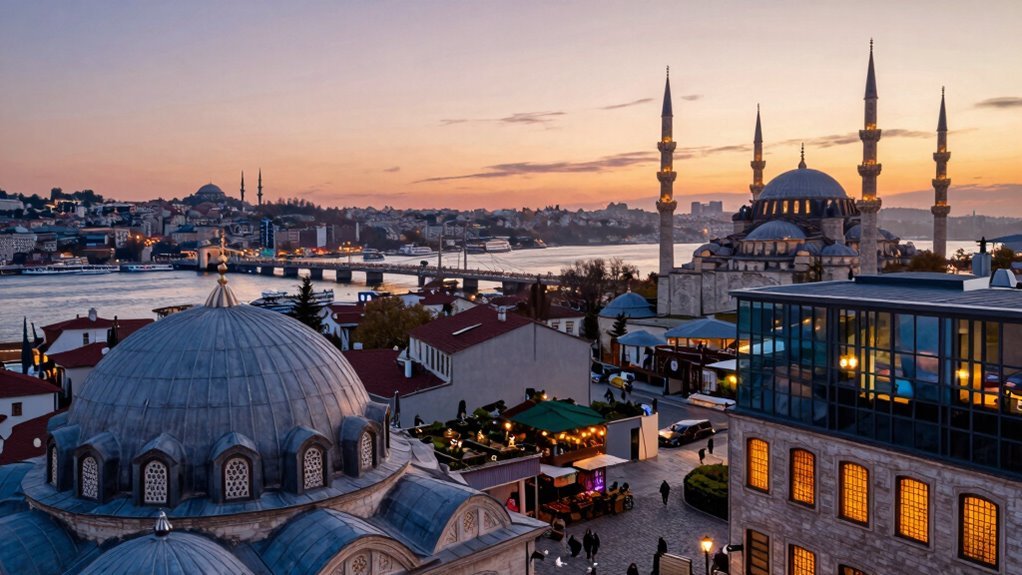
If you stand on the Galata Bridge and look east, you’ll see mosques and minarets silhouetted against minarets and modern towers, and when you look west the skyline keeps speaking the same story—two continents stitched together by the Bosphorus.
You feel Istanbul’s tug between Europe and Asia in every step: the Bosphorus Strait threads neighborhoods, ferries hum like arteries, and bridges stitch daily life.
The Hagia Sophia’s Byzantine Empire mosaics sit beside Ottoman Empire domes—the Blue Mosque and Topkapi Palace echo shared rites and power.
In the Grand Bazaar, spices and silks trade with European imports, proving commercial and cultural fusion isn’t theory but taste, color, and rhythm.
You’ll come away convinced this city doesn’t bridge worlds so much as weave them. Many visitors explore these highlights best during spring and autumn when temperatures are mild and crowds are thinner.
Top 8 Istanbul Landmarks : What to See and How to Visit Them
When you walk Istanbul’s streets, the city unfolds like a living museum—each landmark a vivid chapter that mixes imperial grandeur, daily ritual, and sensory surprises.
You’ll stand beneath Hagia Sophia’s soaring dome and Byzantine mosaics, then cross to the Blue Mosque where 20,000 Iznik tiles glow and you’ll remove your shoes for prayerful calm.
Explore Topkapi Palace’s Harem, glittering Imperial Treasury and Iznik‑tiled rooms to feel sultans’ lives.
Descend into the Basilica Cistern’s shadowed columns and spot the Medusa heads.
Lose yourself among 3,000 shops in the Grand Bazaar, then inhale aromas at the Spice Bazaar—bargain and taste.
Climb Galata Tower for skyline views across the Golden Horn, and pause at Suleymaniye Mosque to watch daily life flow.
Take a Bosphorus cruise to pass Dolmabahçe Palace, Ortaköy Mosque and the Maiden’s Tower while crossing the waterway linking continents.
Best Istanbul Neighborhoods to Stay In (Galata, Beyoğlu, Eminönü, Kadıköy) + Transit Tips
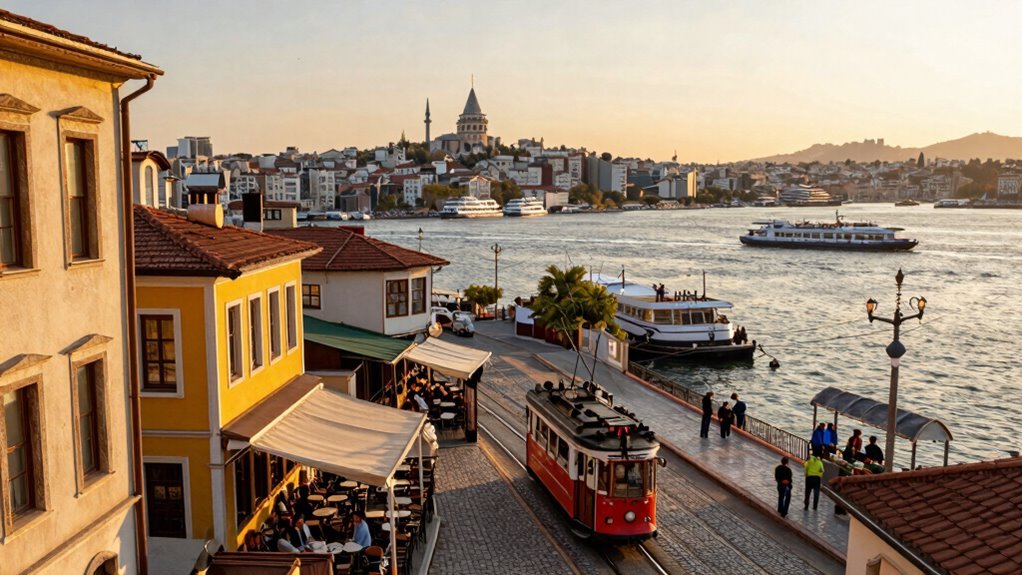
After you’ve ticked off Hagia Sophia and the Grand Bazaar, pick a neighborhood that shapes how you’ll remember Istanbul—each quarter offers a different daily rhythm.
Stay in Galata for cobbled streets, the Genoese tower silhouette and boutique hotels where you can stroll straight to the Galata Bridge.
Choose Beyoğlu to live on İstiklal’s pulse, steps from trams, arcades and nightlife.
Pick Eminönü or Sultanahmet if you want instant access to the Spice Bazaar, Grand Bazaar and monuments; mornings there feel almost cinematic.
Cross the Galata Bridge on foot to move between moods, or grab ferries for a scenic commute.
Hop vending-machine ferry tickets to reach Kadıköy’s market, cafes and Moda promenade on the Asian shore.
Relax along the Red Sea Corniche with its waterfront promenade and scenic sunset views, a peaceful contrast to Istanbul’s bustle and a great spot for sunset photography.
Taste Istanbul : Where to Try Simit, Lahmacun, Meze and Baklava
Along the noisy lanes and quiet backstreets of Istanbul you’ll find the city’s true signature: food meant for sharing, snacking and lingering.
You’ll grab a warm simit from a street cart, crunching it with Turkish tea as vendors call; near the Grand Bazaar and Spice Bazaar, street food rules your strolls.
Fold a tangy lahmacun with lemon and parsley at Kadıköy stalls for instant, cheap delight.
Sit in Beyoğlu meyhanes and taste meze—hummus, ezme, haydari—passed around while conversation deepens.
For syrupy perfection, queue at Karaköy Güllüoğlu and sample pistachio and tray baklava with coffee.
Follow aroma and crowds; Istanbul’s flavors are invitations you shouldn’t refuse.
- simit from carts and bakeries
- lahmacun folded on the go
- meze in communal taverns
- baklava at Karaköy Güllüoğlu
- market snacks by Spice and Grand Bazaars
Markets in other historic cities, like Madinah, also act as living cultural centers preserving food, crafts, and communal traditions, with specialty hubs such as the Central Dates Market supporting agricultural trade and seasonal flavors.
Bookable Local Experiences: Bosphorus Cruises, Hamams, Bazaars and Nightlife
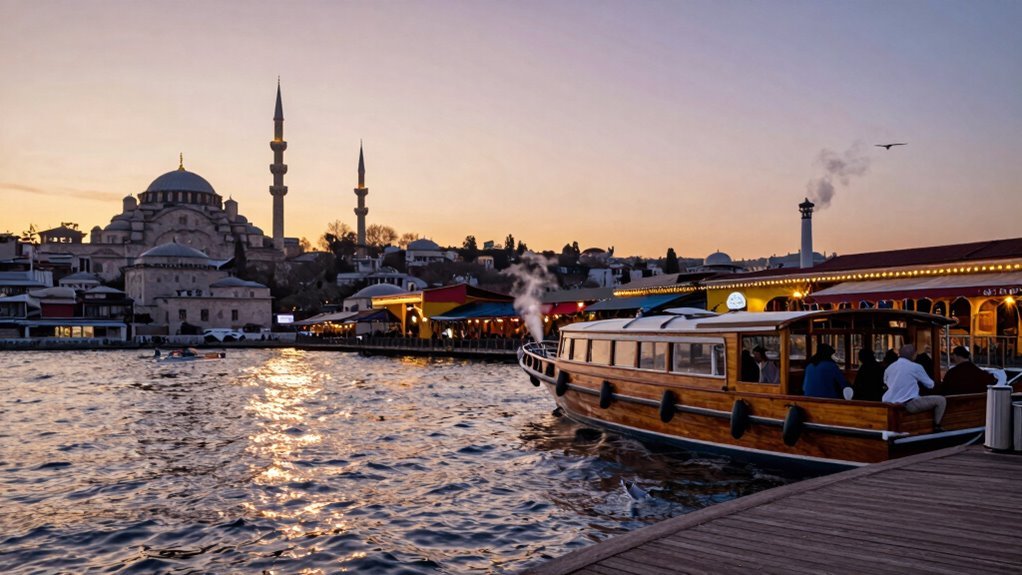
If the city’s flavors have whetted your appetite for more, bookable local experiences will let you taste Istanbul’s other rhythms — gliding between continents on a Bosphorus cruise, sinking into the steam and scrub of a centuries‑old hamam, bargaining amid the heady scents of the Spice and Grand Bazaars, or finding late‑night music and rooftop views in Beyoğlu and Karaköy.
Take a 1.5–2 hour Bosphorus cruise from Eminönü or Karaköy to admire Dolmabahçe Palace, Ortaköy Mosque and fortresses, or book an evening Bosphorus dinner cruise for illuminated palaces, live music and dance.
Reserve a restored hamam for a traditional hamam experience—steam, kese scrub and a 50‑minute massage.
Roam the Spice Bazaar and Grand Bazaar to taste Turkish delight and haggle in thousands of stalls, then end with rooftop bars or a Whirling Dervish show.
Spring is also a lovely time to visit for gardens and waterways, with nearby tulip fields and canal views adding seasonal color.
Frequently Asked Questions
What Was Istanbul Called in Bible Times?
In Bible times you’d call it Byzantium Origins, founded in Greek Antiquity as Byzantion. After Rome’s shift it became Constantinople Passage and later New Rome in Early Christiantexts and Medieval Names.
You’ll see Bithynian References linking it to the Roman Province, then Ottoman Renaming reshaped its identity while Stamboul Usage persisted in vernacular speech. You’ll sense layers of history persuading you that the city always bridged eras and empires.
Is It Safe for Americans to Go to Istanbul Right Now?
Yes — you can go, but stay alert. Check travel advisories and local political climate, monitor crime statistics, and follow health precautions like drinking bottled water.
Respect cultural sensitivities, use licensed transport, and note emergency contacts. Solo travel, women travelers, and LGBTQ+ safety vary by neighborhood; stay in well-reviewed areas and avoid demonstrations.
Keep copies of documents, register with STEP, and trust your instincts to keep your trip secure and enjoyable.
Where East Meets West Istanbul?
Yes you’ll find Istanbul where east meets west, a glittering bridge between worlds.
You’ll wander a cultural crossroads of architectural fusion, religious coexistence, and culinary synthesis, where language mélange and trade legacy hum in markets.
You’ll see artistic hybridity and urban layering in every skyline, feel identity negotiation in daily life, and witness modern globalization shaping traditions.
You’ll be persuaded to explore, taste, and listen to its layered stories.
Is It Worth Going to Balat, Istanbul?
Yes you’ll love Balat. You’ll wander historic streets full of architectural details, find photography spots on colorful facades and hidden courtyards, and sip in cozy local cafes.
You’ll spot lively street art, browse antique shops and traditional crafts, and join culinary tours or community festivals that reveal true local life.
You’ll leave feeling inspired, having captured unique scenes and tasted authentic flavors off the beaten path.
Conclusion
You’ll leave Istanbul with a pocket full of simit crumbs and a head full of call to prayer melodies—proof that its two halves really do mingle. I once watched a fisherman on the Galata Bridge toss a line into currents where Europe and Asia kiss; his patient tug felt like the city itself, pulling you toward new flavors and sudden vistas. Stay curious, follow those tugs, and let Istanbul change the way you travel.
0 Comment