
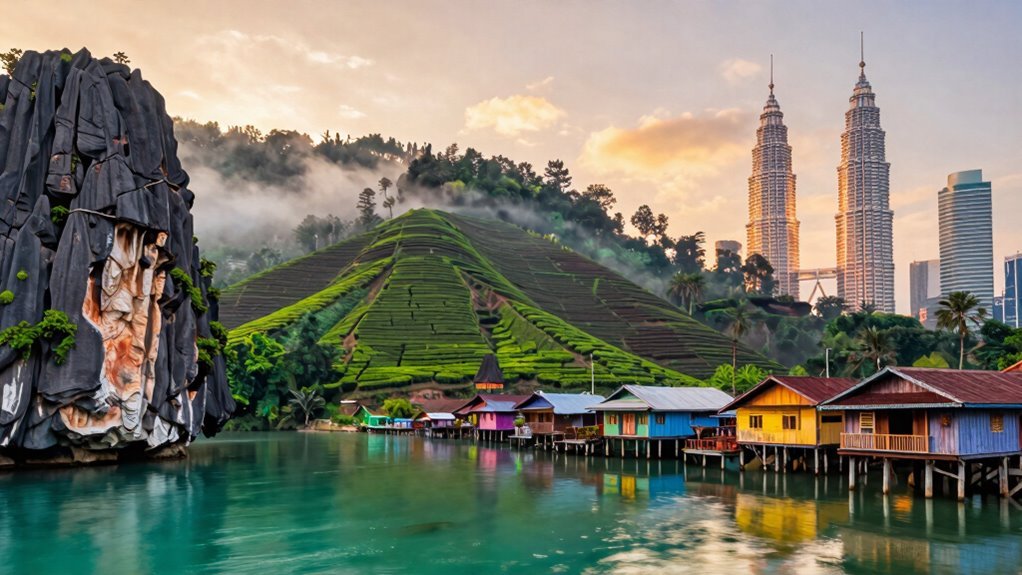

You’ll time your trip by region—dry season Nov–Apr on the west coast and Feb–Apr for the clearest Cameron Highlands, April–Oct for east‑coast diving, and Mar–Sep for Borneo wildlife.
Book climb and dive permits months ahead, fly between hubs, pack reef‑safe sunscreen and light quick‑dry layers, and insure for evacuation and scuba.
Expect jungle dawns, tea‑scented mist and coral‑fringed sunsets; keep going to uncover detailed itineraries, permits and seasonal tips that make planning easy.
Key Takeaways
- Time your visit by region: west coast Nov–Apr, east coast Apr–Oct, and Borneo Mar–Sep for best weather and activities.
- Book high‑demand permits early: Sipadan dive quotas and Mount Kinabalu climbing permits sell out months ahead.
- Fly via KLIA and use short domestic hops; allow generous layovers for delays and holiday peak travel.
- Pack light, reef‑safe sunscreen, insect repellent, sturdy hiking shoes, a pocket first‑aid kit, and universal adapter.
- Plan wildlife and marine activities seasonally—river cruises at dry‑season mornings, and diving when seas are clearest.
Best Time to Visit Malaysia : By Region & Activity
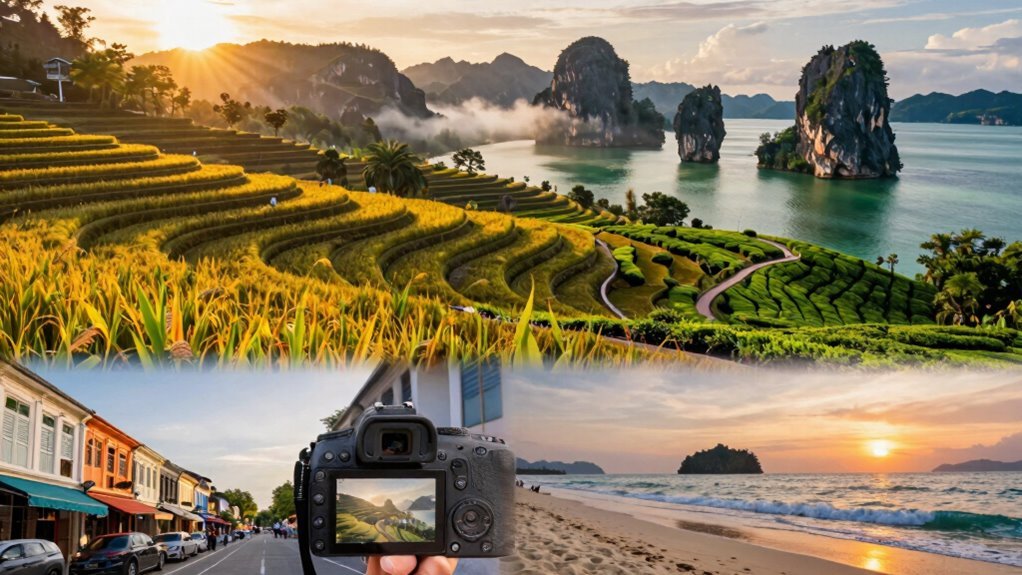
When you plan a trip to Malaysia, timing can shape everything from sea conditions to wildlife sightings: aim for November–April on the west coast (Langkawi, Penang, Pangkor) and in Kuala Lumpur for drier skies and calm seas, April–October on the east coast (Perhentian, Redang, Tioman) for the best diving and snorkeling, and March–September in Borneo (Sabah and Sarawak) if you want easier jungle treks and better chances of spotting wildlife.
Meanwhile the Cameron Highlands stay cool year-round but feel clearest February–April, and remember to check festival dates like Thaipusam or Sabah’s harvest celebrations since they’ll change crowds and transport.
You’ll watch weather steer your choices: pick the dry season for beaches and boat rides, avoid the northeast monsoon closure on the East coast, and favor March–September in Borneo for wildlife.
Also plan around major attractions such as the Mount Kinabalu National Park if mountain trekking or peak views are a priority during your visit.
Quick Planning Essentials : Flights, Permits, Packing, and Insurance
You’ll probably fly into KLIA or connect through Singapore, Doha, or Hong Kong before heading on to Penang, Langkawi, or Borneo, so plan connections and flight times carefully.
Check visa entry rules and passport validity, and book special permits early if you’re heading to Mount Kinabalu or Sipadan — you’ll also want to reserve any required guides or quota spots in advance.
Pack light, breathable clothes plus a waterproof layer, insect repellent, and reef-safe sunscreen.
And don’t forget travel insurance that covers diving, jungle trekking, and emergency evacuation.
Remember that the dry season (May–September) is often the best time for outdoor activities across the region.
Flights & Connections
Because most long-haul flights funnel into Kuala Lumpur International Airport, plan your arrival there as the easiest gateway to Penang, Langkawi and Borneo.
Regional hops from KL take only 1–2.5 hours but sell out fast during school holidays and Sabah’s dive season, so book early.
You’ll notice KLIA hums with efficient domestic connectivity: daily flights to Penang and Kota Kinabalu board alongside travelers juggling dive gear and trekking boots.
Pick connections that leave comfortable layover windows; delays happen, and use domestic carriers that link remote Borneo towns.
Pack light but ready: quick-dry layers and reef-safe sunscreen save space, while travel insurance covering diving and evacuation keeps you calm.
Reserve climb or dive permits months ahead; those quotas vanish sooner than you’d expect.
For flexible travel across multiple parks and protected areas, consider an America the Beautiful–style pass or local equivalent to streamline access and fees.
Visas, Permits Needed
Although many nationalities can enter Malaysia visa‑free for up to 90 days, check your passport has at least six months’ validity and confirm current entry rules before you book.
You’ll arrive knowing basic entry requirements, passport validity matters, and that visa‑free entry doesn’t remove other local rules.
If you dream of Climbing Mount Kinabalu, permits required are strict: book days and a certified guide well ahead.
For Sipadan diving, a diving permit is issued per diver and trips sell out.
Keep a neat checklist: confirm visas, secure permits required, and verify travel insurance covers diving and high‑altitude rescue.
Your planning pace will shape the trip: orderly permits, stamped passports, and peace of mind.
All travelers should also ensure they meet any passport validity and entry requirements relevant to their nationality before departure.
| What | Action |
|---|---|
| Visa status | Check entry requirements |
| Adventure permits | Book early (Kinabalu, Sipadan) |
Packing & Travel Insurance
Pack smart and plan your insurance well so surprises don’t slow you down: fly into KLIA and lock in domestic connections early, bring light, breathable clothes with a rainproof layer and sturdy hiking shoes for highland treks, reef‑safe sunscreen and snorkel gear for island days, plus insect repellent and a pocket first‑aid kit; and make sure your travel policy explicitly covers medical evacuation, jungle trekking, and scuba (including depth and nitrox if you’ll use it) so remote rescues from places like Danum Valley or Sipadan won’t leave you exposed.
Travel light: pack light, favor quick‑dry layers and rainproof layers, slip on sturdy hiking shoes for muddy trails, and stash reef‑safe sunscreen and insect repellent.
Don’t forget a universal plug adapter and thorough travel insurance—check scuba limits, evacuation caps, and cancellation coverage before you go.
Also consider timing your trip for the best time to visit to avoid extreme weather and enjoy milder conditions.
Sabah & Borneo : Kinabatangan, Sepilok, Kinabalu (Logistics & Tips)
Framed by dense rainforest and winding waterways, Sabah’s Borneo highlights are as much about logistics as they are about wildlife. You’ll fly into Sandakan to board early-morning or dusk cruises along the Kinabatangan River for close-up views of proboscis monkeys, hornbills and the occasional pygmy elephant.
Swing by Sepilok’s feeding platform (typically at 10:00 and 15:00) to watch rehabilitated orangutans and visit the nearby sun bear centre. Then base yourself in Kota Kinabalu for the two-hour transfer to Kinabalu Park where multi-day climbs to Panalaban require advance permits and a licensed guide for a sunrise summit. If you have extra time, consider exploring nearby glacial valleys and lesser-known trails for secluded views.
| Site | Access | Tip |
|---|---|---|
| Kinabatangan River | Sandakan/Sukau river cruises | Pack waterproofs, insect repellent |
| Sepilok Orangutan Rehabilitation Centre | Short drive from Sandakan | Attend 10:00 or 15:00 feedings |
| Mount Kinabalu | 2-hr transfer from Kota Kinabalu | Book permits, guide, Panalaban stay |
Island & Reef Essentials : Sipadan, Perhentian, Redang, Tioman
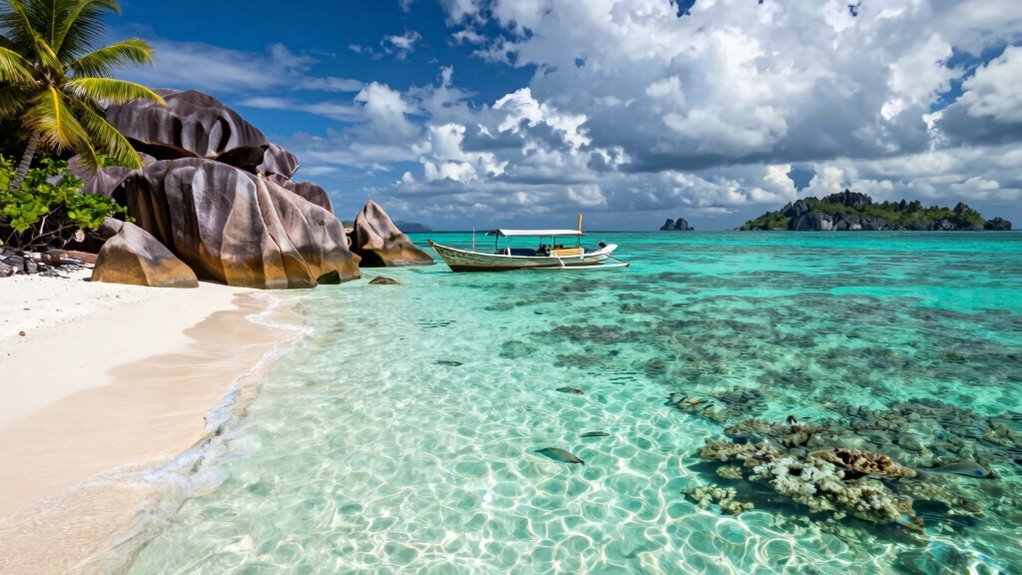
Plunge into Malaysia’s island edges and you’ll find a kaleidoscope of reefs, white-sand bays and jungle-backed coves where each island offers a distinct marine personality: Sipadan’s world-class drop-offs teem with barracuda, sharks and turtles but you’ll need to secure a scarce permit and a Sabah base; the Perhentians serve powdery beaches and turquoise shallows ideal for snorkeling and easy access to wrecks and shark sites from Kuala Besut; Redang’s protected marine park brings consistently clear water and vibrant coral gardens in the main season; and Tioman’s jungle-fringed bays hide superb reefs and a handful of boutique resorts for a quieter, more secluded escape.
You’ll plan around seasons, chase sea turtles on dives, arrange dive permits for Sipadan and savor powdery white-sand beaches on the Perhentian Islands, Redang Island and Tioman Island.
Also consider visiting nearby conservation areas like Blue Bay Marine Park to experience protected coral gardens and managed snorkeling tours.
Langkawi & Kilim Geoforest Park : Beaches, SkyCab, Mangrove Cruises
You step into Langkawi’s warm breeze. The SkyCab lifts you toward cliffside panoramas, and the Sky Bridge hangs like a ribbon above an emerald canopy.
Later, a licensed boat threads the Kilim Geoforest Park’s mangroves. Guides point out eagles, otters, and limestone karsts as you glide past bat caves and fish farms.
Finish with your toes in powdery sand on nearby Gaya Island, watching turquoise waves roll in and the palms sway. The islands’ proximity to regional hubs also makes them an excellent base for exploring nearby destinations.
Langkawi SkyCab Experience
Hop into a glass‑walled gondola and feel Langkawi unfold beneath you as the SkyCab climbs 2.2 kilometres from the bustling Oriental Village to the peak of Gunung Mat Cincang, rising about 708 metres above sea level and revealing sweeping views of the 99‑island archipelago and the Andaman Sea.
You’re lifted along a steep 42‑degree stretch, watching emerald hills give way to salt and sky.
At the summit you can stroll the Langkawi Sky Bridge, linger on viewing platforms, or grab a snack while clouds drift by.
Book sunset tickets early to skip lines and secure a glass‑floor gondola for drama as day fades into gold.
- Dramatic ascent with panoramic views
- Glass‑floor gondolas available
- Langkawi Sky Bridge access
- Oriental Village amenities
Families can pair the SkyCab with nearby mangrove cruises to extend the nature-focused experience and spot wildlife in the Kilim Geoforest Park.
Kilim Mangrove Cruises
Framed by sheer limestone cliffs and a tangle of roots, a Kilim mangrove cruise slips quietly through braided waterways where sunlight dapples the water and eagles wheel overhead. You’ll glide through the Kilim Geoforest, a UNESCO World Heritage Site, as your guide points out winding channels, Bat Cave and the sculpted karst faces.
Boats pause at floating fish farms and eagle-feeding points; you’ll watch brahminy kites descend for scraps while you steady binoculars for better views. The narrative of mangrove life—mudskippers, monitor lizards, mangrove birds—unfolds along narrow estuaries, and excursions from Kilim Jetty often add kayaking or seafood lunches at floating restaurants.
Choose dry-season mornings for calm waters and cinematic light. Many visitors also time trips to coincide with best times for milder weather and fewer crowds.
Gaya Island Beaches
After a morning among karst cliffs and mangrove channels, head out across turquoise water toward Gaya Island’s coral-fringed beaches, where sunlight scatters over reef tops and snorkeling masks reveal a bustling undersea world.
You’ll reach this marine park from Kota Kinabalu in a 20–30 minute day trip boat ride; the shorelines curve into quiet coves, and Gayana Marine Resort’s over-water villas give you direct access to house-reef snorkeling and conservation talks.
Walk palms, watch hawks glide, then slip into warm water to follow clownfish through garden corals.
If you’ve come from Langkawi after mangrove cruises and SkyCab panoramas, Gaya’s calm reefs feel like a needed breath.
- Clear shallow reefs for easy snorkeling
- Quick boat transfer from Kota Kinabalu
- Conservation programs at Gayana Marine Resort
- Best months: November–May
Penang & George Town, Malaysia : Food, Street Art, Heritage Routes
Wander through George Town and you’ll find layers of history and flavor stitched into every lane: pastel shophouses and Peranakan mansions sit beside clan jetties, street-food hawkers call out familiar names like laksa and char kway teow, and playful murals and iron caricatures turn alleyways into open-air galleries—perfect for a walking route that mixes bites, sights and stories.
You’ll trace heritage routes from Fort Cornwallis to the Blue Mansion, pause for assam laksa at a hawker cluster, then follow Ernest Zacharevic’s murals down Armenian Street. Rent a trishaw or bike, visit Kek Lok Si, and sample nasi kandar by sunset; 2–3 days lets you taste Penang’s layered culture.
| Spot | Must-try | Tip |
|---|---|---|
| Armenian St | Char kway teow | Go early |
| Gurney Drive | Laksa | Evening market |
| Pinang Peranakan | Peranakan snacks | Guided tour |
Cameron Highlands : Tea Estates, Walks, Where to Stay Overnight
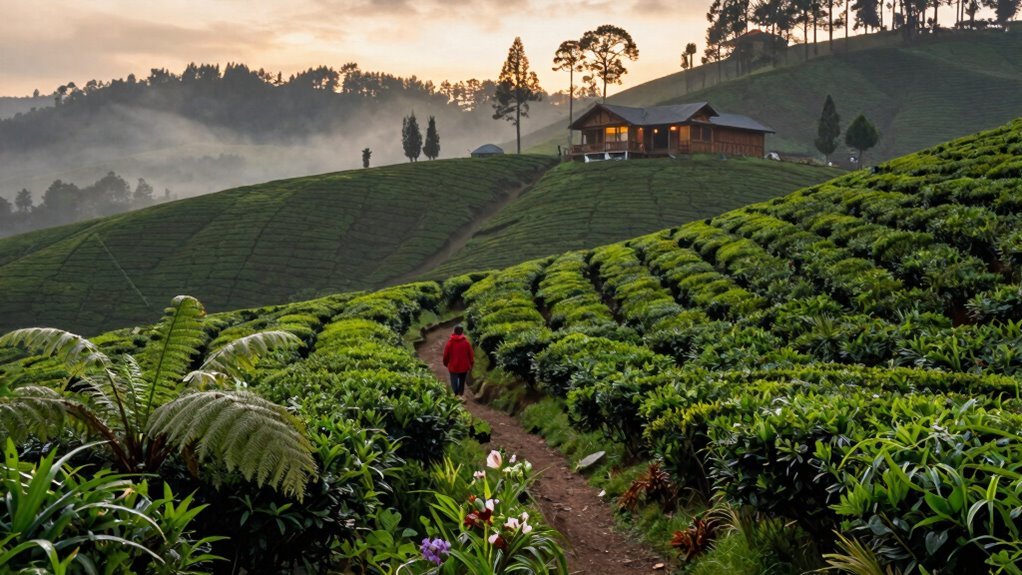
Perched between 1,300 and 1,829 meters, the Cameron Highlands feel like a cool, emerald refuge where mist curls through rolling tea terraces and the air smells faintly of damp earth and brewed leaves.
You wander BOH tea plantation slopes at dawn, join guided tours at Boh Sungei Palas, and sip fresh brews in the Cameron Valley Tea House while valley views unfold.
Plantation walks range from short, gentle loops to longer treks into mossy forest and fern-lined Gunung Brinchang trails.
After a hike you can pick strawberries at local strawberry farms or browse night markets.
Choose from colonial-style guesthouses in Tanah Rata or estate-facing lodges for overnight stays, and pack a light jacket and waterproof layer.
- Sunrise at Boh Tea Garden
- Short plantation loops
- Mossy forest treks
- Stay in colonial-style guesthouses
Top Malaysian Beaches & Island Access : Tanjung Aru, Perhentian, Pangkor
From misty highlands to sunlit shores, Malaysia’s coastline offers a quick change of pace: palm‑fringed promenades, powdery isles and sheltered bays that invite swimming, snorkeling and slow sunset rituals.
From misty highlands to sunlit shores, Malaysia’s coast unfolds palm‑fringed promenades, powdery isles and sheltered bays for swimming and slow sunsets
You’ll find Tanjung Aru a short ride from Kota Kinabalu airport, its long palm‑fringed beach perfect for easy sunset watching and quick shore snorkelling or day trips to Tunku Abdul Rahman Marine Park.
Head east to the Perhentian Islands—a 40–60 minute boat from Kuala Besut—for turquoise water, white sand, Turtle Point and Shark Point where you’ll snorkel or dive and can train with PADI courses.
On the west coast, Pangkor Island and exclusive Pangkor Laut Resort sit near Pasir Bogak and Nipah Bay; ferries and short speedboats connect you to calm, reef‑filled swimming.
Sample 7-, 10- & 14-Day Malaysia Itineraries By Interest
Pick the itinerary that fits how you like to travel — whether you want a whistle‑stop city‑and‑food introduction, a nature‑heavy Borneo expedition, or a relaxed two‑week loop that mixes highlands and islands — and you’ll find a ready plan that balances sights, transit time and seasonal needs.
You’ll move from Kuala Lumpur’s skyline and street food alleys to misty Cameron Highlands tea trails, then savour Penang’s UNESCO lanes and hawker stalls. Choose the 10‑day Borneo‑focused route for rainforest, river cruises and orangutans, or stretch to 14 days for Langkawi and east‑coast island beaches.
Fly between hubs to save time; book Sipadan permits and avoid monsoon months for Perhentian/Tioman.
- 7‑day: KL → Cameron Highlands → Penang
- 10‑day: KL → Malacca → Penang → Langkawi
- 10‑day Borneo‑focused: Kota Kinabalu → Kinabalu Park → Kinabatangan → Sepilok/Sipadan
- 14‑day: KL → Cameron Highlands → Penang → Langkawi → Perhentian/Tioman
Frequently Asked Questions
What Is the Prettiest Place in Malaysia?
You’ll find the prettiest place depends on your tastes: you can savor Kuala Lumpur’s glittering skyline, wander Penang Heritage’s mural‑lined streets, or relax on Langkawi Islands’ limestone‑fringed beaches.
You’ll trek Mount Kinabalu for sunrise vistas, breathe cool air in Cameron Highlands’ tea terraces, snorkel the Perhentian Islands’ turquoise reefs, or lose yourself in the Borneo Rainforest’s cathedral trees.
Each scene will make you fall for Malaysia all over again.
What Not to Do in Malaysia as a Tourist?
Like a well-tuned compass, you’ll steer clear of trouble: respect local customs and avoid public displays of affection, don’t photograph sensitives without permission, and refuse street food caution when vendors warn you.
Skip wildlife feeding, ignore dress codes at your peril, and never neglect local laws.
You’ll act observant, polite, and curious—asking before photos, dressing modestly, and bargaining fairly—so your visit feels smooth and respectful.
How Many Days Are Enough to Explore Malaysia?
About 10–14 days will let you taste Malaysia’s highlights: you’ll follow an ideal itinerary mixing urban highlights, cultural immersion and nature treks.
Spend city days for a foodie tour and street art, then island hopping for beach downtime and snorkeling.
If you’re Borneo-bound, plan longer. Leave wiggle room for seasonal planning and travel days so you can savor moments, adapt plans, and truly feel the place rather than rush.
Can Females Wear Shorts in Malaysia?
Yes you can wear shorts in Malaysia, but you’ll balance dress codes and cultural sensitivity. In tourist neighborhoods and urban areas you’ll find local attitudes relaxed, allowing beachwear etiquette on islands and swimwear at resorts.
In conservative areas and mosque visitation you’ll need knee-length or longer garments and shoulder coverage. You’ll notice people watching more in rural spots; you’ll adapt by carrying a sarong or lightweight trousers for respect and comfort.
Conclusion
You’ve traced misty tea terraces, plunged into sapphire reefs, and wandered spice-scented lanes—now picture yourself on a twilight mangrove cruise, torchlight wobbling on the water as proboscis monkeys chatter nearby.
Didn’t you come here to feel places, not just tick boxes? Keep a loose map and an open heart: Malaysia rewards curiosity with unexpected flavors, sunrise summits, and island silence.
Go on—let the next horizon pull you gently onward.
0 Comment