
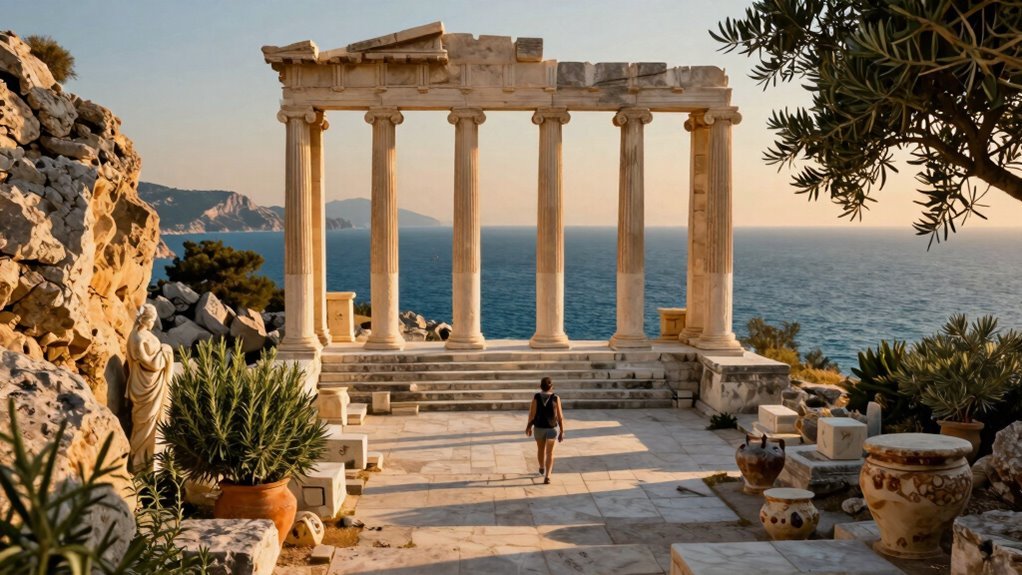

You’ll walk temple steps where oracles spoke, trace frescoed corridors at Knossos, and stand beneath the Parthenon’s Doric columns feeling entasis in the stone.
Sail the Cyclades to Delos’s marble sanctuaries, watch Santorini’s volcanic rim glow at dusk, then hike Mount Olympus trails and whisper where gods once lingered.
Paddle near Acheron’s shaded banks and visit Cape Sounion’s clifftop Poseidon temple at sunset. Keep going and you’ll find logistics, routes and local tips to plan it all.
Key Takeaways
- Visit iconic mythic sites—Delphi, Acropolis, Knossos, Delos, and Santorini—to experience foundational Greek myths and ritual landscapes.
- Study architectural details—Doric entasis, cyclopean masonry, corbelled Lion Gate—to read building techniques and repairs.
- Examine sculptures and fragments in museums (Acropolis, Olympia) to reconstruct friezes, metopes, and polychromy evidence.
- Combine island hopping (Delos, Naxos, Santorini) with coastal sites (Cape Sounion, Acheron) for mythic, maritime, and underworld contrasts.
- Time visits in spring or fall, use morning light for mosaics, and favor guided or backstage tours for deeper contextual interpretation.
Top Greek Sites That Bring Myths to Life: Delphi, Acropolis, Knossos
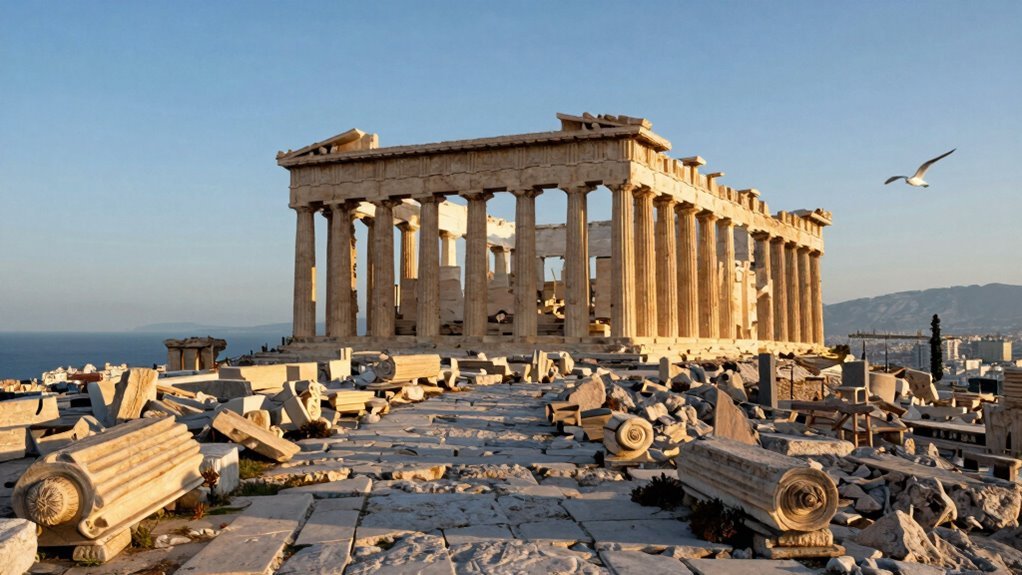
Walk into Delphi, the Acropolis, and Knossos and you’ll feel myths press against the stones—Delphi’s breeze still carries the hush of oracles beneath Mt.
Step into Delphi, the Acropolis, and Knossos—where myths breathe from stone and ancient rites linger on the wind
You trace steps where the Pythia once spoke, where the Treasury of the Athenians and a theater hold votive echoes.
On the Acropolis you climb to Parthenon ruins that once sheltered Athena’s gilded image;
the museum’s glass floor lets you peer at buried foundations and rescued marble friezes.
Down on Crete, Knossos sprawls in a maze of columns and frescoed corridors, palace rituals and the Theseus–Minotaur legend hanging in painted dancers and ceremonial spaces.
Moving between these sites, you follow a living arc: prophetic cult, civic devotion, and Minoan palace religion made tangible.
The journey pairs mythic sites with a deep appreciation for art and archaeology, much like visiting world-class museums such as The Louvre Museum that connect objects to their broader historical stories.
How to Read Ruins: Parthenon, Lion Gate & Palace Frescoes
Stand in front of the Parthenon’s entablature, the Lion Gate’s hulking ashlar, or a frescoed room at Knossos and let the details do the talking. Notice the rhythm of the columns and the tool marks — they tell you about the original design and any repairs done later. Pick up sculpted fragments and you’ll start to hear whispers of mythic scenes and the traces of their original paint. Look closely at mural pigments and motifs and you can piece together ritual meanings and social rank.
Read the stones for both function and ceremony, the chisels for construction and reuse, and the color and movement for belief and identity. As you move through each ruin, pay attention to scale, joinery, stratigraphy, and repeating icon patterns — they help you tell what was intended by the first builders and what came from later hands. The enduring, multi-era nature of these sites is similar to how structures like the Ming Dynasty Wall were expanded and repaired over centuries, reflecting changing defensive and cultural priorities.
Reading Architectural Details
Although weather and time have worn their surfaces, you can still read ancient intentions in every line and joint: the Parthenon’s Doric columns curve with deliberate entasis and hold traces of marble metopes once alive with civic myths; the Lion Gate’s corbelled arch and triangular relieving lintel frame a heraldic limestone relief that declared Mycenaean power; and Knossos’s fresco fragments preserve bold mineral pigments and flowing figures that speak of ritual and the sea rather than individual likenesses.
Walk close, feel Pentelic marble’s cool plane, note fluting that catches light and shadow. In the Acropolis Museum look for metal dowel holes and neat joins, then at Mycenae trace cyclopean mortar seams.
Read foundations, patches, and layered masonry as palimpsests of rebuilding, conquest, and devotion. A nearby landscape of ancient sites like Stonehenge and Avebury reminds visitors that monumental stonework shaped regional identities across Europe.
Interpreting Sculptural Fragments
Interpretation begins where the stone stops: touch the broken edge of a Parthenon metope or the weathered face of the Lion Gate relief and you’ll find stories encoded in tool marks, join-holes, and paint traces.
You’ll read sculptural fragments by placement—metopes’ battle scenes, pediments’ birth and contest, and the Ionic frieze’s Panathenaic procession—while drill holes and dowels reveal ancient joinery on Pentelic marble.
At Mycenae the limestone Lion Gate’s heraldic lions announce authority in high relief.
In museums like the Acropolis Museum you’ll follow labels, stratigraphy, and comparative iconography to reunite shards with architecture.
For fresco fragments from palaces, examine plaster layers and pigment traces to restore scale and narrative, grounding each fragment in ritual, civic, or funerary use.
Deciphering Wall Paintings
When you step close to a sun-bleached frieze, a chipped metope, or the flattened pigments of a Minoan fresco, the ruin speaks in color, tool marks, and placement: read it by tracking surviving pigments like Egyptian blue and red ochre, following repeated motifs—horses, offerings, dolphins—and situating those images within their architectural axes so the Parthenon’s procession, the Lion Gate’s heraldic stance, and Knossos’s ritual scenes unroll as social and religious gestures rather than isolated pictures.
You trace Parthenon panels left-to-right, watch the Lion Gate’s pair hold threshold power, and move through Palace frescoes at Knossos where dolphins and bulls orient courtly ritual. Note pigment chemistry, binding traces, stratigraphy, and context to turn weathered color into lived ceremony. Visitors often pair archaeological sites with nearby cultural highlights like Hagia Sophia to deepen historical perspective.
| Motif | Meaning |
|---|---|
| Horses | Procession |
| Dolphins | Ritual marine symbolism |
| Lions | Dynastic power |
| Bulls | Ritual/ceremony |
| Altars | Offerings |
Mount Olympus & Dion: Hiking the Home of the Gods
Step onto the trails around Mount Olympus and you’ll feel why ancient Greeks believed gods walked here: towering limestone peaks pierce the sky above forests humming with 1,700+ plant species, while clouds often wrap the summits in a mysterious veil.
You’ll hike through Mount Olympus National Park, where endemic blooms dot the path and deer or jackals might glance from shadowed groves. Routes from Litochoro suit daywalks or multi-day ascents; local guides from Thessaloniki lead you toward ridgelines often shrouded in cloud.
At the wooded foothills, Dion unfurls ruins of temples, altars and a theater—places Macedonian leaders honored Zeus and staged festivals. You move between living wilderness and palpable antiquity, sensing ritual echoes in wind and stone.
Many visitors combine mountain treks with scenic train and boat journeys to nearby cultural hubs and lakes, taking advantage of scenic rail connections and regional transport.
Island Shrines to Visit: Delos, Naxos & Santorini
Step onto Delos and feel the hush of a once‑sacred island — marble temples, the Terrace of the Lions, and mosaics that still whisper the origin story of Apollo and Artemis.
Then wander Naxos’s harbor, stand beneath the mighty Portara and picture Ariadne with Dionysus, and if you’re up for it, climb toward Mount Zas where myths seem to cling to the peaks.
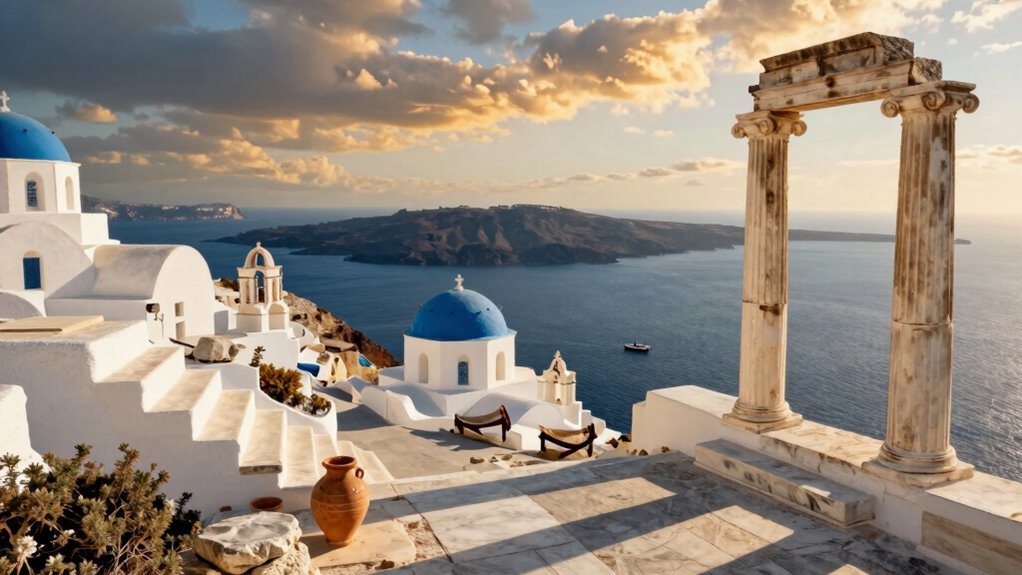
Finish on Santorini’s caldera rim: whitewashed churches and volcanic terraces frame the buried Minoan town of Akrotiri and a landscape shaped by a world‑changing eruption. Visitors often combine island visits with ferry and flight connections to optimize travel time.
Delos: Sacred Archaeological Site
Though tiny, Delos feels like the center of the ancient world as you step from the boat onto sun-bleached marble, where the Terrace of the Lions, ruined temples, and intricate house mosaics still echo the island’s sacred past.
You wander among columns and courtyards, imagining pilgrims honoring Apollo at the Temple of Apollo, sensing why Delos earned UNESCO World Heritage status.
Silence, except for wind and distant gulls, makes the stones speak; priests, traders and votive offerings feel close.
Plan a morning visit from Mykonos to catch light on carved reliefs and mosaics before crowds arrive.
Below is a quick guide to what you’ll see and why it matters.
The region’s dramatic coastal setting, much like Norway’s fjords with their steep cliffs and deep inlets, enhances the sense of isolation and history, inviting quiet contemplation of the ruins deep fjord.
| Feature | Why Visit |
|---|---|
| Terrace of the Lions | Iconic guardians |
| Temple of Apollo | Mythic heart |
| House mosaics | Domestic artistry |
| Sacred harbor | Pilgrim gateway |
| UNESCO World Heritage | Protected legacy |
Santorini & Naxos Highlights
From Delos’s sun-bleached ruins you can sail south to islands where myth and landscape stage very different dramas: Santorini’s blue-domed villages cling to a volcanic rim that glows at sunset, while Naxos spreads marble, myth and long beaches beneath Mount Zas.
You’ll wander narrow lanes in Santorini, feel the caldera air, and watch whitewashed houses ignite in gold as the sun slips; the island’s volcanic past is visible in every cliff and cobalt dome.
On Naxos, you’ll greet the Portara at dawn, a hulking marble doorway framing sea and sky, then hike toward Mount Zas for panoramic silence.
Between cliffside evenings and sandy afternoons you’ll move from myth to landscape, each view a lived, breathing legend.
Enjoy nearby cultural and archaeological treasures like Jerash and Madaba on the mainland for deeper historical context and ancient mosaics to complement your island explorations.
Mythic Landscapes to See: Cape Sounion, Acheron & Underworld Rivers
Stand on the cliff at Cape Sounion as the sun melts into the Aegean and you’ll feel how myth and place fold together—16 great Doric columns still frame the sky where ancient Athenians watched for ships and told the tale of King Aegeus.
You’ll trace the weathered stones of the Temple of Poseidon, listen to waves, and imagine sailors signaling home.
| Site | Experience |
|---|---|
| Cape Sounion | Sunset, cliff vistas |
| Acheron River | Gorges, boat crossings |
| Underworld Rivers | Necropoleis, myth trails |
Then head inland to the Acheron River: boat rides through dramatic gorges, lakeside quiet, and necropoleis make the underworld stories tangible.
You’ll feel heroic paths—Orpheus, Theseus—mapped onto real water and rock.
A nearby natural area offers wild, dramatic cliffs that echo the raw coastal landscapes of other Mediterranean shores.
Museums & Backstage Access: Acropolis Museum, Olympia
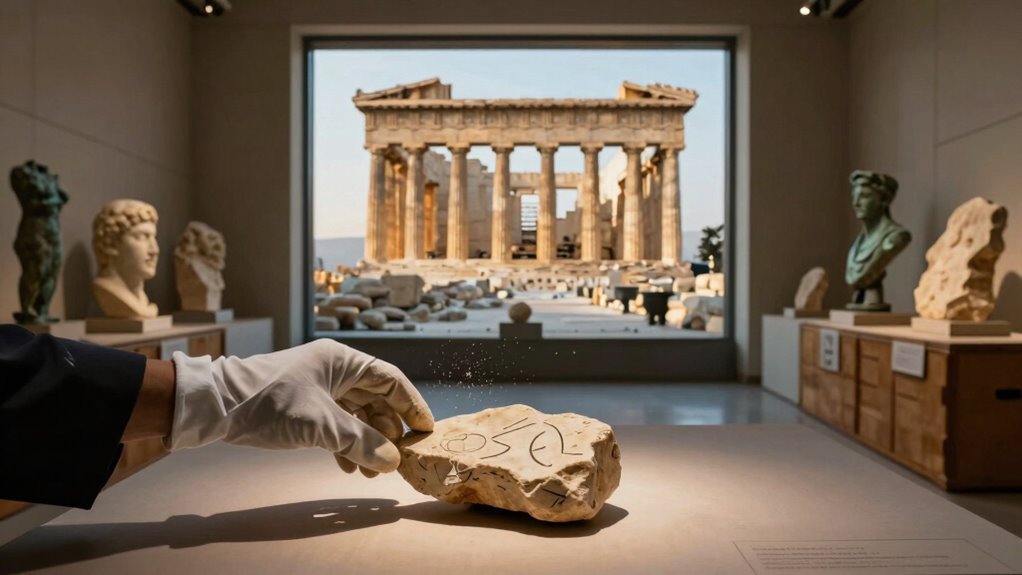
While you move through the Acropolis Museum’s sunlit galleries, the Parthenon’s marble friezes and a gleaming marble Athena seem to breathe history into the present, and a glass floor lets you watch excavations where ancient foundations sleep below your feet.
You trace Iktinos and Kallikrates’ sculptural program, imagine the lost gold-and-ivory cult image, and feel 5th-century B.C. artistry pulse in every carved groove.
Then you travel to Ancient Olympia, where backstage access narrows time: you stand on the original stadium starting line, step among temple precinct ruins that once held Phidias’s colossal Zeus, and explore the Archaeological Museum’s game-related treasures.
Workshops and training-area tours connect the mythic tales of Greek mythology to the bodies and rituals that made them real.
Spring and fall are ideal for visiting to enjoy milder weather and fewer crowds around these sites and museums, especially compared with the busy summer season and the colder north in winter, reflecting common travel advice about the best times to visit spring and fall.
Suggested Day Plans: Athens, Mycenae & Knossos
Plan your days to balance awe and pace: spend a morning beneath the Parthenon and its museum’s glass floor, pair a long but rewarding day trip to Mycenae and Epidaurus for Lion Gate drama and theater acoustics, and save a full day on Crete to roam Knossos’ reconstructed frescoes and the Heraklion museum—book early, wear sturdy shoes, and expect several hours of walking and 8–10 hour round trips when you head beyond Athens.
You’ll climb to the Acropolis, feel marble warmed by sun, then descend to the museum’s glowing displays. Drive out to Mycenae, trace Cyclopean walls, listen to stone speak at Epidaurus. On Crete, let Knossos Palace’s frescoes and VR reconstructions transport you into Minoan life.
- Morning at the Acropolis and museum
- Day trip: Mycenae + Epidaurus
- Full day: Knossos Palace & Heraklion museum
When to Go & Getting Around: Seasons, Flights & Ferries
If you time your trip for May–June or September–October, you’ll enjoy warm sea swims, thinner crowds at ruins like the Acropolis, and lower prices than peak summer; Athens International Airport (ATH) serves as your main gateway with frequent transatlantic and European connections, so book early especially on popular carriers to lock in good seats and avoid last‑minute headaches.
Travel in these shoulder seasons feels effortless: mornings light up marble columns, afternoons tempt you to islands. Use quick domestic flights to reach Crete or Thessaloniki, and pair them with scenic ferries for the Cyclades; high‑speed catamarans zip you between islands in 1–3 hours, while overnight ferries offer cabin sleep for longer hops.
From ATH, choose the metro for a calm entry or a taxi for door‑to‑door ease.
Where to Stay & Eat: Neighborhoods, Coastal Towns & Home Meals
Stay in Plaka—or just wander the narrow lanes around the Acropolis—so you can step out to tavernas serving moussaka and souvlaki beneath neoclassical facades.
Or pick Glyfada, Vouliagmeni, or an Oia cliffside room if you want sea-scented mornings, caldera sunsets, and hotels that put the coast right at your doorstep.
And if you want something more personal, arrange a meal with a local family to taste grilled fish, a seasonal salad and mezedes while you swap stories over a bottle of bright, olive oil–friendly wine.
Charming Coastal Villages
A few of Greece’s coastal villages—think Nafplio’s neoclassical facades, Hydra’s car-free stone alleys, and Parga’s pastel harbor—invite you to wander narrow cobblestone streets that open onto seafood tavernas, sunset viewpoints, and boats to nearby islets.
You’ll feel history underfoot—Venetian arches, whitewashed cottages—and smell grilling octopus and olive oil on the breeze.
Stay in Glyfada along the Athens Riviera for easy beach access, or choose a family-run pension in Nafplio to reach Mycenae by day.
Book a home-meal or cooking class to learn regional recipes and meet locals; peak-season rates climb, so plan shoulder months for better value.
- Wander alleys to seaside tavernas
- Book home meals or classes in advance
- Choose shorefront stays for sunsets and boat trips
Neighborhoods Around Acropolis
Several neighborhoods hug the Acropolis, each offering a distinct mood for where you’ll sleep and eat: Plaka and Makriyianni put the Parthenon and the Acropolis Museum a short, sunlit walk away with tavernas spilling tables onto cobbled lanes; Koukaki and Anafiotika bring quieter, boutique guesthouses and chances to join a family-hosted dinner; while Monastiraki and Psiri serve budget stays, bustling street food, and fast metro links to the airport.
You’ll wake to balconied views, stroll past ancient stone, and choose between late-night ouzo in Psiri or slow coffee in Plaka.
If you crave seaside meals, head to Glyfada or the Athens Riviera for fish tavernas and easy transfers.
Pick Koukaki or Makriyianni for calm, close-up access to the Acropolis and Acropolis Museum.
Meals With Local Families
Often you’ll find that the most memorable meals in Greece happen not in restaurants but around a family table, where grilled octopus, moussaka, island cheeses and local olive oil arrive alongside stories of gods, seafaring and village life.
You’ll join a meal with a local family in coastal towns or island homes—Naxos, Ithaca or a whitewashed Hora—sampling multi-course plates, local wine or tsipouro, and fresh salads drizzled with olive oil from an old olive tree.
Stay in Plaka, Anafiotika or seaside Glyfada for easy access to home meals. Book through local programs early, note dietary needs, and be ready for stairs and cobbled paths; the rhythm of conversation and storytelling completes the feast.
- Intimate island dining by candlelight
- Family recipes and regional tales
- Booking tips and accessibility notes
Practical Prep: Passports, Accessibility, Trip Protection & Sustainability
Before you step onto Greek soil, make sure your passport will still be valid for at least six months after your return date. This guidance applies to U.S. passport holders, and non‑U.S. citizens should confirm their own rules so you won’t face last‑minute hassles at the airport.
Check enrollment options: if you book Road Scholar airfare, you get protection against airline change fees and complimentary round‑trip transfers on program dates.
Think about the optional Trip Protection and Road Scholar Assurance Plans for 24‑hour emergency help and medical evacuation.
Note accessibility limits: uneven terrain, many stairs, and up to three miles walking or two hours standing mean roll‑on wheelchairs and scooters aren’t usually accommodated.
Embrace sustainable travel: bring a reusable bottle, cut plastics, and appreciate the program’s carbon offsets.
Frequently Asked Questions
Can I Combine Myth Tours With Modern Greek Cooking Classes?
Yes you can blend myth tours with modern Greek cooking classes to create immersive fusion excursions that awaken all senses.
You’ll follow Workshop itineraries that weave stories of gods and heroes into hands-on kitchen rituals, tasting dishes steeped in culinary myths.
As you chop, simmer and savor, ancient legends will echo through olive groves and tavern tables, turning every recipe into a vivid, multi-sensory pilgrimage of flavor and lore.
Are There Family-Friendly Myth Activities for Young Children?
Yes you’ll find many family-friendly myth activities that charm young children.
Like a warm sunrise, Puppet Workshops animate gods and creatures, letting kids handle characters and improvise scenes.
Story Walks guide you through ruins with picture-rich tales and sensory stops, while a Mythic Scavengerhunt sends little explorers searching for symbols and tokens.
You’ll watch imaginations ignite as stories, movement, and play weave ancient myths into joyful, hands-on learning experiences.
How Do I Find Licensed Private Archaeology Guides?
Search local archaeological associations and official tourism sites to find licensed guides; they’ll list verified professionals. Contact guides directly to ask for permit verification and copies of credentials so you can feel secure.
Choose someone who describes site access clearly, including paths, restricted zones, and best viewing times, to shape an immersive experience. You’ll hear stories, touch stones, and move through ruins with a guide whose license and permits guarantee authentic, responsible exploration.
What Myths Are Celebrated in Local Festivals and Dates?
You’ll find myths woven into festivals: the Panathenaic Procession honors Athena each July with ceremonial pageantry, the Dionysian Theater celebrates Dionysus in late spring with masked performances, and the Nymph Springfest (early May) praises local nymphs with fountains, dances, and flower offerings.
Imagine columns spilling petals like rain coinciding with masked choruses; you’ll walk through living stories, smell incense and wine, and feel gods and nature reenacted in communal joy.
Can I Trace Myth-Related Genealogy or Surnames in Greece?
Yes you can often trace myth-related genealogy or surnames in Greece. You’ll follow Mythic Lineage hints in church records, oral tales, and regional archives, feeling ancestral echoes.
Ancestral Names linked to saints or heroes surface in registries and village lore; you’ll uncover a Heroic Pedigree woven into local traditions, inscriptions, and folk festivals. As you dig, you’ll experience living connections between family identity and ancient mythic threads.
Conclusion
You’ll leave Greece with salt on your lips and myths in your pocket, feeling like Odysseus returned with new maps. Walk where gods argued and lovers fled; taste olive oil older than memory; watch light lay a laurel crown on ruined stones. Let each temple, tide and tavern rewrite your story—so when you tell it, listeners will lean in, certain you’ve carried back more than souvenirs: a small, stubborn shard of the sublime.
0 Comment