
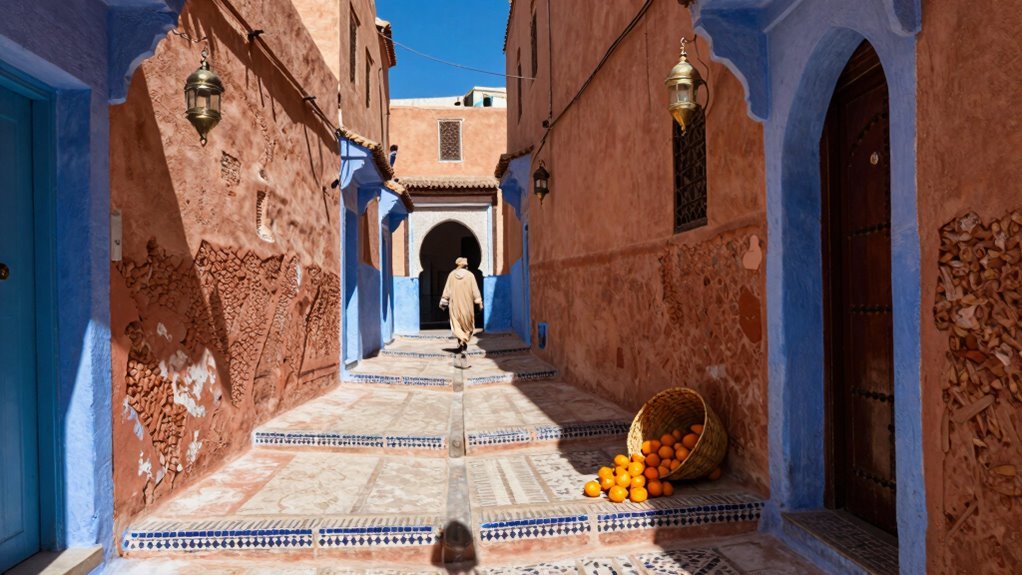

You’ll wander ochre medinas, sip mint tea on sunlit rooftops, and watch golden dunes shift under a star-swept sky. Visit in spring or autumn for mild weather, or head coastward in summer; plan 7–10 days for Casablanca, Fes and Marrakech, 10–14 to add Atlas treks or Sahara nights. Mix trains, buses and guided transfers, book desert camps and mountain guides ahead, carry cash and pack layers. Keep going to find routes, costs and packing lists.
Key Takeaways
- Best times: visit in spring or autumn for mild weather; winter for quiet medinas and snowy Atlas; summer for coast and Sahara.
- Ideal trip lengths: 7–10 days for Casablanca–Fes–Marrakech, 10–14 to add Atlas or Sahara, 2+ weeks for Essaouira and Chefchaouen.
- Getting around: combine trains, buses, rental cars, and guided transfers; buy ONCF tickets a day or two ahead.
- Must-dos: explore Marrakech souks, Fes tannery alleys, Chefchaouen’s blue lanes, Essaouira’s ramparts, and Sahara camel treks.
- Practical tips: carry cash, book desert/mountain trips with reputable operators, pack layers and sturdy shoes, and follow local etiquette.
When to Go, Trip Lengths, and Where to Start in Morocco
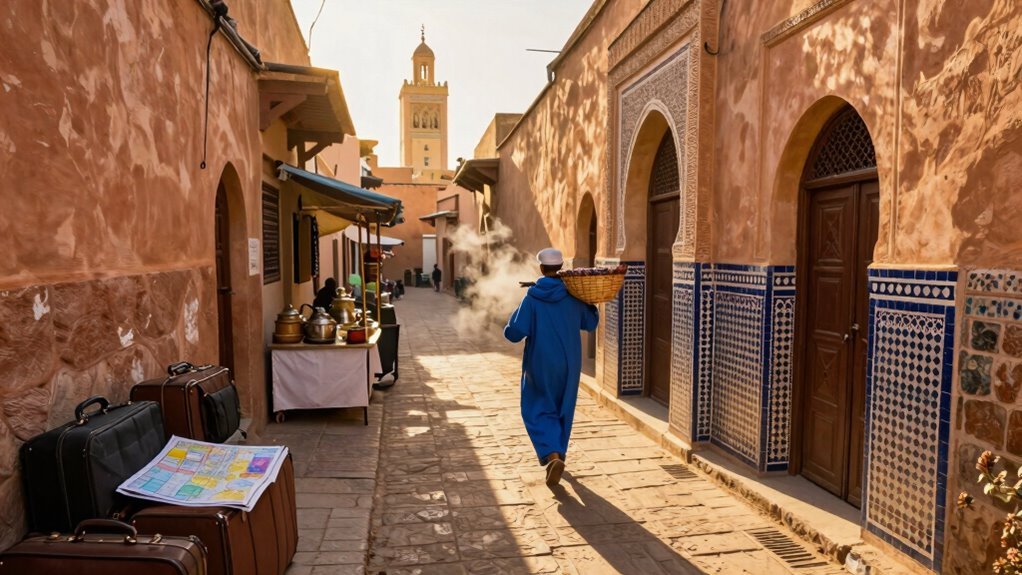
Because Morocco’s climate and crowds shift with the seasons, pick your timing to match the experience you want: go in spring or autumn for mild weather, blooming landscapes and comfortable city strolling; visit winter if you want quieter medinas and snowy Atlas peaks; and head to coastal towns or the Sahara in summer when beaches and desert camps offer an escape from inland heat.
You’ll time your trip around peak festivals for vivid street life, or savor off season benefits like empty riads and lower prices.
Plan 7–10 days to sample Casablanca, Fes and Marrakech; 10–14 to add Atlas treks or the Sahara; 2+ weeks to travel slowly and include Essaouira and Chefchaouen.
Start in Casablanca or Marrakech for easy flight links and layered introductions.
Consider visiting the Sahara via Merzouga or Zagora for authentic camel treks and desert camps.
Transport, Tickets, and How to Book Tours & Guides
Get around Morocco like a local by mixing trains, buses, rental cars and guided transfers—each mode offers a different slice of the country, from the sleek Al Boraq whizzing between Casablanca and Tangier to dusty 4x4s threading mountain passes and desert tracks.
Buy train and long-distance bus tickets a day or two ahead online or at stations to snag preferred times; opt for ONCF e-tickets for peace of mind.
Book guided desert or mountain trips through reputable agencies or your riad; ask about local permits for protected zones or valleys.
When hiring drivers or guides, confirm inclusions, language, and insurance.
Carry cash for small fares and follow local tipping etiquette—round up modest fares and tip guides 10–15% for excellent service.
Consider timing your visits to match regional seasonal highlights like fall foliage or mild spring weather for more comfortable travel.
Sample 10–19 Day Morocco Itineraries (Cities, Desert, Mountains)
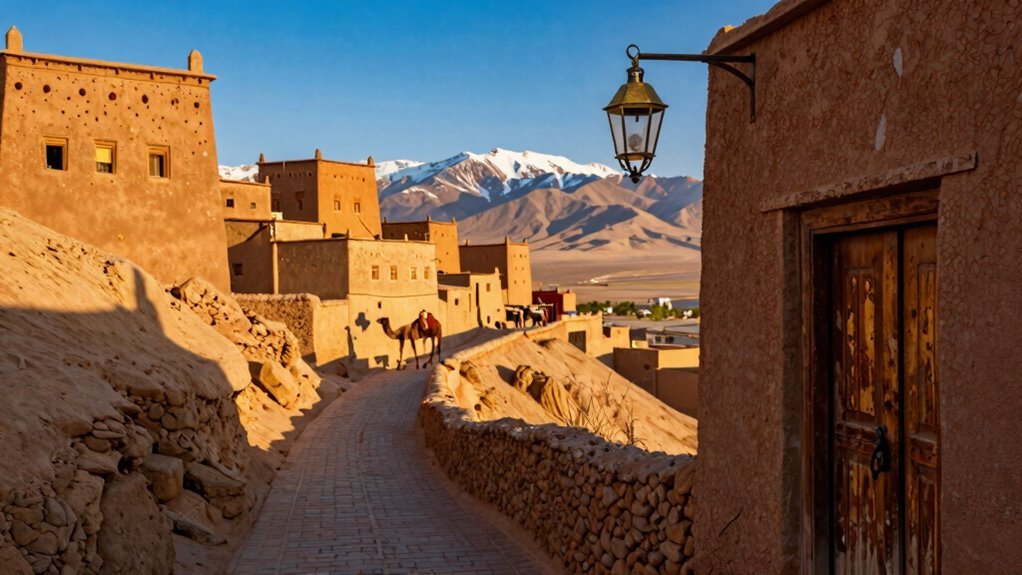
Now that you know how to move around Morocco—by train, bus, rented car or guided transfer—you can shape that logistics into an itinerary that balances city life, desert nights and mountain trails.
Now that travel options are clear, craft an itinerary blending medina nights, desert camps, and Atlas hikes.
Start with 3–4 nights in a vibrant medina, then take an overnight train or day coach south toward dunes, breaking the journey with coastal detours to Essaouira for wind-swept beaches.
Allocate two nights under stars in a desert camp, plus guided hikes in the Atlas with a local guide.
Mix cultural days—hands-on culinary workshops and souk explorations—with slower photo-friendly mornings: book photography tours to capture light on kasbahs and blue alleys.
Leave buffer days for relaxed travel, market returns, or unexpected discoveries.
Consider including a coastal or inland stop known for its thermal waters to combine relaxation with heritage sightseeing.
Top Experiences by Region: Casablanca, Marrakech, Fes, Chefchaouen, Essaouira, Atlas, Sahara
When you move through Morocco’s regions, each place delivers a distinct sensory story: Casablanca’s ocean-sliced skyline and the cavernous Hassan II Mosque contrast with Marrakech’s riot of ochre alleys, rooftop mint-tea sessions, and souks that wake at dusk; Fes invites you to lose and find yourself amid tannery scents and craftsmen’s slo-mo rhythms; Chefchaouen’s cobalt lanes make every photo feel like a painted pause; Essaouira breathes wind and surf into laid-back strolls along its ramparts; the Atlas offers cool terraces, village exchanges, and trekking routes that reveal Amazigh life; and the Sahara rewards long shadows over golden dunes, camel humps, and nights under an impossibly starry dome—so plan your days to mix guided insights with unhurried wandering, and book key sites and overnight desert camps in advance.
Wander Casablanca’s Art Deco boulevards, sip mint near the Corniche, lose yourself in Marrakech’s medina rhythms, trace Fes’s tannery alleys, get lost in Chefchaouen’s Blue Alleys, ride Essaouira’s windy ramparts, trek Atlas passes, and time Sahara sunsets for campfire stories. Plan your trip for spring or autumn to enjoy milder temperatures and fewer crowds.
Costs, Safety, Accommodation, and What to Pack
Although costs vary widely between riads and desert camps, you can stretch your budget without missing Morocco’s highlights by blending local meals and public transport with a few guided experiences; expect mid-range hotels in cities to run moderate prices, basic hostels and guesthouses to be very affordable, and luxury riads or private desert camps to command premium rates.
You’ll find currency exchange counters in airports and medina corners; compare rates and avoid airport rip-offs.
For safety, trust well-lit streets, polite locals, and common-sense vigilance.
Keep valuables secured and learn a few local etiquette phrases to ease interactions.
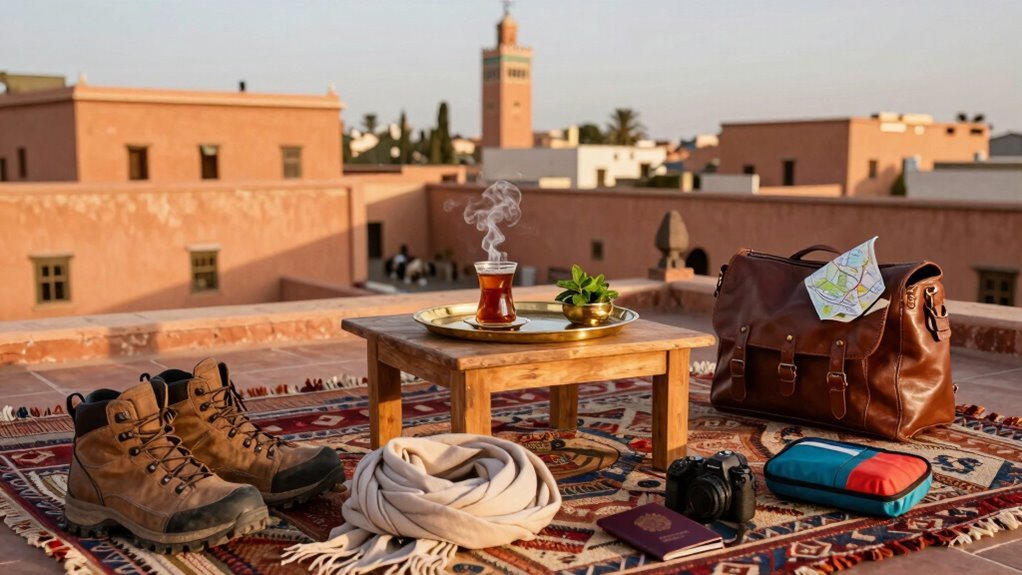
Pack layered clothing for hot days and cool nights, sturdy shoes for medinas and mountains, sun protection, a light scarf for conservative areas, and copies of travel documents.
Consider timing your visit for the winter months to enjoy milder weather and more comfortable outdoor exploration.
Frequently Asked Questions
Are There Any Cultural Customs I Should Avoid Offending in Markets and Riads?
Like a respectful guest at a family table, you should dress modestly and keep gestures calm.
In markets, negotiate politely, smile, and avoid haggling over trivial items; don’t touch goods or photos without asking.
In riads, keep noise low, remove shoes where asked, and respect privacy in courtyards.
For religious sites, cover shoulders and knees, don’t enter during prayers if discouraged, and follow hosts’ customs graciously.
Can I Use My International SIM Card or Is Local Wi‑Fi Sufficient?
You can use your international roaming, but getting a local SIM or portable hotspot usually works better and costs less.
In bustling medinas your phone will buzz with maps; riads often offer patchy Wi‑Fi, so a hotspot keeps streams and calls steady.
Buy a local SIM at the airport or a shop, top it up, and savor sending sunset photos from a rooftop cafe without hunting for a signal.
Are There Vegetarian or Halal-Specific Dining Options Widely Available?
Yes — you’ll find Vegetarian tagines and Halal certified restaurants across cities, their steam rising like spice-scented mist from market stalls.
You’ll spot veg bowls piled with chickpeas, roasted veggies, and saffron rice, and mosqueside eateries displaying halal certification.
Tip: ask for “bitaqet halal” or look for certificates in windows, book popular riads’ kitchens in advance, and enjoy bargaining for fresh produce at medina stalls for DIY meals.
What Tipping Etiquette Is Customary for Guides and Service Staff?
You’ll typically tip local guides 10–15% for half-day tours and a bit more for full-day or private guides; give small cash envelopes after a memorable experience.
For restaurant staff, round up bills or leave 5–10% in casual cafés and more in fine dining.
Picture handing a grateful note of dirhams after a desert trek or at a riad; it honors service, supports livelihoods, and reflects Morocco’s warm, personal hospitality.
Do I Need Any Vaccines or Travel Health Precautions for Morocco?
About 90% of visitors don’t need special vaccines beyond routine vaccinations, but you should check updates.
You’ll want hepatitis A and sometimes typhoid if you eat street food; consider rabies if you’ll trek with animals.
Pack a basic kit, drink bottled water, and buy travel insurance that covers medical evacuation.
Enjoy the spice-scented souks and mountain air, but stay prepared to keep your trip healthy and smooth.
Conclusion
You’ve tasted mint tea at a riad, watched sunset dunes swallow the horizon, and bargained under blue Chefchaouen stairways — now pause.
Let the chaos of medina souks sit beside the hush of Atlas trails; carry both in your pack.
Keep copies of documents, a refillable bottle, and patience for slow trains.
Return with sand in your shoes and stories that outshine postcards — Morocco changes your pace, then becomes part of it.
0 Comment