
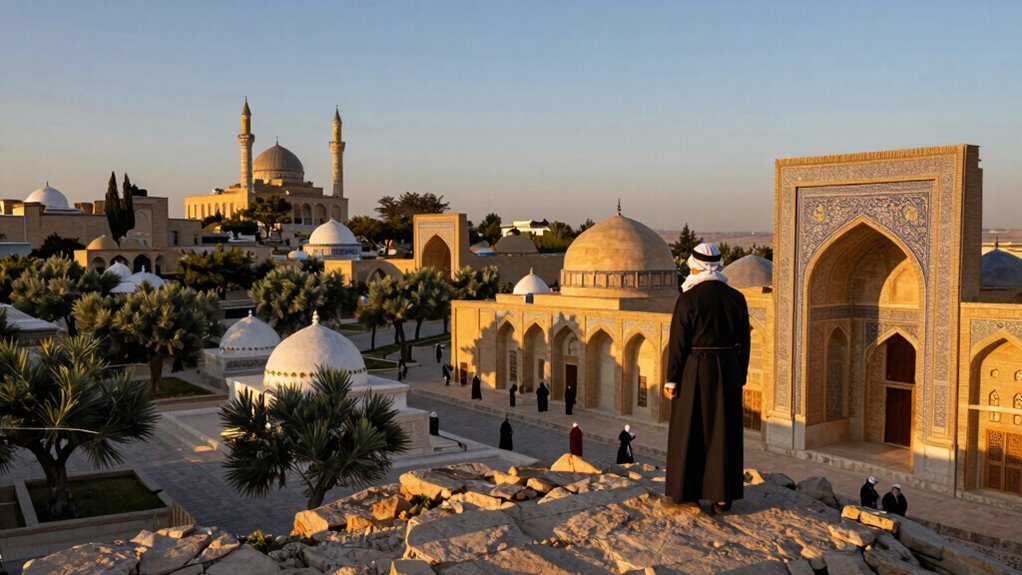

After tawaf and sa‘i, visit Maqam Ibrahim and drink Zamzam while making heartfelt dua; pause at Safa and Marwah to recall Hajar’s perseverance.
In Madinah, pay respects at the Prophet’s neighborhood, Masjid Al‑Bukhari, Masjid Umar and Masjid Abu Bakr, and reflect quietly at Masjid Ghamamah and Saqifah Garden.
Approach Jannatul Baqi and Jannat al‑Mu’alla with humility, recite Qur’an, and observe etiquettes.
Consider Jabal al‑Noor and Thawr for solitary reflection; further guidance and practical tips follow.
Key Takeaways
- Pause immediately after tawaf for focused supplication, brief ziyarat checklist, and voluntary prayers to seal your devotion.
- Visit Maqam Ibrahim, drink Zamzam, and reflect at Safa and Marwah to honor prophetic perseverance and rites.
- Explore Jabal al‑Noor (Cave of Hira) and Jabal al‑Thawr for quiet reflection on revelation and the Hijrah.
- Make respectful visits to Masjid An‑Nabawi’s nearby sites (Masjid Imam Al‑Bukhari, Masjid Umar, Masjid Ghamamah) for remembrance.
- Pay humble visits to Jannatul Baqi and Jannat al‑Mu’alla, reciting Qur’an and dua while observing local customs and timings.
Quick Guide: Which Ziyarat to Do Right After Tawaf
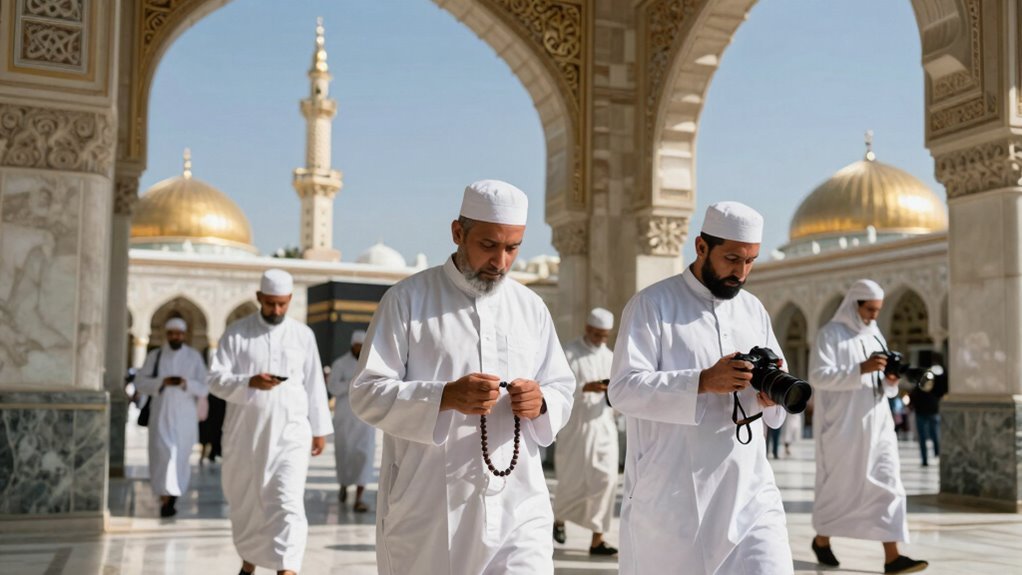
After completing your tawaf, head toward a few nearby ziyarat that deepen your worship and connect you to the Prophet’s life and early Islamic history. You’ll want to pause for a focused post‑tawaf supplication, asking for guidance and forgiveness before moving on.
Use a short ziyarat checklist: intention, respectful dress, silence for reflection, and brief dhikr at each site you visit. Consider sites linked to the Prophet’s companions and early community to feel the continuity of faith.
Walk with humility, read concise ziyarat texts, and offer voluntary prayers where appropriate. Keep visits purposeful rather than rushed; quality of devotion matters more than quantity.
Finish by recording personal lessons and dua for lasting spiritual benefit. Also consider visiting nearby historical sites such as Jannat al-Mualla Cemetery to connect with the early figures of Islam.
Top Ziyarat Near Masjid An‑Nabawi
Explore the area around Masjid an‑Nabawi with intention and calm, focusing on a handful of nearby ziyarat that deepen your connection to the Prophet and his companions.
You’ll visit small mosques and sites that invite reflection: Masjid Imam Al‑Bukhari to honor scholarship, Masjid Umar and Masjid Abu Bakr to remember leadership, and Masjid Ghamamah for its prophetic gatherings.
Walk to Saqifah Garden to contemplate the early community’s decisions and the unity that followed.
Each spot is within easy reach, so you can move slowly, pray, and make dua.
Respectful silence and brief reflection will enrich your visit, helping you feel connected to faith, history, and the humility of those who served Islam.
Bring essential documents and modest, comfortable clothing during your visit, keeping items like your passport, vaccination certificate, and unscented clothing for Ihram easily accessible and secure, especially when moving between sites and accommodations with important documents.
Jannatul Baqi & Jannat al‑Mu’alla : Visiting Tips and Etiquette
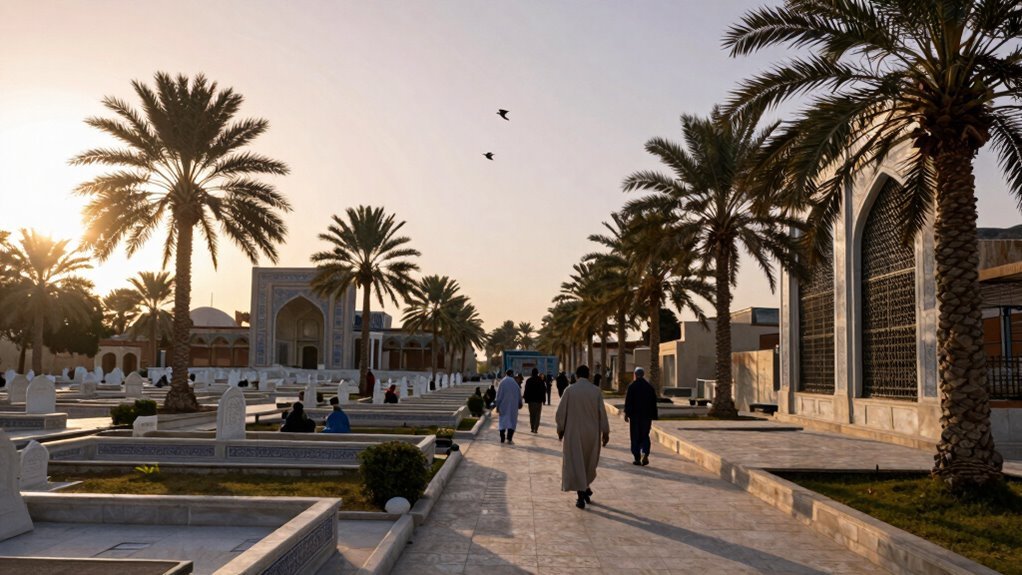
Having spent time near the Prophet’s mosque, you can continue your quiet remembrance by visiting Jannatul Baqi and Jannat al‑Mu’alla, two cemeteries that invite solemn reflection and prayer for those buried there.
Approach each grave with humility, observing simple graveside etiquette: keep voices low, avoid ornate rituals, recite Qur’an and dua, and face the qibla when possible.
Respect local customs and dress conservatively; separate areas may apply. Check visitation timings to avoid busy prayer periods and to make certain entrances are open, especially during Ramadan and Hajj seasons.
Spend a few moments in silent supplication for the deceased, remember their service to the ummah, and leave gently, carrying lessons of mortality and gratitude back to your worship.
You may also consider visiting nearby cultural sites such as Al-Balad District to experience historic architecture and a reflective atmosphere.
Essential Makkah Sites After Tawaf and Sa’i
Once you complete tawaf and sa’i, turn your steps toward a few nearby sites that deepen the spiritual arc of your pilgrimage: the Maqam Ibrahim, where you can reflect on Prophet Abraham’s devotion; the Zamzam well, whose water invites you to make heartfelt supplications; and Masjid al-Taneem (Masjid Ayesha), where many enter ihram for additional umrah intentions.
You should pause at Maqam Ibrahim to ponder Maqam Ibrahim significance and at the Zamzam source to drink and pray. Learn Safa Marwah history as you recall Hajar’s perseverance during sa’i. Plan a respectful, measured visit; bring modest silence and focused dua.
Al-Baraka Market nearby also offers premium Ajwa dates and traditional foods that connect pilgrims with the region’s date heritage.
Reflection Spots: Jabal Al‑Noor, Jabal Al‑Thawr and Quiet Caves
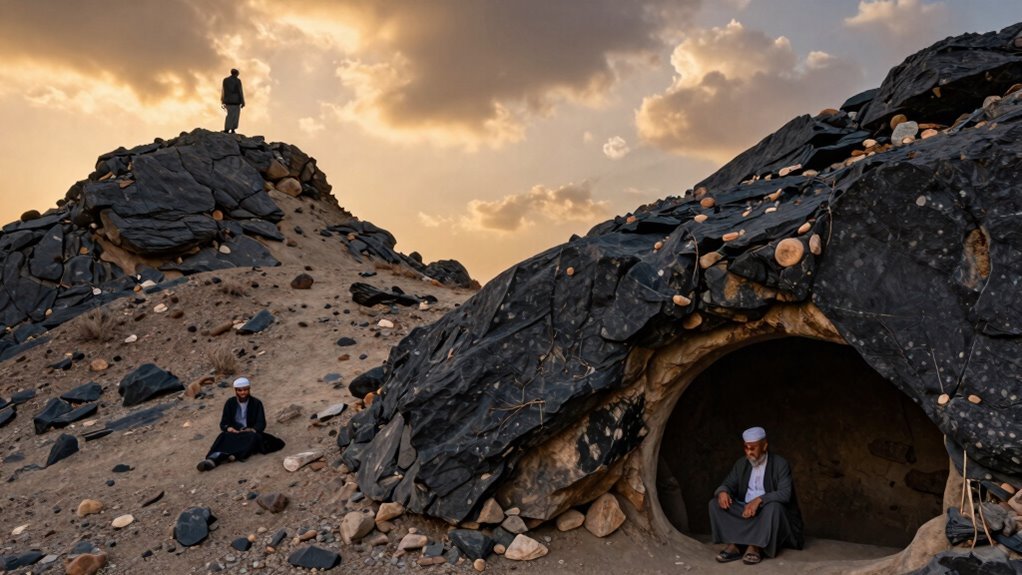
A quiet ascent to Jabal al‑Noor or Jabal al‑Thawr invites you into the most contemplative moments of the pilgrimage, where the Cave of Hira on Jabal al‑Noor recalls the first revelation and Jabal al‑Thawr remembers the Prophet’s refuge during the Hijrah.
You’ll plan a Sunrise climb to avoid heat and crowds, timing your steps with dawn light to deepen your Cave reflection.
On the path you’ll pause for prayer, dhikr, and quiet study of the Prophet’s trials.
The terrain teaches humility; the view rewards gratitude.
Small caves and secluded spots nearby offer space for private supplication and reading Qur’an.
Visit with reverence, keep cleanliness, and let these silent places turn your recent rituals into lasting spiritual resolve.
Prepare ahead by ensuring your hydration and health needs are managed, especially in hot conditions.
Frequently Asked Questions
Can Non‑Muslims Visit These Ziyarat Sites?
Yes by coincidence you might arrive right when gates open, but access policies vary: non‑Muslims can visit some historical sites nearby, while holy precincts like the Grand Mosque areas restrict entry.
You should respect cultural sensitivity, follow signage, and ask authorities about permitted zones.
You’ll find informative tours and reflective spots outside restricted sanctuaries; stay devout, polite, and prepared to show ID or follow specific visitor rules for each site.
Are Guided Tours Necessary or Recommended for Ziyarat Visits?
You don’t need guided tours, but they’re often recommended.
You can choose private guides, group guides, self guided visits, or audio guides depending on your needs.
Private guides offer deep, personalized context; group guides provide fellowship and structure.
Self guided visits or audio guides let you reflect quietly at your own pace.
Trust your intention, seek reputable guidance, and prioritize respectful behavior and prayerful reflection throughout each ziyarat spot.
What Items Are Appropriate to Bring to Cemeteries?
You should bring modest items: clean clothes, a prayer rug, water, and a tasbih for dhikr. Avoid food offerings or leaving perishable gifts; they’re discouraged and can disrespect the graves.
If you place flowers, be prepared for flowers removal by caretakers and don’t expect them to remain. Bring respectful intentions, dua, and knowledge to recite; keep your visit quiet and reflective, honoring the departed through prayer rather than material tokens.
Are There Specific Dress Codes for Men and Women at Each Site?
Yes you should follow modest attire and gender etiquette everywhere; no you don’t need ceremonial armor.
You’ll wear modest attire: men in loose non-revealing clothes; women in garments covering hair arms and legs.
You’ll respect gender etiquette by avoiding close physical contact and keeping appropriate distances in prayer areas and cemeteries.
You’ll act reverently speak softly and prioritize intention over ornamentation while reflecting on sacred history.
Can Disabilities or Mobility Issues Be Accommodated During Ziyarat?
Yes you can be accommodated. Many ziyarat sites provide wheelchair access and sensory accommodations; ramps, reserved seating, accessible toilets, quiet spaces, and guided assistance help you participate.
Plan ahead: contact site authorities or your travel group for escorts, timing, and mobility-friendly routes. Bring necessary aids and a companion if possible.
You’ll find thoughtful staff and facilities aiming to preserve your dignity, reflection, and devotional experience despite physical limitations.
Conclusion
You’ve completed tawaf and stood in humble praise—now let your feet keep the prayer alive as you visit these sacred sites.
Walk slowly through Masjid An‑Nabawi and pause at the Prophet’s grave, breathe deeply in Jannatul Baqi and Jannat al‑Mu’alla, then turn your heart toward Makkah’s honored spots after sa’i.
Climb to Jabal al‑Noor or Thawr, letting the stones whisper history; each step renews faith, like lanterns waking in dusk.
0 Comment