
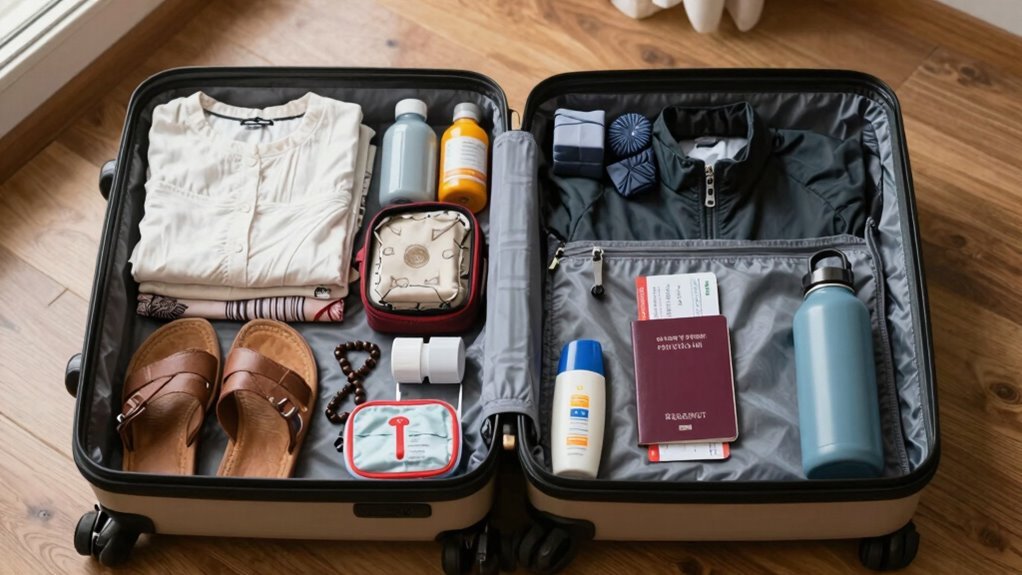

Pack smart and secure: keep your passport with Hajj visa, vaccination certificates, printed and digital copies, and SAR/credit cards in a waterproof pouch. Bring durable, breathable ihrams (two plus sets) and modest clothing, broken-in sandals and trainers, plus blister care.
Use a 20–25L daypack for water, snacks, meds, toiletries, and a compact sleeping mat for Muzdalifah. Include prescription meds with letters, a charger/power bank, pocket Quran and dua booklet. Continue for full step-by-step packing guidance.
Key Takeaways
- Pack passport, Hajj visa, vaccination certificates, photocopies, and digital backups in waterproof holders, with spare passport photos and emergency contacts.
- Bring two–three ihram sets (men) or 4–6 breathable abayas and neutral hijabs (women), plus moisture-wicking undergarments and a waterproof spare.
- Use labeled packing cubes and a medium hard-shell suitcase (70 cm), plus a 20–25L daypack for Mina/Arafat/Muzdalifah essentials.
- Carry medicines in original containers with prescriptions and physician’s letter, split between carry-on and checked luggage, plus a compact first-aid kit.
- Pack charging essentials: Type G adapter, 10,000–20,000 mAh power bank, spare cables, unlocked spare phone for local SIM and a multi-port charger.
Essential Documents, Money & Vaccinations for Hajj
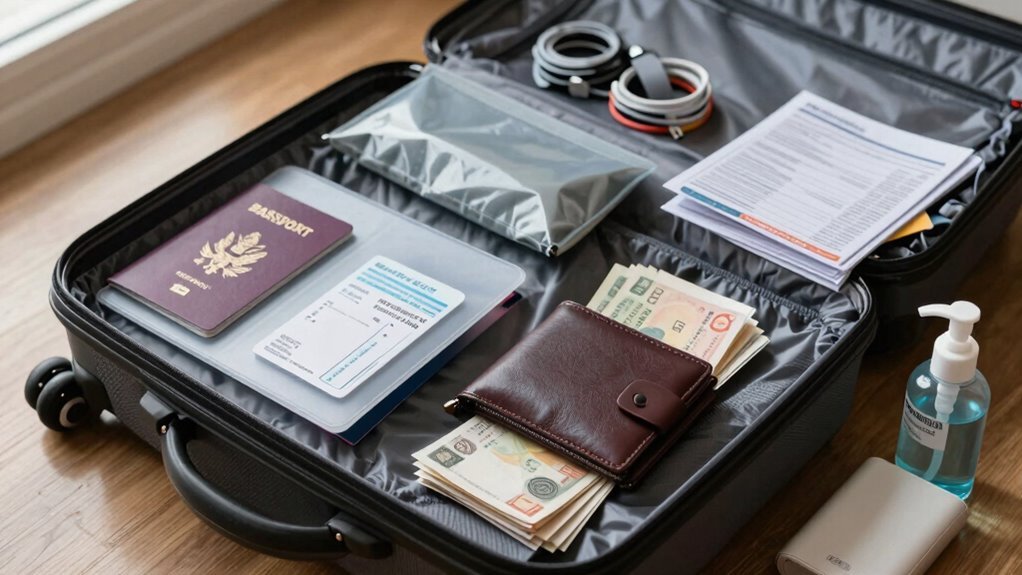
Start by organizing your essential documents and money so you can focus on worship, not logistics. Keep your passport with a valid Hajj visa in a waterproof holder and carry three printed color copies—one on you, one in checked luggage, one with someone trusted.
Bring official vaccination certificates (meningococcal ACWY, COVID-19, and any country-specific shots) and four passport-sized photos; keep digital scans of passport, visa, travel insurance, prescriptions, and photos in secure offline storage.
Carry SAR/foreign currency for immediate needs and at least two credit/debit cards after notifying your bank to prevent blocks. Pack photocopies of prescriptions and a printed list of emergency contacts (group leader, 24/7 operator, consulate) in your day bag for quick access.
Begin preparing your body for the hotter, drier climate weeks before departure by increasing water intake and acclimating gradually.
Hajj Clothing & Ihram Essentials
When packing for Hajj or Umrah, think about the right ihram fabric and how many sets you’ll need — men should aim for at least two thicker cotton or towelling sets (or quick‑dry Turkish blends) so you can change if needed.
Pick two pairs of flat, soft, waterproof sandals for the rituals (open‑toe for men where required) and bring supportive trainers or slip‑ons for long walks.
For everyday modest clothing, choose breathable, wrinkle‑resistant pieces — women usually take 4–6 abayas with neutral hijabs — and don’t forget quick‑dry towels and a small laundry kit so you can rotate outfits easily.
Keep your vaccination certificates, especially meningitis ACYW135, and other health records with your travel documents to ensure smooth entry and care if needed, and store them with your vaccination certificates.
Ihram Fabric & Quantity
Although ihram must be unstitched and plain, you should pack at least two complete sets (izar and rida) made from breathable, quick-dry fabrics—Turkish cotton, bamboo blends, or slightly thicker towelling—to balance comfort, durability, and faster drying during frequent washes.
Pack unstitched ihram sets that are durable: a towelling ihram or cotton ihram works well for repeated use and rubbing.
Aim for a practical number of ihrams: two on-hand and a third as backup.
Pack extra ihram in a waterproof ziplock to keep it clean; store spares in checked luggage and keep one ihram carry-on for arrival and transfers.
Bring small safety pins or clips and a thin pouch under your folds to secure essentials without breaking rules.
Consider coordinating Ihram choices with your group’s accommodation needs to ensure quick access to laundry facilities and suitable drying space.
Footwear For Rituals
After packing your ihram sets and a spare in a waterproof pouch, give equal care to footwear since long tawaf, sa’i and transfers will test your feet more than clothing. Bring two pairs of flat, soft walking sandals (men) or supportive sandals/walking shoes (women), plus waterproof slippers for showers. Break in footwear at least two weeks before travel and pack blister prevention supplies. Carry closed trainers for rami and tougher transfers. Use quick-drying materials and label a pair to stay with your day backpack. Keep an accessible shoe bag for entering the Haramain. Consider vaccine and health requirements when planning extended trips and packing essentials for health and safety.
| Purpose | Recommendation |
|---|---|
| Ritual walking | Flat walking sandals, supportive sandals |
| Showers/tents | Waterproof slippers |
| Rough days | Closed trainers |
| Comfort prep | Break in footwear |
| Protection | Blister prevention, shoe bag |
Modest Everyday Clothing
Because you’ll be moving between intense rituals, long walks and crowded, air‑conditioned spaces, pack modest everyday clothing that balances breathability, coverage and quick‑dry convenience.
Men should include two ihram sets (plus an extra) in thicker towelling or Turkish cotton; women should bring 4–6 loose, breathable outfits—abayas or long tunics—with at least two neutral hijabs for daily use.
Select lightweight fabrics and quick-dry outfits to handle sweat and washing.
Pack 7–10 moisture‑wicking undergarments, unscented socks, a lightweight cardigan or jacket for cool nights, and two pairs of sandals plus supportive trainers for long rites.
Store complete daily sets in labeled packing cubes or zip‑lock bags, and bring a small over‑door hook or string bag to hang and access clothes easily during Hajj or Umrah.
Consider timing your trip for milder weather to make these clothing choices more comfortable and practical.
Luggage Strategy for Mina, Arafat & Muzdalifah
When you plan luggage for Mina, Arafat and Muzdalifah, think small, accessible, and multifunctional: keep a lightweight day/backpack with water, electrolyte sachets, snacks and a compact first-aid kit for long days, a thin sleeping mat and compact sleeping bag or sheet for Muzdalifah nights, Ihram-safe toiletries in a clear ziplock, secure storage for valuables, and a single power solution with short cables and a torch so you won’t need to return to your main luggage during the busiest parts of Hajj.
Pack a small backpack or simple drawstring bag (20–25L) with a 500ml–1L water bottle, 1–2 electrolyte sachets, dates and nuts.
Include wet wipes, fragrance‑free soap, lip balm and a foldable istinja jug.
For Mina tent stays bring a lockable pouch, over‑door hook, plastic bags for dirty clothes, a shoe bag, power bank and earplugs.
Also remember to prepare required health documents and vaccinations, especially the meningitis vaccine, before travel.
Toiletries, Medication & First-Aid for Hajj
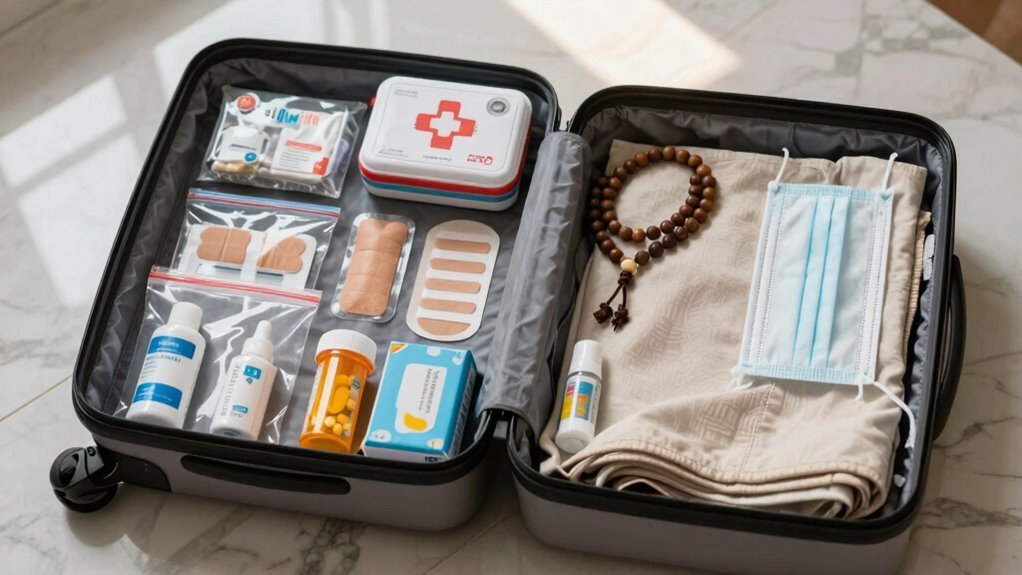
You’ve already planned a compact day bag for the long hours in Mina, Arafat and Muzdalifah; now give the same practical attention to what you’ll carry on and in your main luggage for health and hygiene.
Pack all prescription medications in original labeled containers with a physician’s letter, a trip supply plus an extra week, and split doses between carry-on and checked bags.
Include a small first aid kit with adhesive and blister plasters (hydrocolloid), antiseptic wipes, sterile gauze, medical tape and barrier cream for chafing.
Bring OTC essentials and electrolyte sachets (20–30 servings for two weeks).
Carry inhaler/epipen and diabetic supplies (insulin in a cool pack if needed) with instructions and a list of generic drug names.
Use only unscented toiletries and extra wet wipes/toilet tissue.
Ensure you have travel documents and evidence of vaccinations or medical clearances where required, including any Health and character paperwork linked to visa or entry requirements.
Electronics, Chargers & Daily Travel Gadgets
Bring reliable charging gear so your devices stay usable for navigation, apps, and recordings throughout Hajj or Umrah. I recommend packing a 10,000–20,000 mAh power bank and a multiport USB charger so you can charge several things at once.
Don’t forget a Type G travel adapter and a short extension lead — those outlets get scarce, so having an extra lead helps. Label spare cables so you can share them without confusion.
Also bring earphones and an old carrier‑unlocked spare phone for local SIMs or for playing offline audio; that way you can preserve your main device’s battery. Consider using a local SIM card for cheaper data and calls while in Saudi Arabia.
Essential Charging Gear
Although you’ll rely mostly on your phone for maps, communication and photos, pack charging gear that keeps devices powered without drama; prioritize a high-capacity power bank (10,000–20,000 mAh), a Saudi Type G or universal adapter with multiple USB-A and USB-C ports, original plus spare cables, and a multi-port charger or surge-protected extension to handle scarce outlets in tents.
Bring a power bank ≤100Wh to meet airline rules and recharge phones multiple times.
Choose a Type G travel adapter or quality universal unit with USB-C and USB-A ports so everyone can top up.
Pack spare charging cables and labelled cables or different colors to avoid swaps.
Include a multi-port USB charger or 4-gang extension surge protector for Mina/Muzdalifah.
Carry an old carrier-unlocked spare phone with a local SIM for emergencies.
Verify the agency’s credentials and certifications and confirm authenticity before paying any fees.
Portable Power & Adapters
Next to spare cables and a power bank, portable power and the right adapters will keep your devices working through long days in Mina, Arafat and Muzdalifah.
Bring a high-capacity power bank (≥10,000 mAh) and know carry-on airline rules (usually ≤100 Wh without approval).
Pack a universal travel adapter (Type G) with USB-C and USB-A ports so you can charge multiple items at once.
Add a multipoint USB charging hub or short 4-gang extension lead with surge protection and a fused UK plug to share scarce sockets.
Carry extra charging cables and a compact multi-cable in a zip pouch.
For backup, include a portable solar/hand-crank charger or a second power bank.
Label batteries/chargers with your name to avoid loss.
Ensure your travel planner or agency provides 24/7 emergency support so you can get help quickly if power or equipment issues affect your trip.
Prayer Kit: Quran, Duas & Practical Aids to Pack
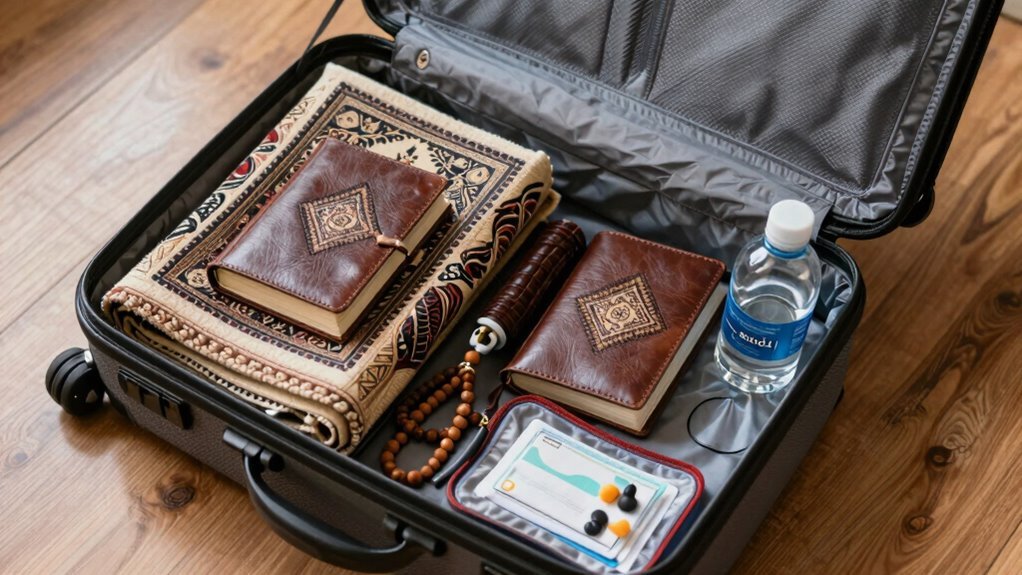
When you prepare your prayer kit, focus on compact, durable items that support worship and remembrance throughout the journey: a pocket-sized Quran in clear script kept in a waterproof pouch, a printed dua booklet with translations plus a short Arafat/day-specific list in your native language, and at least four extra passport photos for paperwork.
Pack a small prayer mat that folds easily and a compact tasbeeh or digital dhikr counter to keep track during tawaf and sai. Load your phone or e-reader with dua apps and audio khutbahs, carry spare earphones, and include a reliable power bank (≥10,000 mAh).
Bring a Qibla compass/app, a tiny notebook and pen for personal supplications, and printed Arafat duas for quick reference.
Final Packing Checklist + Where to Buy & Store Locally
Now that your prayer kit is set, finish by packing light and smart: aim to keep checked bags under typical 23–28 kg limits and reserve one medium hard-shell suitcase (≤70 cm) so you have room for purchases and Zamzam.
Use this Hajj Packing Checklist to prioritize essentials, stash passports and vaccination certificates in a waterproof document pouch in your carry-on, and keep photocopies in checked luggage plus digital backups.
Carry a small day bag with medicines, snacks, electrolyte sachets, phone, charger, money pouch, and a 500 ml Zamzam water or empty water bottle to refill.
Buy locally bulky or replaceable items (thobes, towels, sandals, chargers) at Makkah/Madinah markets or Bin Dawood to save weight.
Pack clothes in zip-lock cubes, toiletries sealed, and bring a foldable duffle for returns.
Frequently Asked Questions
How to Pack a Bag for Hajj?
Pack light and purposeful: start with Ihram essentials and Travel documents in a waterproof pouch in your carry-on.
Add a Medication kit, lightweight toiletries (fragrance-free), and Comfort footwear packed with socks.
Include a Portable prayer mat, Laundry solutions like a small detergent and travel clothesline, and Electronics chargers with power bank.
Use packing cubes for outfits, keep valuables in a theft‑resistant pouch, and reserve a day backpack for rites and water.
What Is a Female Haji Called?
You’re called a Hajjah, yes, a Hajjah, loud and proud — the female pilgrim title honoring women pilgrims who’ve completed Hajj.
You’ll hear it used as the hajjah title after names, reflecting hajji etiquette and hajji responsibilities.
As a female muhrim you follow female ihram rules and women in pilgrimage guidelines.
You’ll respect customs, observe rites, and balance practical needs with spiritual focus throughout the journey.
What Are the Common Mistakes to Avoid During Hajj?
You should avoid common mistakes during Hajj: Overpacking toiletries and bulky bags, Ignoring footwear choices, Skipping hydration, Forgetting documents or backup copies, Poor timekeeping for rites, Neglecting health and medications, Inadequate rest between rituals, and Disregarding etiquette with fellow pilgrims.
Plan light, pack essentials, carry meds and copies, schedule rest and prayer times, wear proper shoes, drink regularly, and respect others to keep your pilgrimage safe and focused.
What Is a Good Snack for Hajj?
Think comfort food: nutritious dates and portable nuts are ideal, and you’ll want energy bars and protein bites for steady fuel.
Pack dry fruits, granola clusters, and fruit leather for quick, mess-free calories, plus sea salted crackers to replace sodium.
Keep them in resealable bags or vacuum packs, carry 1–2 items per active hour, and choose heat-tolerant options so you’ll stay energized, hydrated, and steady during long rituals.
Conclusion
You’ll leave with light luggage but heavy purpose: a small bag of essentials beside a heart full of intentions. As you pack documents, clothing, meds and prayer items, remember that meticulous planning meets humble surrender — your organized suitcase supports spontaneous devotion.
Practical lists free you to focus on worship; thoughtful simplicity honors the pilgrimage. Carry what you need, not what comforts you, and let every folded garment remind you why you came.
0 Comment