
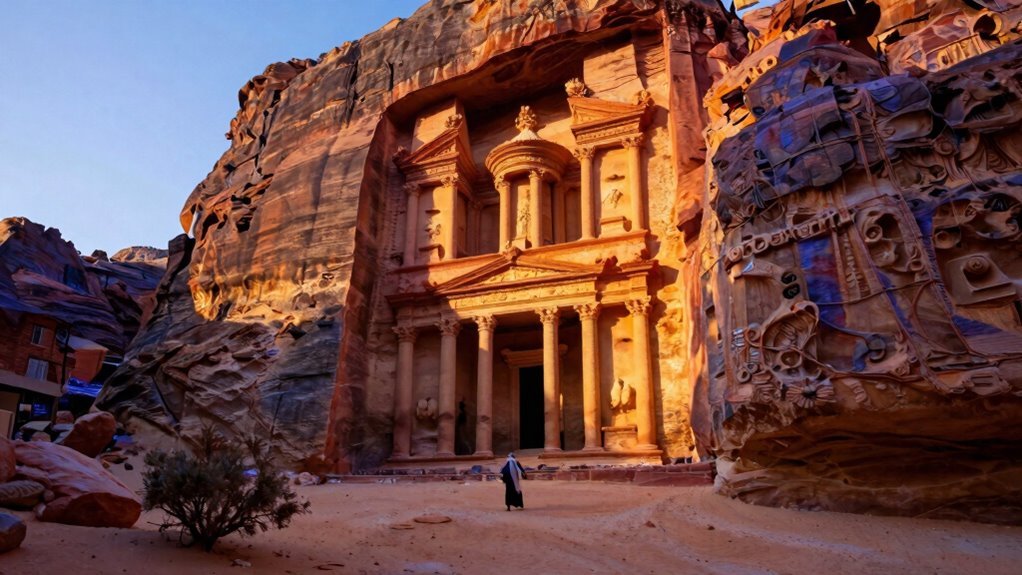

You’ll explore Jordan’s highlights — from Petra’s rose-red siq and the Monastery’s climb to Wadi Rum’s vast sandstone deserts and starlit camps — while floating in the Dead Sea and tracing mosaics in Madaba. Pack lightweight layers, sturdy shoes, a refillable bottle and modest clothing; secure permits for Wadi Mujib and Dana where needed. Use shared minibuses or rent a car for remote spots, book Petra tickets in advance, and plan hikes for golden hours. Keep going to get practical day-by-day plans, permits and safety tips.
Key Takeaways
- Prioritize Petra, Wadi Rum, Dead Sea, Dana Reserve, Madaba, and Mount Nebo for a balanced historical, desert, and natural itinerary.
- Time visits in spring or autumn for comfortable weather, sunrise/sunset photography, and fewer crowds.
- Pack lightweight layers, sturdy shoes, swim kit, headlamp, refillable water bottle, and modest clothing for religious sites.
- Use shared minibuses, rental cars for remote areas, and licensed guides or permits for Wadi Mujib, Dana, and technical trails.
- Book Petra tickets and Wadi Rum camps in advance, carry cash for markets, and follow cultural etiquette and safety guidance.
Essential Checklist & 3–7 Day Sample Itinerary for Jordan
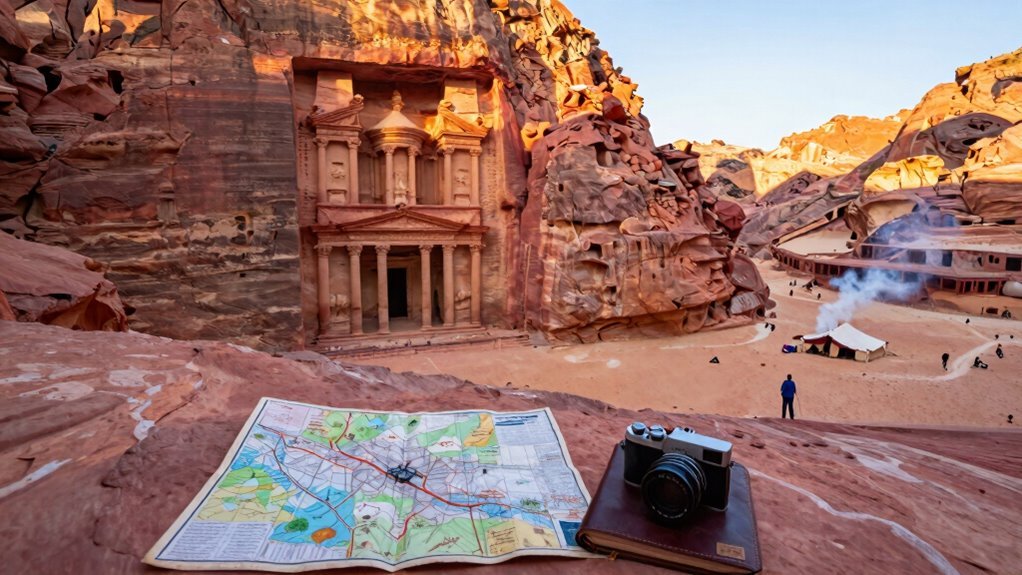
If you want to make the most of Jordan in 3–7 days, plan with purpose: pack lightweight layers for hot days and cool nights, sturdy shoes for rocky sites like Petra and Wadi Rum, a swim kit for the Dead Sea, a refillable water bottle, sun protection, and a compact first-aid kit.
Use a clear packing checklist so you won’t forget chargers, a headlamp for Petra’s trails, modest clothing for religious sites, and cash for remote markets.
A tight 3-day loop hits Amman, Petra, and Wadi Rum; a 5-day adds the Dead Sea and Mount Nebo; a 7-day includes Wadi Mujib or Dana Reserve.
Respect cultural etiquette—dress modestly, ask before photos, and greet hosts warmly—to make connections memorable.
Consider purchasing the Jordan Pass to save on visa and major-site entry fees when eligible.
Best Time to Visit & Regional Weather Tips
Because Jordan’s climate shifts dramatically by region and season, choosing when to go makes a big difference in what you’ll experience.
Jordan’s weather varies widely by region and season, so timing your visit profoundly shapes the experience.
You’ll find mild springs and autumns ideal for Petra and Dana hiking, hot summers perfect for Dead Sea floating but oppressive inland, and chilly winters with possible snow on higher trails.
Plan climate photography around golden hours in Wadi Rum and sunrise at Mount Nebo.
Balance comfort with travel budgeting: shoulder seasons save money and avoid crowds.
- Spring (Mar–May): wildflowers, comfortable days, cooler nights
- Summer (Jun–Aug): intense heat, best for early mornings, Dead Sea dips
- Autumn (Sep–Nov): stable weather, excellent hiking conditions
- Winter (Dec–Feb): cooler highlands, occasional snow
- Flash flood note: avoid narrow wadis during storms
Also consider combining desert and coastal stops to experience both red-rock landscapes and stunning coastline scenery.
Getting Around: Transport, Permits & Safety
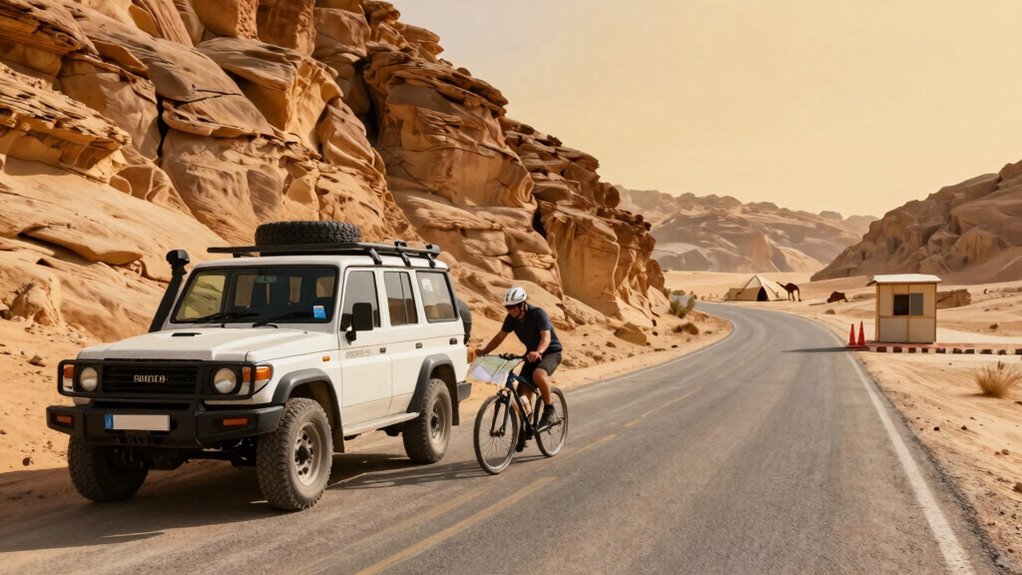
Having picked the best season for your visit, you’ll want to plan how you’ll move between Jordan’s dispersed highlights. Each site demands a different approach.
Use reliable local transport: shared minibuses for short hops, private taxis for flexible schedules, and rental cars for remote spots like Dana or Wadi Rum. Domestic flights are limited; coach services link Amman, Aqaba and the Dead Sea region.
Secure permits where required. Wadi Mujib canyoning needs entry reservations, and some reserves limit access seasonally.
Stay safe: drive cautiously on winding desert roads, carry water, and keep emergency contacts handy. Respect cultural etiquette: dress modestly near religious sites, ask before photographing people, and accept hospitality politely.
Ask locals for current conditions; they’re your best guide. The UK’s extensive public transportation network offers useful rail travel lessons for planning efficient connections.
Petra, Jordan: Must-See Spots, Timings & Entry Tips
When you plan your visit to Petra, try going in spring or late autumn mornings — that way you’ll avoid the worst of the heat and the sandstone façades look their best in that soft light.
Start out with the Siq and the Treasury, then make your way up to the Monastery; after that, check out the Royal Tombs and the theatre so you get the most out of your time there.
It’s a good idea to buy tickets in advance, wear comfortable shoes, and factor in extra time and plenty of water.
You can also join a guided tour, take an evening visit, or save money with a discounted multi-day pass.
Many visitors also enjoy relaxing along the nearby Red Sea Corniche for scenic views and a peaceful end to their day.
Best Time To Visit
If you want to make the most of Petra, plan your visit for spring (March–May) or autumn (September–November), when temperatures are mild, the light on the sandstone is at its most dramatic, and crowds are thinner than in peak summer.
These shoulder seasons balance pleasant hiking conditions with vibrant colors along the Siq and Treasury.
Summer’s peak months (June–August) bring heat and larger tour groups, while winter can be chilly and occasionally wet.
Visit early morning or late afternoon for softer light and fewer people.
Bring layers for cool desert nights and warm midday sun.
Reserve tickets ahead in peak months to avoid lines.
Stay hydrated; water stations are limited on long routes.
Consider Petra by Night on select evenings for a quiet, lit experience.
For additional cultural context and local customs, remember that Moroccan-style hospitality, such as offering mint tea, reflects wider regional hospitality traditions in nearby countries hospitality customs.
Top Must-See Sights
Start your Petra visit early to beat the heat and the crowds: walk the Siq’s cool, shadowed gorge toward the Treasury as the morning light sharpens the sandstone’s reds and golds.
You’ll linger at the Treasury, then climb to the High Place of Sacrifice for sweeping views, and descend to the Roman theatre and royal tombs carved into rosy cliffs.
Hike out to the Monastery; its scale rewards the effort, and explore narrow alleyways where Nabataean craftsmanship surprises you.
Time your visit to sample local cuisine in nearby Wadi Musa and catch cultural festivals that bring music, dance, and storytelling to ancient stone.
Bring sturdy shoes, water, and a sense of wonder; Petra reveals itself step by patient step.
The experience connects you to a long human story of construction and defense, much like the layered history seen in China’s Great Wall, where successive dynasties expanded and reinforced fortifications.
Entry Fees & Tips
Because Petra’s site is vast and protected, you’ll want to plan costs and timing before you go: standard day tickets vary by season and nationality, with discounted rates for children and higher prices for single-day international visitors compared with multi-day passes.
Expect to pay extra for guides, camera permits, and evening shows.
Learn cash policies; some vendors and remote services accept only cash, so carry Jordanian dinars and small notes.
Respect local etiquette: dress modestly, ask before photographing people, and tip guides and mule handlers fairly.
To help you prepare:
- Buy tickets at the official visitor centre or trusted vendors to avoid scams.
- Consider a two- or three-day pass for a relaxed pace.
- Confirm opening hours and seasonal closures in advance.
- Agree prices upfront for rides or mules.
- Use ATMs in Wadi Musa; carry emergency cash.
Also plan visits during the cooler months similar to Qatar’s optimal season timing to make outdoor exploration more comfortable.
Wadi Rum: Tours, Camps & Sunrise/Sunset Advice
When you arrive in Wadi Rum the landscape immediately feels otherworldly, and the best way to experience it’s by joining a guided tour and staying at a desert camp that puts you right among the sandstone formations and amber dunes.
Choose a jeep or camel tour to access soaring cliffs, narrow canyons and hidden rock bridges; guides share local history and practical safety tips.
Camps range from basic Bedouin tents to luxe bubble suites with private views.
Time your visit for sunrise or sunset when colors shift from gold to deep crimson — photographers love both.
Evenings bring Bedouin storytelling and Night stargazing; bring warm layers, a headlamp, and a camera with long-exposure capability for unforgettable desert skies.
For a more secluded experience consider visiting lesser-known desert areas that offer off-road adventures and exceptional stargazing.
Dead Sea & Wadi Mujib: Bathing, Viewpoints & Canyoning Rules
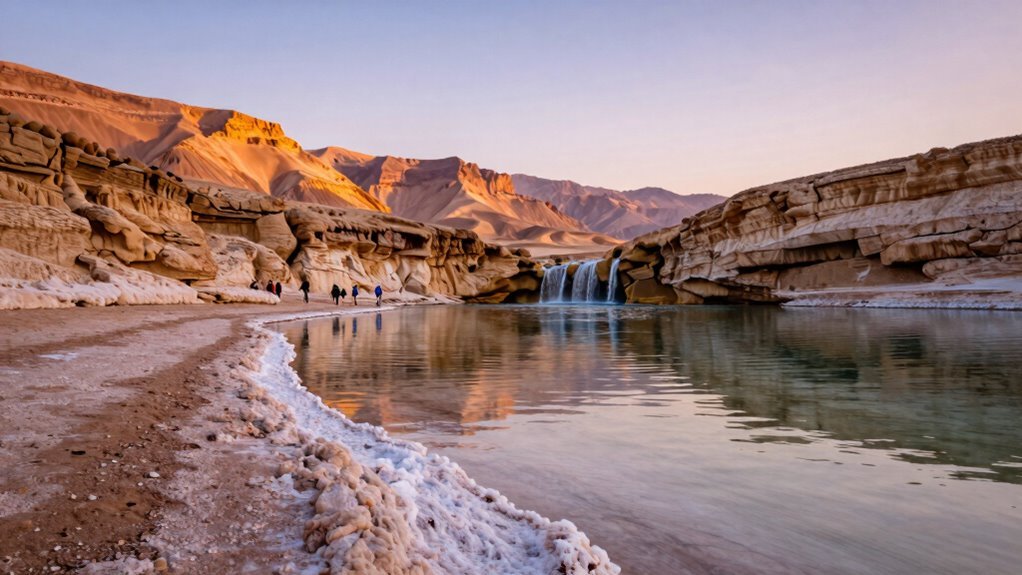
If you want a truly unique water experience, float effortlessly in the Dead Sea’s hyper-saline waters and then trade that serene buoyancy for the adrenaline of canyoning in Wadi Mujib’s narrow, rushing gorges.
You’ll enjoy natural salt therapy as you coat skin in mineral-rich mud, and viewpoints along the shore reveal dramatic cliffs and solar evaporation pans that shape local industry.
Coat yourself in mineral-rich mud, breathe the salty air, and watch cliffs and glinting evaporation pans reshape the shore.
Wadi Mujib’s trails run seasonally; guided canyoning follows strict recreational regulations to avoid flash floods.
Night snorkeling isn’t typical here, but daytime swims and guided descents are thrilling.
Respect the area’s cultural heritage and biosphere status.
- Float safely; avoid shaving beforehand
- Hire licensed canyon guides
- Check seasonal access alerts
- Bring reef-safe sunscreen
- Leave no trace
Winter months offer milder, more comfortable conditions for outdoor activities and visiting the Dead Sea November–March.
Mount Nebo & Madaba: Mosaics, Views & Day-Trip Logistics
Set out from Amman for a compact, rewarding day trip to Mount Nebo and Madaba, where you’ll stand on the rocky outcrop believed to be Moses’ final lookout and trace centuries of history in intricate Byzantine mosaics.
You’ll begin at the Memorial Church of Moses, study tessellated scenes, and pause at viewpoints that frame the Dead Sea and Jordan Valley.
Then head to Madaba’s Greek Orthodox Basilica to see the famous mosaic map and other floor panels restored by careful conservation.
Wander streets where workshops display reproductions by local artisans; you can buy small pieces or commission a custom tile.
Practical tips: allow half a day, start early to avoid heat, and combine transport with La Storia Museum for context.
Consider pairing this trip with a visit to nearby ancient ruins to broaden your historical perspective.
Dana Biosphere Reserve: Hiking Routes, Permits & Difficulty
When you head into Dana Biosphere Reserve, you’ll find a range of trails — from gentle valley walks to steep, technical ridgelines that test your fitness and scrambling skills.
Check permit requirements before you go; some routes need advance clearance from the reserve authority or a local guide, especially if you’re planning overnight or remote treks.
With the right paperwork and route choice, you can match your abilities to spectacular canyon scenery and seasonal waterfalls.
Trail Difficulty Levels
Although Dana’s trails range from gentle valley strolls to steep, rocky ascents, you’ll find clear route markers and graded difficulty levels to help plan your hike, so you can pick a path that matches your fitness and experience.
Pay attention to trail signage and local guides; altitude acclimatization matters on longer climbs, and pacing prevents exhaustion.
Choose routes that suit group dynamics — slower members set the rhythm.
Respect trail etiquette: yield to uphill hikers, avoid trampling vegetation, and pack out trash.
Start early for cooler temperatures and clearer views of Wadi Ghuweir.
- Easy: short, well-marked valley walks, family-friendly
- Moderate: uneven terrain, some steep sections, good fitness needed
- Strenuous: long ascents, loose rock, require acclimatization
- Technical: scrambling, exposed sections, experienced hikers only
- Emergency: plan exit routes and water caches
Permit Requirements
Picking the right trail at Dana also means checking what permits you’ll need before you go. You’ll want to confirm entrance rules at the reserve office or visitor center—some routes require a day permit, while multi-day treks or guided canyon excursions may need special approval. Permit costs vary by route and season, so budget accordingly and ask about group discounts.
If you’re traveling internationally, check visa exemptions for your nationality before arrival; having documentation ready speeds entry and reduces stress. Rangers sometimes require proof of guide booking for remote trails to protect fragile habitats. Plan ahead, reserve permits online or at the visitor center, and carry printed confirmations so you can focus on the scenery, not paperwork.
Frequently Asked Questions
Can I Drink the Tap Water in Jordan Safely?
You generally shouldn’t drink tap water in Jordan; you’ll prefer bottled preference in many places.
Locals often use purification methods like boiling, filtering, or UV treatment to make tap water safer, and hotels usually provide bottled water.
In remote areas or nature reserves you’ll find limited access, so carry extra bottled water and a portable purifier.
That keeps you hydrated and avoids stomach upsets while you explore.
Are There Cash Machines Near Petra and Wadi Rum?
Yes you’ll find ATM locations and currency exchange services near Petra and around Wadi Rum’s visitor areas. In Petra village and just outside the site there are several ATMs and exchange booths.
Wadi Rum’s main visitor center and nearby Aqaba/rum camps offer limited ATMs and currency exchange or cash pickup points. Carry some Jordanian dinars, since remote camps sometimes accept only cash and rates vary between ATMs and exchange counters.
Do I Need a Local SIM Card for Reliable Mobile Internet?
Like a reliable compass, you’ll want a local SIM for steady local connectivity. You’ll get better data plans and far lower roaming costs than using home networks.
Buy a physical SIM or choose eSIM options from major Jordanian carriers at airports or stores. Coverage is strong in cities and most tourist sites, but remote wadis can be patchy, so pick enough data for maps, backups, and unexpected detours.
Are Drones Allowed for Photography in These Sites?
Yes, but you’ll need to follow drone regulations and often secure photography permits.
Jordan restricts drone use at Petra, Wadi Rum, the Dead Sea, Wadi Mujib, Mount Nebo, and Dana; some sites ban drones outright, others allow licensed operators with permits.
Contact site authorities or the Civil Aviation Regulatory Commission before flying, plan for safety and cultural sensitivity, and be ready to present permits and respect no-fly zones and wildlife protections.
Can I Visit Religious Sites During Ramadan or Religious Holidays?
Yes — you can visit religious sites during Ramadan and holidays, but be respectful as if you’re stepping into a living poem.
You’ll follow mosque etiquette: dress modestly, remove shoes, and avoid loud behavior.
Be mindful of fasting customs — don’t eat or drink in public during daylight if locals observe fasts.
Check visiting hours for prayer times, join if invited, and always ask permission before photographing worshippers or interiors.
Conclusion
By now you’ve got the map to Jordan’s heart — from rose-red Petra to silent Wadi Rum and buoyant Dead Sea shores.
Let the country’s mosaicked history, desert-sculpted horizons and lush canyons pull you like a gentle current: plan smart, pack light, and move with curiosity.
Every trail and ancient stone offers a story; taste it slowly, respect the land, and let Jordan’s warm hospitality settle into your bones like sunshine after a long, rewarding trek.
0 Comment