
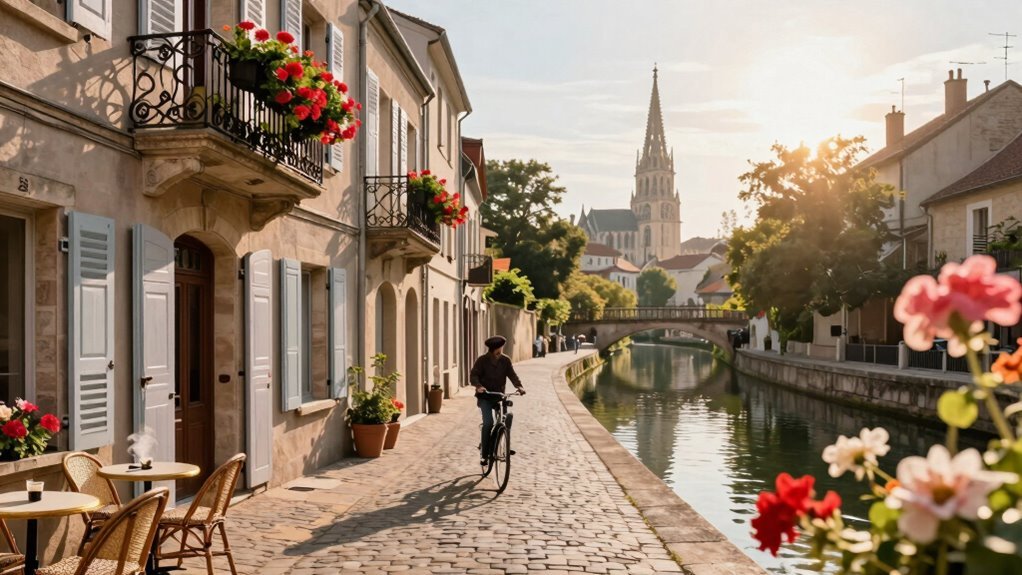

Choose cities that sharpen what you love: wander Lyon’s cobbled lanes and bustling markets for food that sings, lose yourself in Bordeaux and Saint‑Émilion for cellar coolness and vineyard light, or soak in Nice and Cannes for sunlit coves.
Head to Annecy for alpine lake calm, Rouen and Mont‑Saint‑Michel for layered history, and Alsace for timbered charm in winter.
Pick season and pace, and you’ll map days that feel like stories—you’ll find plenty more specifics ahead.
Key Takeaways
- Lyon: culinary capital for bouchons, markets, and winding traboules that deepen France’s food and urban heritage experience.
- Bordeaux: elegant city with accessible day trips to Saint‑Émilion vineyards for memorable wine immersion.
- Nice/Cannes (Côte d’Azur): sunlit beaches, coastal drives, and perfumed towns for a Riviera lifestyle boost.
- Annecy: alpine lake reflections and gentle paddles offering serene scenery and outdoor reprieve.
- Strasbourg/Colmar (Alsace): timbered streets and festive markets that showcase regional history and seasonal charm.
How to Choose French Cities to Visit (By Time, Season, Interest)
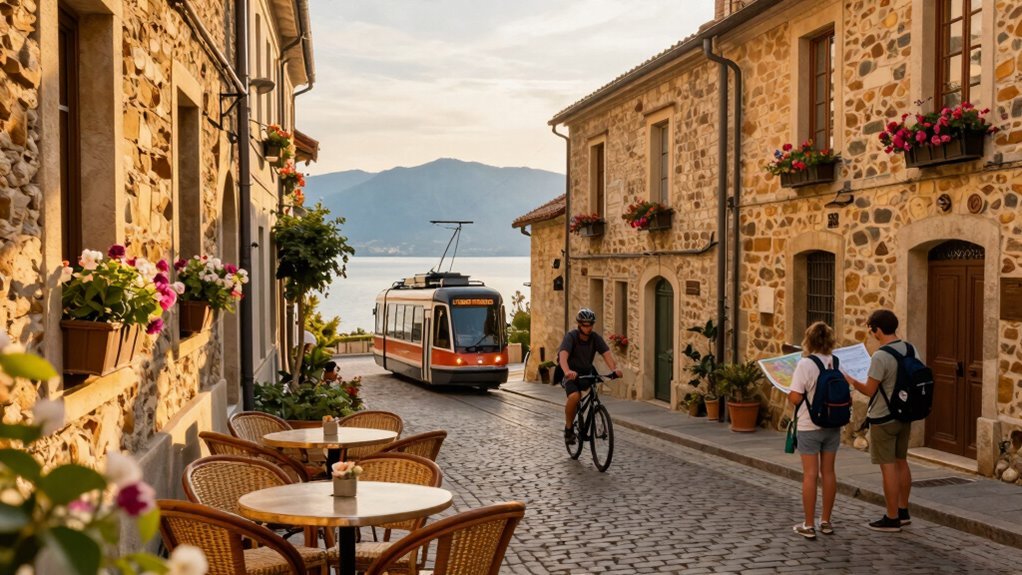
If you’ve only got a long weekend, pack your bags for Lyon or Bordeaux and spend your days wandering cobbled streets, tasting world-class cuisine and slipping out on easy day trips to nearby vineyards; you’ll savor Beaujolais or Saint-Émilion before dusk.
Long weekends: wander Lyon or Bordeaux, indulge in top cuisine and quick vineyard escapes for Beaujolais or Saint-Émilion.
Choose Nice or Cannes for a brief sunlit escape on the French Riviera, or time a Provence trip in late June–mid July for the lavender bloom that perfumes Aix and Valensole.
Plan winter market pilgrimages to Alsace — Strasbourg and Colmar — for festive lights and half-timbered charm.
Base yourself in the Loire Valley if medieval châteaux and graceful gardens draw you, and use rail links for flexible city breaks.
Let seasonal travel and your interests shape each itinerary, prioritizing wine regions or scenery as you like.
Consider adding a day trip to Neuschwanstein Castle to experience a fairytale landmark that complements France’s châteaux and historic sites.
Top Cities by Travel Goal: Food, Wine, History, Scenery
When you follow your appetite, Bordeaux and Lyon will answer with tastings and stalls; when you chase history, Rouen and the Norman coast lay out timbered streets, abbeys and wartime shorelines to walk through.
You’ll move from Lyon’s bouchons and markets to Saint‑Émilion’s cellar coolness, from Rouen’s Joan of Arc corners to Mont Saint‑Michel’s rising silhouette.
Burgundy’s gentle vineyards let you sip grand cru while wandering market towns; Annecy reflects alpine light, inviting slow lake paddles.
Provence and the Côte d’Azur cast fragrant rosemary and sunlit coves when you want scent and sea.
Choose a goal, pack accordingly, and let each city shape your days.
Italy likewise rewards travelers with regionally distinct cuisine, historic sites, and stunning landscapes to explore, from the Amalfi Coast to the Dolomites and world‑class museums showcasing Renaissance masterpieces like Michelangelo.
French Cities Near Paris for Short Trips and Châteaux
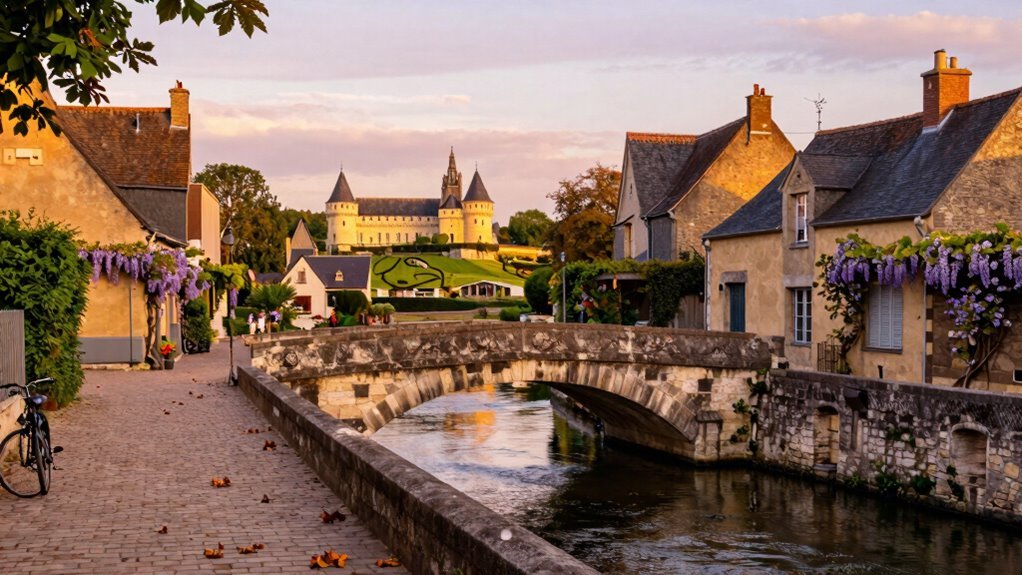
Hop off the metro and you can be wandering marble halls and manicured parterres in less than an hour: Versailles’s gilded rooms, Fontainebleau’s forested alleys, Chantilly’s art-filled galleries and the Loire’s fairytale châteaux all sit close enough for a day trip or a short overnight, each offering a different scale of history and landscape to explore.
You’ll feel time reshape: at Versailles the palace dazzles with Hall of Mirrors light and sweeping gardens, at Fontainebleau you’ll trade salons for forest climbs, and Château de Chantilly condenses art, stables and moat into a compact cultural burst.
Head farther west to the Loire Valley for rolling rivers and a necklace of châteaux—perfect short trips near Paris when you want grandeur without a long journey. Many visitors time their trips for spring and autumn to enjoy milder weather and fewer crowds.
Rhône‑Alps & Alps: Annecy, Lyon, Tournon‑sur‑Rhône (1–3 Day Stays)
Nestled between glacial lakes and jagged peaks, the Rhône‑Alps region invites you to swap city bustle for bluewater reflections, timbered streets and vine‑strewn hills; paddle Annecy’s glassy surface at dawn, lose yourself in Lyon’s winding traboules and bouchons by evening, then let Tournon‑sur‑Rhône’s riverside calm lead you into nearby vineyards and chocolate shops.
Nestled between glacial lakes and jagged peaks, Rhône‑Alps beckons—dawn paddles, winding traboules, riverside vines and chocolate.
You’ll rent a paddleboat on Lake Annecy, feel alpine hiking underfoot, then drive or take regional trains with a rental car to weave between Beaujolais slopes and medieval streets.
Lyon’s bouchons nourish, its hilltop views reward, and Tournon‑sur‑Rhône tempts you with Valrhona treats after vineyard tastings. Travel lightly, linger deliberately, and let each short stay unfurl.
- Paddle Lake Annecy at dawn.
- Cycle Lyon’s Rhône and Saône.
- Wander Tournon‑sur‑Rhône’s riverside.
- Day‑trip Beaujolais vineyards.
You can also connect easily to other Western European destinations from regional hubs like Lyon, making the Rhône‑Alps a great base for broader travel proximity to other destinations.
Provence & Riviera and Alsace/Burgundy/Loire: Villages, Wine Towns, Châteaux
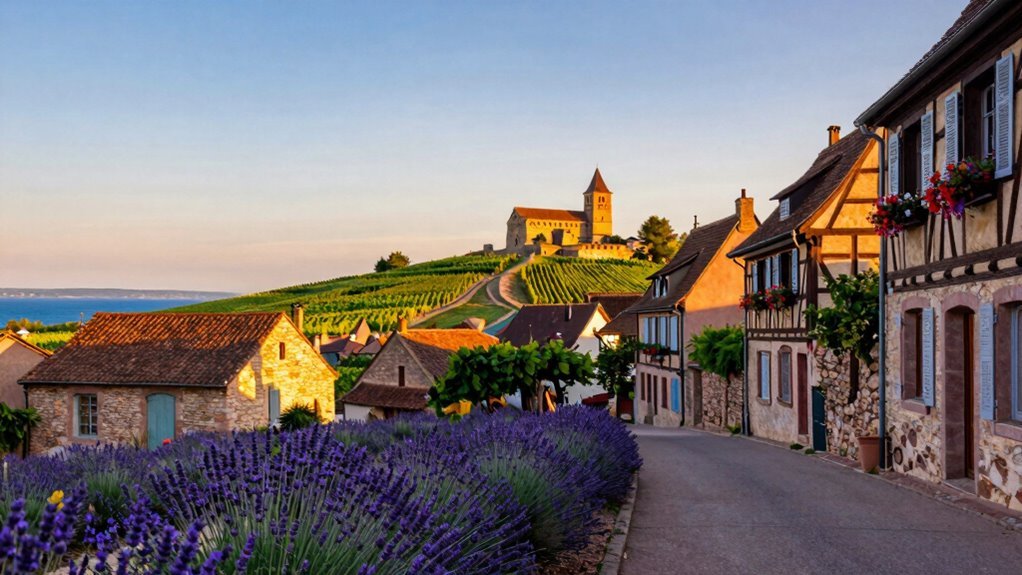
Leave the alpine lakes and cobbled traboules behind and follow sun‑warmed roads south and east, where Provence and the Riviera unfurl in honeyed light and Alsace, Burgundy and the Loire trade medieval charm for vine‑strewn stately homes.
You’ll wander Aix-en-Provence’s shaded cours, time Valensole’s lavender to late June–mid‑July, and taste Rosé d’Une Nuit at Château La Coste amid sculpture and olive groves.
Along the French Riviera, drive Nice to Cannes, detour to Èze and Monaco, and let coastal views slow you.
In Alsace, Colmar’s timbered streets and the famed wine route feel storybook; Strasbourg’s market sparkles in winter.
Burgundy’s Dijon and Beaune and the Loire Valley’s Chambord, Chenonceau, Villandry demand multi‑day stays or a rental car to savor châteaux and wines.
Summer (July–August) is peak season with larger crowds and warmer weather, so consider visiting in spring or fall for pleasant weather and fewer tourists.
Frequently Asked Questions
What Are the Best Months for Fewer Crowds and Mild Weather?
Late spring and early autumn are best for fewer crowds and mild weather. You’ll enjoy shoulder season benefits and late spring charm with daylight hour balance, and early autumn appeal brings post holiday calm and festival free periods.
You’ll savor morning market strolls and midweek advantages, and you can chase temperate coastal months or cold weather discounts inland. You’ll notice each scene feels lived-in, quiet, and richly textured.
Is It Easy to Travel Between These Cities by Train?
Yes you’ll find it straightforward and charming by train. With a rail pass and high speed connections you’ll zip between cities, enjoying scenic routes and quick station transfers.
Watch regional schedules for local stops, use ticket machines, and expect platform changes. Reserve seats on popular lines and overnight trains.
Pack smart for luggage storage on board or in stations, and you’ll travel smoothly while soaking in the landscape.
How Should I Budget Daily Expenses Across These Regions?
Think of your budget as a compass guiding each day. You’ll set daily cash for small buys, keep a card mix for safety, and use meal budgeting for breakfasts and a nicer dinner.
Allocate transport allocation by distance, factor attraction fees and local taxes, pick accommodation tiers wisely, cap souvenir limits, and keep an emergency fund.
Learn tipping practices so you’re prepared, adjust daily as you explore and discover.
Can I Visit Multiple Wine Regions in One Trip?
Yes you can visit multiple wine regions in one trip; plan winery hopping logistics around harvest season timing and prioritize cellar door reservations.
You’ll weigh driving vs train, choose private vs group tours, and respect regional wine etiquette and appointed tastings etiquette.
Savor food and wine pairings at boutique vs major estates, learn wine shopping rules, and let slow, observant travel turn each vineyard into a vivid, narrated memory.
Are English Speakers Common in Smaller Towns?
Yes you’ll find pockets of English, and you’ll find places without it.
You’ll notice local friendliness, language basics helping, elderly speakers less likely to chat in English, student populations and tourist services boosting bilingual signage.
You’ll see workplace English in hotels, marketplace interactions often in French, school holiday impact increasing English use, and translation apps filling gaps.
You’ll adapt by listening, smiling, trying phrases, and relying on helpers.
Conclusion
You’ll find no single “best” French city — and that’s the point. If the old theory that France’s soul lives in its villages holds true, you’ll prove it by lingering: taste a single village wine until its terroir tells a story, watch market mornings until the rhythm becomes familiar, follow a river to a hidden château. Travel like this teaches you to read places, not just see them, and transforms quick stops into unforgettable belonging.
0 Comment