
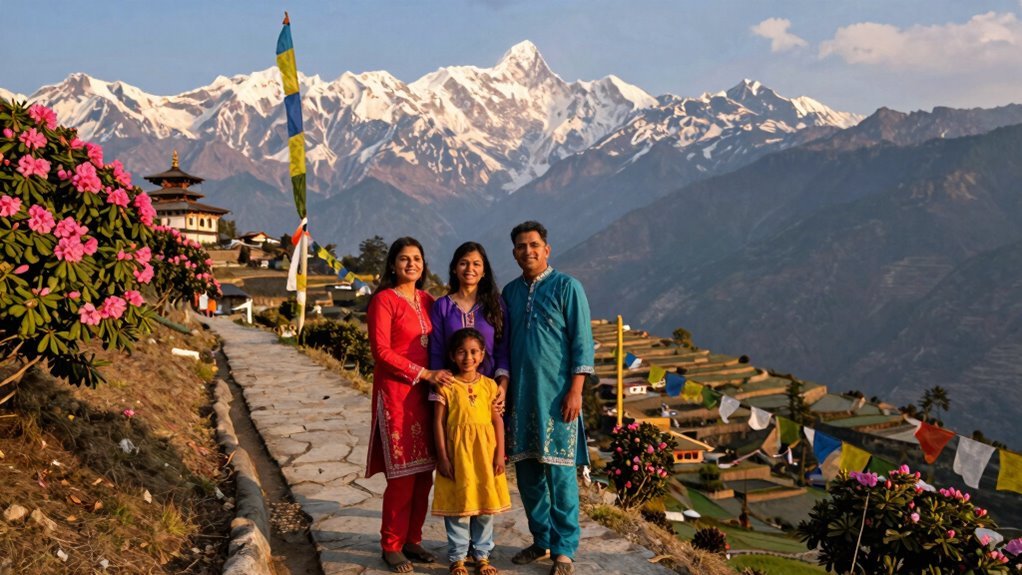

You’ll find Nepal an effortless winter escape from Bangladesh: short 1.5‑hour flights to Kathmandu, quick drives to Nagarkot or Sarangkot, clear cold air revealing Everest and Annapurna, and compact 5–7 day itineraries that pack culture, wildlife and easy treks.
You can catch sunrise panoramas, join festival rituals like Tihar and Losar, or take a scenic mountain flight with minimal fuss.
Keep going and you’ll uncover practical tips, top viewpoints and trip ideas to plan it.
Key Takeaways
- Short direct flights and quick transfers make Nepal an efficient 3–7 day winter escape for Bangladeshi travelers.
- Visa on Arrival and familiar cultural ties simplify border formalities and travel planning for Bangladeshis.
- Clear winter skies offer stunning mountain vistas from Nagarkot, Sarangkot, Poon Hill and scenic flights.
- Diverse options—short treks, cultural temple circuits and wildlife safaris—suit varied interests and fitness levels.
- Affordable connectivity, local guides and established park lodges ensure safe wildlife viewing and comfortable stays.
Why Nepal Is Ideal for a Short Winter Escape From Bangladesh
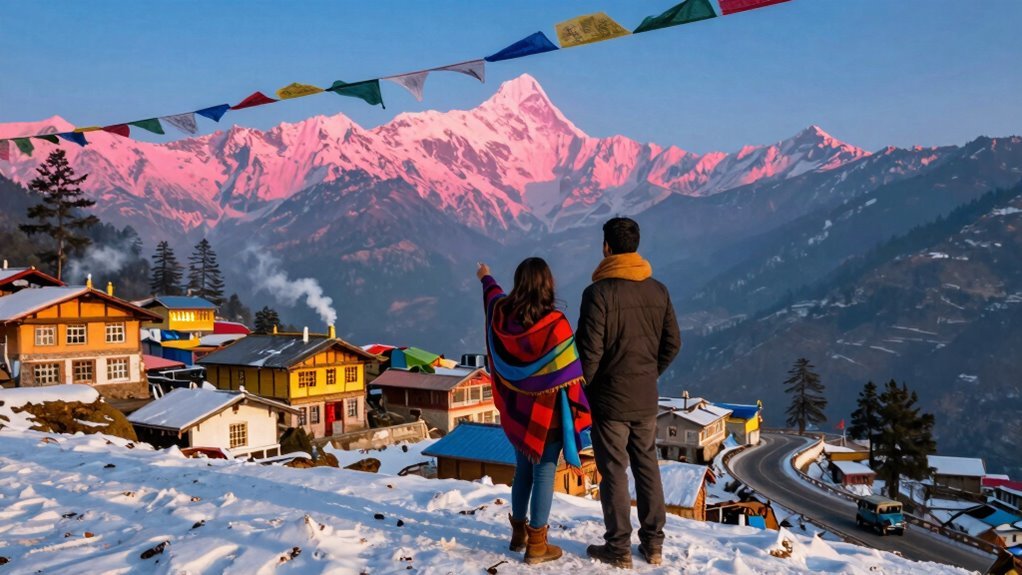
Although it’s just a short hop from Dhaka, Nepal feels like a world away: a 1.5-hour flight lands you in Kathmandu’s crisp winter air, where clear skies frame the Himalaya and day temperatures stay pleasantly mild, letting you stroll ancient squares, take a peaceful hike or catch a sunrise over peaks from Nagarkot or Sarangkot without the summer crowds.
You’ll find direct Dhaka to Kathmandu services make getting there effortless, and visa on arrival keeps logistics simple.
Winter’s mountain views are stunning from Nagarkot and short trek viewpoints around Pokhara and Dhulikhel.
Combine Kathmandu, Pokhara and Chitwan National Park into a compact 5–7 days: city culture, serene lakeside walks, and wildlife safaris that suit a quick, memorable escape.
Many travelers also choose short treks like Poon Hill for guaranteed panoramic Annapurna views on clear winter mornings.
Top Winter Experiences in Nepal : Treks, Snow Sports & Scenic Flights (Durations & Difficulty)
Choose your winter adventure in Nepal based on how much time, fitness and cold you’re ready to handle: short, gentle treks like Poon Hill take 2–4 days and reward you with sunrise panoramas at 3,210 m with minimal technical challenge; Annapurna Base Camp is a 7–12 day climb into snow-draped alpine scenery that’s moderate to strenuous and demands warm nights and careful footing; the Everest Base Camp circuit via Lukla stretches 12–14 days, needs strong acclimatization and serious cold-weather gear but delivers unrivaled high-altitude vistas; for adrenaline, guided snow sports and ice climbs around Manang, Pisang and Thorong La require technical experience and specialist equipment; and if you want the mountains without the exertion, 60-minute Everest flights or Annapurna helicopter tours give close-up views with almost no physical strain. Bhutan’s dramatic Himalayan peaks like Jomolhari and the protected biodiversity of parks such as Jigme Dorji inspire similar alpine conservation efforts and trekking respect for local cultures and wildlife, including snow leopard habitats. As a Winter Travel Destination, Nepal’s trekking routes balance access and spectacle: Ghorepani/Poon Hill suits quick escapes, Annapurna Base Camp Trek rewards steady endurance, Everest Base Camp Trek challenges seasoned trekkers, while high-altitude snow sports demand expert guides. Choose scenic flights like the Everest Mountain Flight for guaranteed panoramas when time or acclimatization limit your plans.
Accessible Mountain Viewpoints: Nagarkot, Sarangkot, Poon Hill
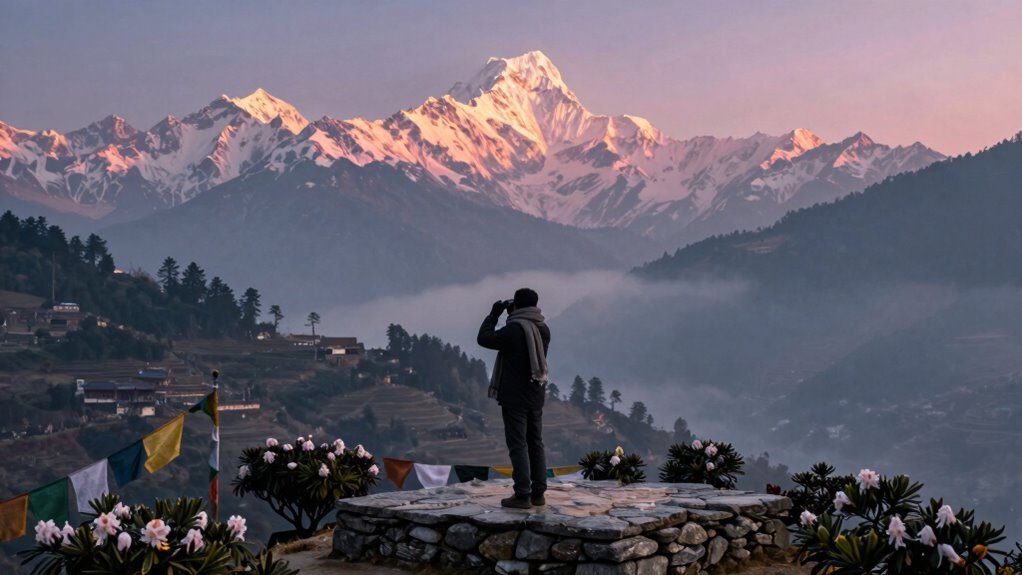
If you’re after mountain panoramas without committing to long, high-altitude treks, Nepal offers several accessible viewpoints that deliver dramatic sunrises and clear winter skies.
You can reach Nagarkot from Kathmandu in about 1.5–2 hours’ drive and stand at ~2,175 m for panoramic views of Mount Everest, Langtang and Ganesh Himal without strenuous effort.
Near Pokhara, Sarangkot perches around 1,600 m and rewards you with sunrise vistas of Annapurna, Machapuchare and Dhaulagiri.
It’s a popular paragliding launch.
For a short multi-day option, Poon Hill sits at 3,210 m after easy trekking over 2–3 days, offering close-up Annapurna South and Hiunchuli panoramas.
All three are ideal in winter and reachable via short flights from Dhaka to Kathmandu or Pokhara.
Winter is generally the best time to visit these viewpoints for clear, sunny weather and excellent visibility.
Better Winter Safaris: Birding And Tiger‑Tracking Tips
In winter you’ll find the best birdwatching at Chitwan, Koshi Tappu and the riverine wetlands—over 500 species and heaps of migratory waterfowl show up, so bring binoculars and grab a local checklist.
If you’re after tigers, head to Bardia in the cool, dry months; the cats tend to hug riverbanks and grasslands then. Book early-morning jeep safaris and guided tracks with authorized park naturalists.
Stay in park‑buffer lodges and hire experienced local guides — they’ll help you follow the rules, boost your chances of sightings, and support community conservation.
For a quieter, more exclusive experience consider visiting private conservancies that offer fewer vehicles and more personalized wildlife encounters.
Winter Birdwatching Hotspots
Bundle up and head out early: Nepal’s winter months (October–March) turn its lowland parks into birding and wildlife magnets, when cooler, drier air lowers humidity, thins foliage around water, and concentrates species at rivers and wetlands.
You’ll find Chitwan National Park’s wetlands alive with migratory birds; jeep safaris and guided walks reveal waterfowl and resident species.
Bardia National Park funnels birds and mammals along the Karnali, offering quieter, intimate sightings.
Koshi Tappu is a premier winter birdwatching hotspot for migratory waterfowl and over 500 species; boat trips and guided wetland walks excel here.
Bring binoculars, warm layers, and a guide who handles protected-area permits to maximize sightings and photographic chances.
For an extra wild experience, consider visiting a park that protects extraordinary biodiversity and large mammals, like Corcovado National Park, to learn about rainforest ecosystems and species conservation.
| Site | Winter Strengths |
|---|---|
| Chitwan National Park | Wetlands, jeep safaris |
| Bardia National Park | River congregations |
| Koshi Tappu | Boat trips, richness |
Tiger‑Tracking Best Practices
After a morning spent tallying migratory warblers and waterfowl, switch your focus to the lowland forests where tigers come to drink and hunt in winter’s cool, dry air.
In Bardia National and Chitwan National parks, winter months concentrate wildlife near rivers — perfect for tiger tracking if you plan right. Hire a registered local guide and join park-run jeep safaris in Chitwan or guided walking safaris in Bardia; rangers read pugmarks, scent trails, and camera-trap data to boost sightings and safety. Aim for dawn and late afternoon, carry binoculars for birdwatching (migratory birds), and follow protocols.
- Feel the hush as a guide points to fresh pugmarks.
- Taste the dusty river breeze at first light.
- Hold your breath during a distant call.
- Celebrate a responsible, safe sighting.
You can also consider a floatplane access approach for truly remote wildlife-viewing experiences.
Winter Festivals, Temples And Cultural Highlights Bangladeshi Travelers Will Love
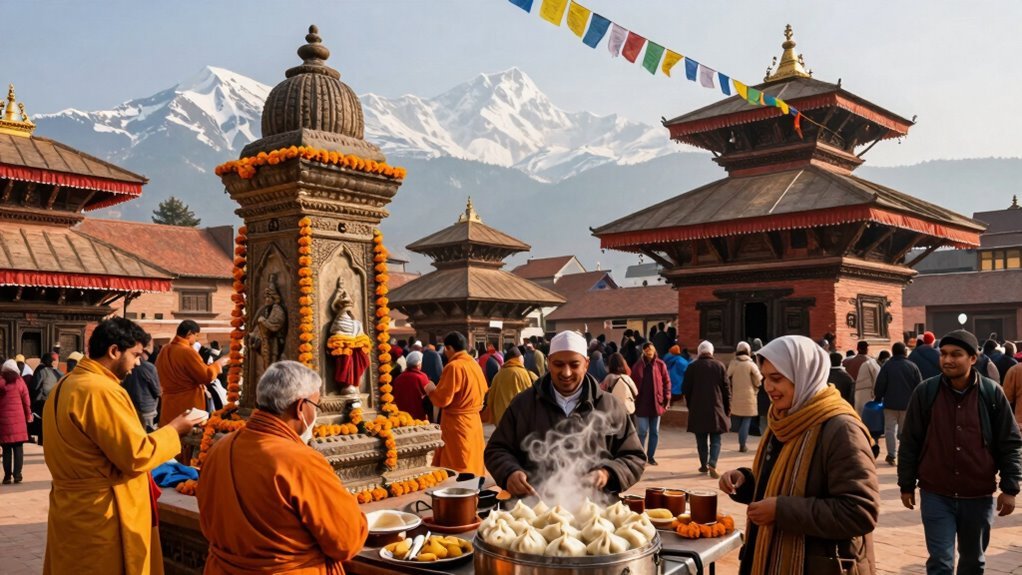
You’ll find Nepal’s winter alive with festivals — from the glowing lamps of Tihar to the masked dances of Losar — each one a vivid cultural show that often happens during the cooler months.
Take a walk through the temple circuit: Pashupatinath’s river ghats, the vast mandala of Boudhanath and the hilltop Swayambhunath.
The clear winter air sharpens the rituals and the panoramic views, so everything feels more vivid. For Bangladeshi travelers, those monasteries and sacred sites are an easy, memorable way to experience both Hindu and Tibetan Buddhist traditions.
Visitors from Bangladesh should ensure their travel documents meet entry requirements and demonstrate intention to return when applying for visas.
Festive Winter Celebrations
Against a backdrop of crisp mountain air and clear winter skies, Nepal’s festivals turn streets and temples into living, colorful tapestries you’ll want to wander through.
You’ll catch Tihar (Deepawali), the festival of lights, filling Kathmandu Valley with oil lamps, rangoli and warmth; Maghe Sankranti’s communal feasts and holy baths reveal agrarian rhythms; and Losar’s masked dances and monastery ceremonies pulse through Boudhanath, Swayambhunath and Mustang.
Major sites like Pashupatinath brim with ritual energy while Bhaktapur Durbar Square and Patan Durbar Square feel more intimate in winter’s hush.
Experience ancient wood-carved courtyards, processions and fragrant offerings that make these celebrations both spiritual and vividly human.
Highlights you won’t forget:
- Candlelit courtyards reflecting on old stone
- Drums and masked performers in bright regalia
- Shared festive meals and local smiles
- Clear views of snowy peaks above temple roofs
You can also take serene boat rides at dawn to see sunrise panoramas and the surrounding landscape in softer light.
Sacred Temple Circuits
When winter light sharpens the valley’s carvings and prayer flags, you’ll find Kathmandu’s sacred circuit—Pashupatinath, Swayambhu, Boudhanath and the Durbar Squares—easier to move between and richer in ritual detail, with oil lamps, aarti and masked dances that resonate closely with Bangladeshi religious traditions.
You can wander UNESCO World Heritage Site streets, watching priests tend Hindu temples and pilgrims circumambulate stupas.
At Pashupatinath the Bagmati’s ghats and ceremonies feel familiarly intimate; at Swayambhunath the hilltop views frame chants and fluttering flags.
Boudhanath’s Buddhist monasteries welcome quiet reflection and simple rituals.
If you want a longer devotion-trek, Gosaikunda and Muktinath combine high-altitude pilgrimage with stark mountain scenery.
The Kathmandu Valley’s circuits give you layered, accessible spiritual experiences year‑round.
Travelers from Bangladesh should note practical entry requirements like the passport validity and visa arrangements before planning their trip.
Monasteries And Losar
If you time your visit for winter, you’ll find Nepal’s monasteries alive with Losar energy—mask dances, prayer rituals and quiet pujas—that feel both intimate and spectacular to Bangladeshi travelers familiar with shared devotional rhythms.
You can stand at Boudhanath Stupa as monks circle with prayer wheels, or climb to Swayambhunath for valley views and morning pujas.
In Mustang and Solu-Khumbu you’ll catch highland Losar pageantry and clear mountain backdrops.
Many monasteries offer meditation sessions and monastic ceremonies, and spiritual retreats welcome curious visitors wanting deeper exchange.
Expect fewer crowds, crisper air, and vivid color in ritual robes. Consider these experiences:
- Watching mask dances in a candlelit gompa
- Joining dawn prayers at Boudhanath Stupa
- Meditating with Tibetan Buddhism teachers
- Touring Mustang’s Losar processions
For travelers coming from Bangladesh, consider practical travel planning such as checking visa requirements and seasonal weather to align your trip with the best time to visit.
Nepal Travel Essentials For Bangladeshi Visitors: Flights, Visas, Weather & What To Pack
Though it’s just a short hop from Dhaka, Nepal offers a quick-change of scenery that you’ll want to prepare for: direct flights land in about 1 hour 30 minutes, visas are easily obtained on arrival with exact USD and documents in hand, and mountain weather can shift fast so pack layers, waterproofs and sturdy boots if you plan to head into the hills.
Just a short hop from Dhaka — quick flights, easy visa on arrival, but pack layers, waterproofs and sturdy boots.
Direct flights from Dhaka arrive at Tribhuvan International Airport; expect Visa on Arrival — carry Passport & documents (photos, USD) for smooth processing.
The Best time to visit (Oct–Dec) brings Annapurna and Everest views and clear skies in Kathmandu and Pokhara.
Winter packing (down jacket, layers) plus Trekking essentials (boots, TIMS, permits), sunscreen, basic first-aid and a Local SIM (Ncell, Nepal Telecom) will keep you ready.
Frequently Asked Questions
Why Is Nepal a Popular Tourist Destination?
You’ll love Nepal for its mix of cultural festivals and pilgrimage sites, Himalayan trekking and mountain photography opportunities, and vibrant artisan markets.
You’ll savor local cuisine, try homestay experiences, and enjoy wildlife safaris and river rafting adventures.
You’ll wander tea plantation hills, join lively parades, and trek to serene stupas and temples, all while feeling immersed in warm hospitality and dramatic landscapes that keep you curious and inspired.
How Many Bangladeshi Tourists Visit Nepal?
Like a bustling bridge between homes, about 300,000 Bangladeshi tourists visit Nepal annually. You’ll see Bangla pilgrims and pilgrimage tourism groups, trekking packages and adventure seekers on trails, family holidays and weekend getaways, budget backpacking and solo travelers exploring, cultural exchanges and educational tours happening everywhere.
You’ll spot organized trekking packages, affordable family holidays, and curious solo travelers alike, all drawn by Nepal’s mountains, temples, wildlife and warm hospitality.
What Is the Main Entry Point for Tourists Visiting Nepal?
Tribhuvan International Airport (KTM) is the main entry point for tourists visiting Nepal. You’ll handle visa requirements on arrival, fill immigration forms, pass health screenings and customs allowances checks, and follow luggage regulations.
Airport transfers connect you to Kathmandu and domestic flights to Pokhara. Border crossings exist but are trickier.
Don’t forget travel insurance and currency exchange at the airport counters so you’re ready for your Nepal adventure.
Which Country Visits Nepal Most?
India visits Nepal most. You’ll see this thanks to regional proximity, strong cultural ties and visa facilitation that make travel easy. You’ll enjoy mountaineering appeal and adventure sports in the Himalayas, affordable travel options, and shopping attractions in Kathmandu.
Many Indians come for medical tourism, educational exchanges and film tourism too, so you’ll notice lively cross-border flows, familiar faces, and packed peak-season trails and festivals.
Conclusion
Think of Nepal as a well-worn shawl your grandmother keeps by the door: warm, familiar, threaded with surprises.
You step in from Bangladesh’s winter chill and wrap yourself in mountain air, bright festivals, and easy trails.
Each fold revealing snow-capped peaks, vibrant temples, and birdsong.
You’ll leave lighter, eyes fuller, carrying stories like pressed flowers in a book: small, cherished tokens that call you back before the shawl ever grows old.
0 Comment