
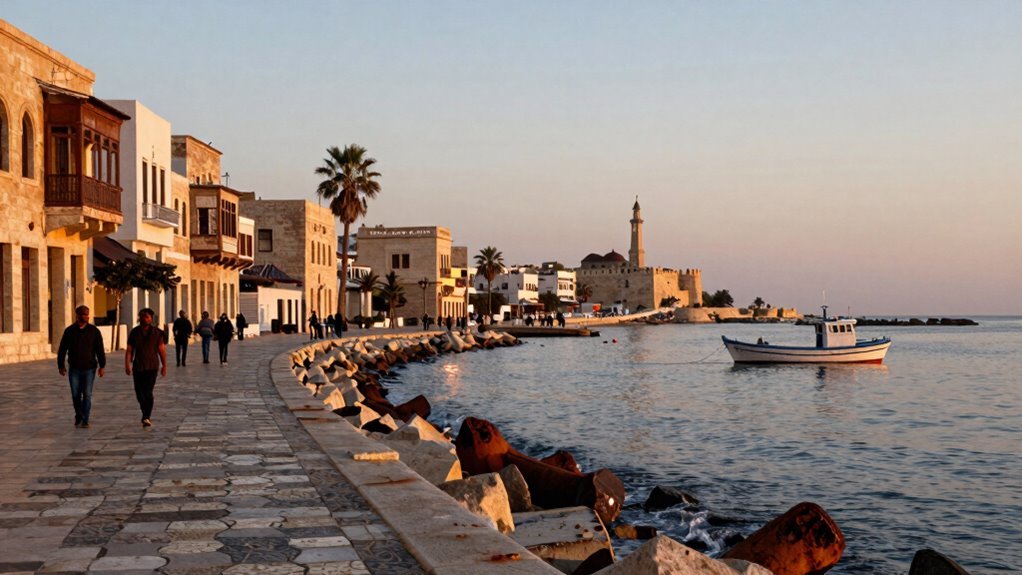

You’ll wander layered history in Alexandria: descend the Catacombs of Kom el Shoqafa, climb beside Pompey’s Pillar, and sit in the Roman amphitheatre at Kom al Dikka to study mosaic floors.
Stroll the Corniche to Fort Qaitbey, sample seafood at the Fish Market Marina, and visit the Bibliotheca Alexandrina plus the Graeco‑Roman and National museums for artifacts that link to nearby ruins.
Try a dive to Cleopatra’s Sunken Palace or a market stroll for local color. More practical tips and itineraries follow.
Key Takeaways
- Visit the Bibliotheca Alexandrina for its striking architecture, rare collections, and guided English tours explaining Alexandria’s seaside setting.
- Explore the Catacombs of Kom el Shoqafa and their Greco‑Roman–Egyptian statuary and maze‑like burial chambers.
- See Pompey’s Pillar and nearby Serapeum ruins, featuring a solitary 30‑metre red granite column from Aswan.
- Walk Kom al Dikka to view Egypt’s only Roman amphitheatre and the Villa of the Birds mosaics.
- Stroll the Corniche to Fort Qaitbey, enjoy waterfront seafood at the Fish Market Marina, and watch sunset harbor views.
Must‑See Ancient Sites (Catacombs, Pompey’s Pillar, Roman Amphitheatre)
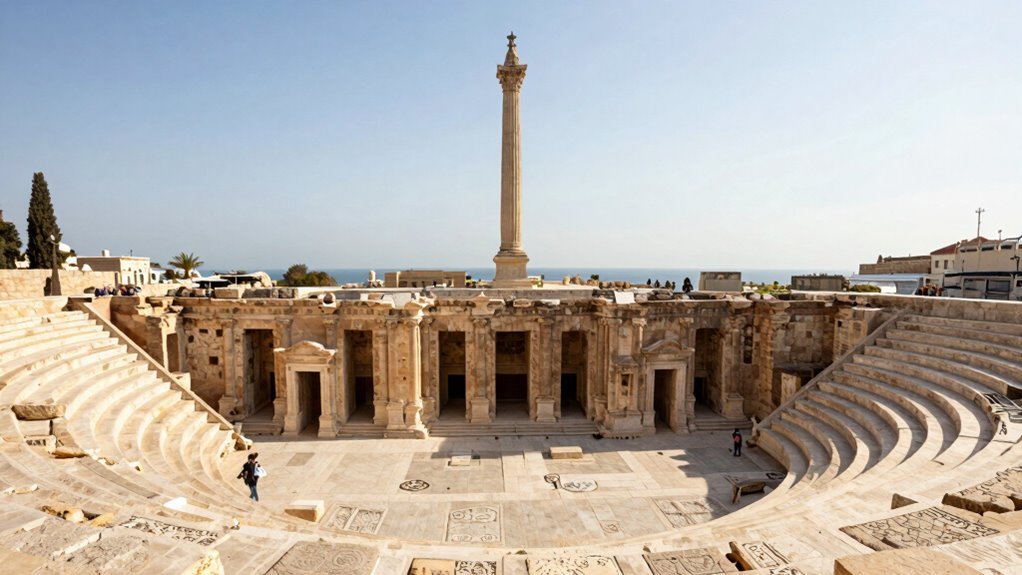
When you step into Alexandria’s ancient quarter, you’ll feel history pressing in from below and above: descend the vast circular staircase of the Catacombs of Kom el Shoqafa to lose yourself in maze‑like tunnels and Greco‑Roman–Egyptian statuary, then look up at the solitary red granite column of Pompey’s Pillar—quarried in Aswan and rearing some 30 metres above the Serapeum ruins—and wander the Kom al Dikka complex to stand in Egypt’s only known Roman amphitheatre, where the acoustics still carry a whisper from the center while nearby villas, baths and mosaics like the Villa of the Birds fill out the scene. You’ll trace funeral rites in the underground necropolis, study floor mosaic panels, and savor how the Greco‑Roman Egyptian fusion defines each site on an Alexandria day tour. For a relaxing stroll afterward, consider enjoying waterfront views along the Red Sea Corniche to watch the sunset and reflect on the day.
Alexandria Waterfront & Fort Qaitbey (Corniche, Fish Market Marina)
Leave the stone and mosaics behind for salt air and seagull cries as you head down to Alexandria’s waterfront, where the Corniche unfurls along roughly 3 km of Mediterranean edge. You’ll stroll past vendors, microbuses and fishing boats, the harbor alive with motion.
At Ras El Tin the crenelated walls of Fort Qaitbey rise where the Pharos Lighthouse once stood; you can climb for commanding Mediterranean views and spot reused red granite pillars thought to be from the ancient beacon.
Pause for a seaside lunch at Fish Market Marina, with elevated shoreline seating and fresh daily catch while boats drift by. Tours often include this waterfront meal — note beverages may be excluded — then linger to watch sunset color the harbor. A short detour can connect you with reminders of Egypt’s wider ancient heritage, including nearby sites linked to memorial temples and coastal trade.
Museums & Cultural Hubs (Bibliotheca Alexandrina, Graeco‑Roman Museum, Alexandria National Museum)
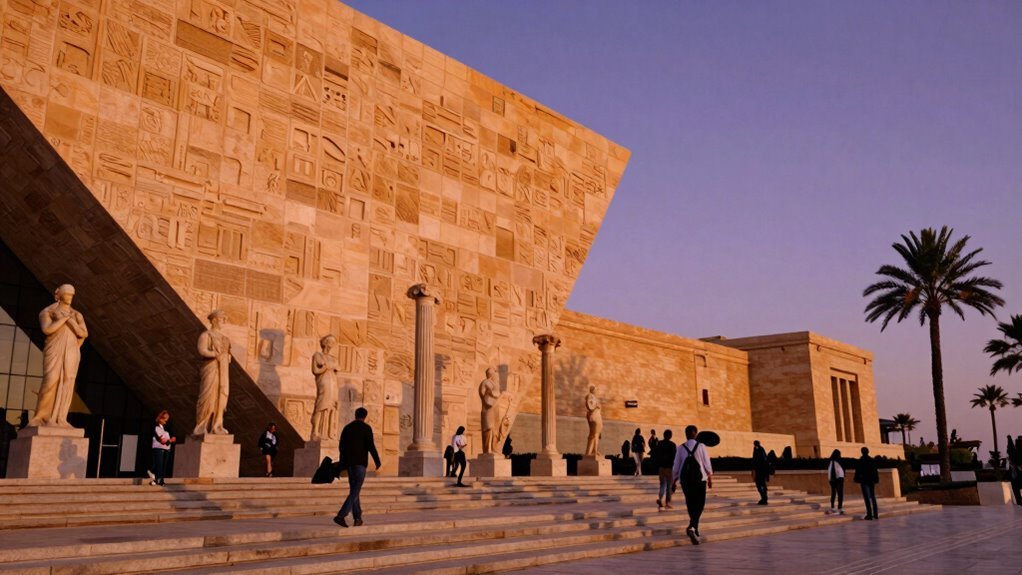
Step into Alexandria’s cultural heart and you’ll find layers of history arranged with intentional clarity, from the gleaming, modern sweep of the Bibliotheca Alexandrina to the hush of marble halls in the Graeco‑Roman Museum and the chronological narrative of the Alexandria National Museum.
You’ll wander the Bibliotheca Alexandrina’s soaring reading room, glimpse rare volumes, and join English guided tours that explain its architecture and seaside setting.
In the Graeco‑Roman Museum you’ll study mosaics, statues and domestic reconstructions spanning Greek and Roman rule; many Alexandria artifacts here came from local digs.
The Alexandria National Museum guides you through Pharaonic to Ottoman eras. Nearby Kom al Dikka’s Roman theatre and the Villa of the Birds echo in museum displays, tying excavations to vivid onsite interpretation.
Don’t miss exploring nearby historic sites that reveal Alexandria’s layered past, including Roman ruins and Ottoman landmarks that complement the museums’ collections and context, such as the scenic seaside setting that inspired parts of the city’s cultural development.
Unique Experiences & Practical Access (Cleopatra’s Sunken Palace Dive, Kom Al Dikka, Local Markets)
After exploring Alexandria’s museums, you’ll want to feel the city’s textures as well as see its objects — from underwater ruins to bustling fish stalls.
You can book diving trips to Cleopatra’s Sunken Palace (about 10 m down) only if you hold PADI Advanced Open Water; expect cold, murky water, limited visibility and short seasonal windows.
Kom al Dikka’s quiet Roman Amphitheater and the Villa of the Birds mosaics invite slow inspection — it’s open daily and far less crowded than major sites.
Wander Anfushi toward Pompeys Pillar, then plunge into Al Midan fish market: watch haggling over crabs, sample fish cooked on the spot, and link the sensory market to Alexandria National Museum stories.
You can also connect your visit to the wider region’s collections by noting key Egyptian artifacts like the royal mummies that draw visitors to Cairo museums.
How to Visit Alexandria: Quick Itineraries, Transport & Health Tips
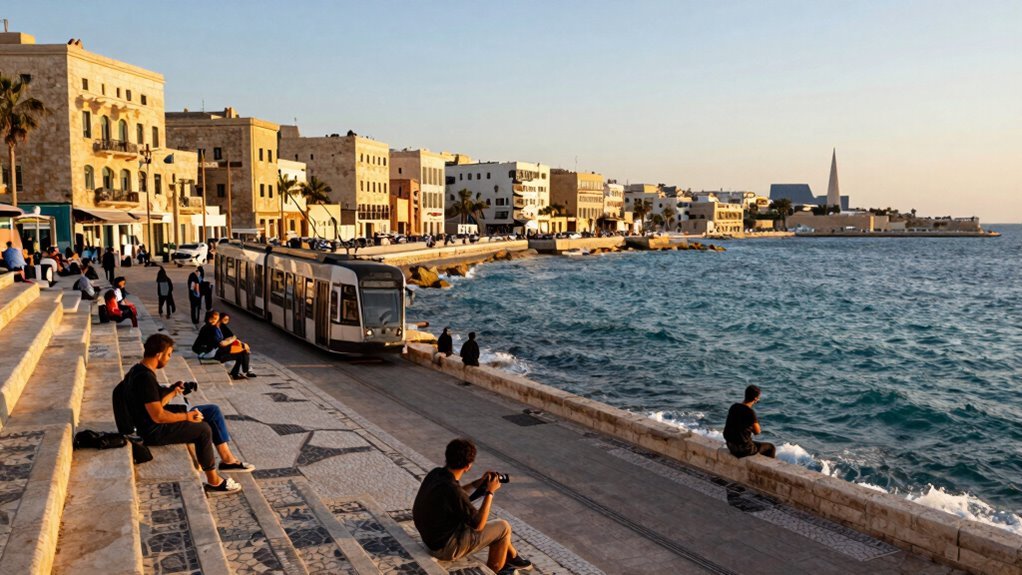
Whether you’ve only got a day or can linger for a few nights, plan around transit and the heat so you actually enjoy Alexandria instead of rushing it: take the scenic 2.5–3 hour train from Cairo with a first-class AC ticket for comfort, or hire a car and driver (plus an Egyptologist guide if you want context) to dodge traffic and language hassles; for budget travel, Go Bus, microbuses along the Corniche, and Uber cover cheap, local hops.
Start with the Library of Alexandria, then Kom el Shoqafa and the Alexandria National Museum; save Sultan Qaitbey’s fortress for sunset. For a day trip, book train tickets >48 hours ahead or reserve a driver.
Health tip: buy travel medical insurance, carry meds, hydrate, and avoid risky street food. Visitors should also plan around Dubai’s peak visitor seasons and major attractions like Dubai Miracle Garden if combining UAE stops with an Egypt itinerary.
Frequently Asked Questions
Is There Anything to See in Alexandria, Egypt?
Yes you’ll wander through shadowed Ancient catacombs, stroll Mediterranean promenades, and admire Ottoman architecture framed by citrus air.
You’ll taste Coastal seafood at seaside markets, slip into Hidden courtyards and Local bookshops, and linger in Street coffeehouses.
You’ll watch Sunset fortresses glow, explore Modern artspaces, and plunge into mosaics and amphitheaters.
Alexandria beckons with layered history and daily life that stirs curiosity and wonder.
Is Alexandria in Egypt Worth a Visit?
Yes you’ll find Alexandria absolutely worth a visit. Wander the ancient harbor and stroll the coastal promenade, savor local seafood at street cafés, and relish Bibliotheca exploration.
Admire Roman mosaics, Ottoman architecture and sunset fortifications; slip into hidden alleys where cultural festivals unfold.
You’ll feel history underfoot, taste fresh seafood, and enjoy lively café life, making Alexandria a vivid, layered city that rewards curiosity and slow discovery.
What Drink Is Egypt Known For?
Try a vendor’s sugarcane juice first, when a Cairo vendor hands you fresh-pressed sweetness, you’ll remember Egypt for that raw, tangy thrill.
You’ll also find traditional karkadeh and hibiscus infusion, mint tea and sahlab pudding, date milk, tamarind drink, cold coffee, barley beverage and bright lemon juice.
These drinks are everyday ritual and hospitality, vivid, comforting, and rooted in markets, cafes, and seaside corniches across the country.
What Not to Do in Egypt as a Tourist?
Don’t ignore local laws or disrespect religion; dress modestly and avoid public displays that’ll draw unwanted attention.
Skip solo nights in unfamiliar areas and don’t shun local cuisine, just be cautious with water and ice.
Haggle respectfully in markets, but don’t photograph soldiers or people without permission.
Avoid flashing valuables, and don’t rely solely on cards, carry cash and use a driver or guide to stay safe and efficient.
Conclusion
You’ve only scratched Alexandria’s surface, the catacombs’ hush, Pompey’s Pillar’s stubborn silhouette, the Corniche’s salty breath.
Walk toward Fort Qaitbey at dusk and you’ll feel centuries lean in to listen; dive sites whisper underwater secrets; markets bustle with spices that tug memory.
Pack sensible shoes and an open mind, because just when you think you’ve seen it all, the city will pull you toward one more narrow alley, one more ruined grace.
0 Comment