
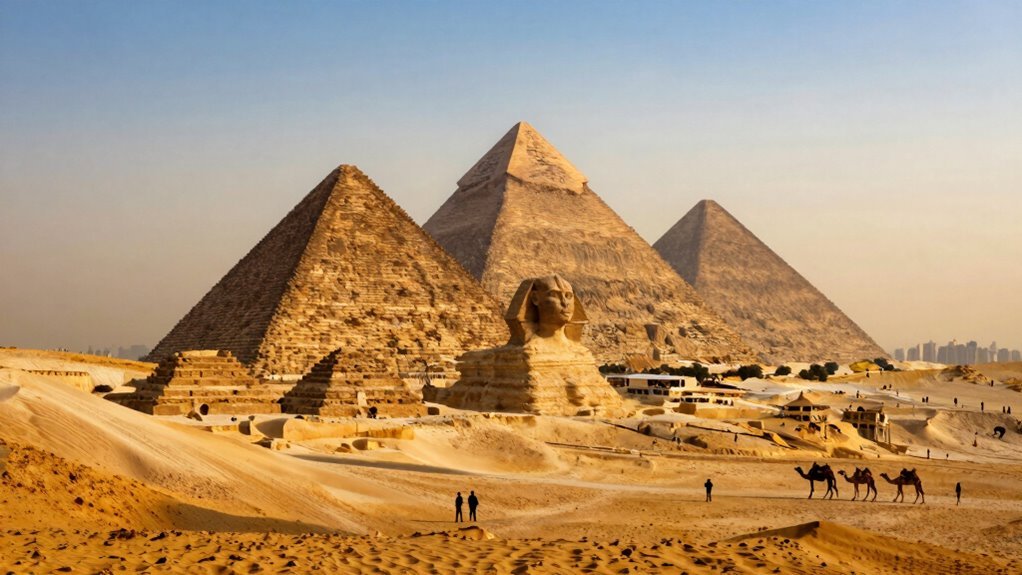

Pick October–April if you want comfortable days and cool nights for temples, Nile cruises, and photography; March–May gives thinner crowds and better hotel deals but watch for khamsin dust.
Use May–September only for Red Sea beaches or tight budgets, since inland and Upper Egypt get brutally hot.
Plan strenuous outdoor activities for mornings or evenings, pack layers for cool nights, and book peak-season trips early — keep going to get month-by-month and regional tips.
Key Takeaways
- Best overall: October–April for mild days (14–26°C), cool nights, and ideal sightseeing conditions.
- Shoulder sweet spot: March–May (and Sep–Oct) for thinner crowds, better hotel deals, and pleasant weather.
- For Nile cruises: October–April, with November and February offering the smoothest sailing and reliable conditions.
- Red Sea diving: September–November (and May/October) for warm water, excellent visibility, and fewer crowds.
- Avoid May–September inland due to extreme heat (38–45°C); coastal resorts remain cooler but still hot.
Best Months to Visit Egypt : At a Glance
Pick the month that fits your priorities—comfort, crowds, or bargains—and you’ll get a very different Egypt.
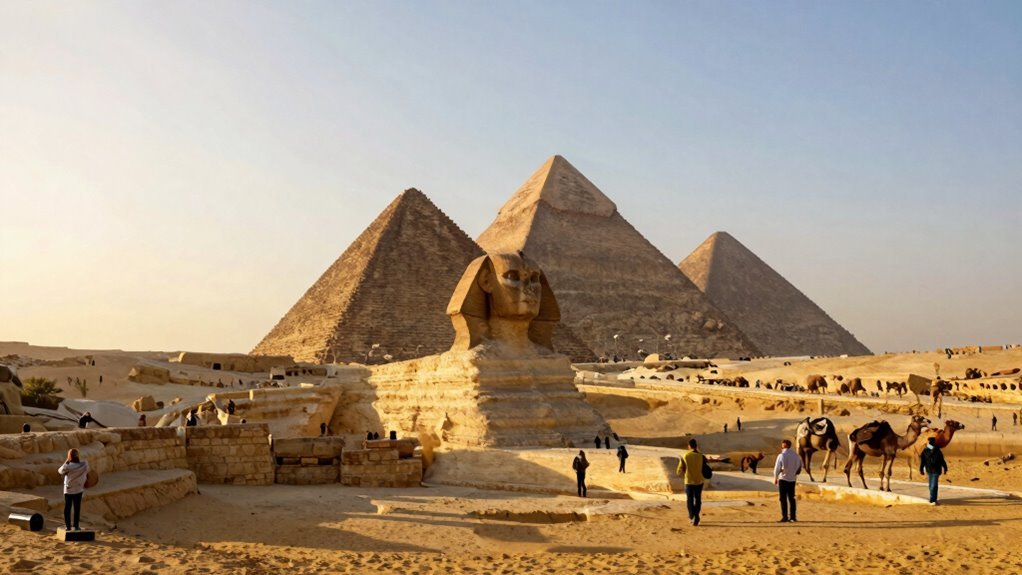
If comfort tops your list, visit October–April: pleasant days, cool nights, ideal for temples and souks, though December and January bring peak weekends, long queues, and higher prices. Many travelers pair visits to the temples with a trip to the Giza Plateau to see the pyramids and Sphinx.
For a sweet balance, choose March–May: March and April give near-perfect weather, thinner crowds, and better hotel deals; watch for April khamsin winds. Plan to build in extra days if traveling in spring because the khamsin wind can disrupt travel.
September–October eases crowds while still warm, great for water activities; late October edges into peak season.
Summer (May–September) brings intense heat and low prices—perfect for beaches and fewer tourists.
Pack layers for nights, consider travel insurance for cancellations, and time bookings to match your priorities.
How to Use This Guide to Pick Your Month
Start by matching your travel priorities—comfort, crowds, budget, or cultural events—to the climate and calendar details in this guide so you can zero in on the best month.
Next, weigh heat tolerance: choose October–April for milder days (14–26°C) and avoid May–September if you can’t handle extreme inland heat.
Cross-check crowd guidance: December–February is peak; shoulder months like March–April and September–October cut crowds and often lower prices.
Factor festivals and service changes—Ramadan and Sham Ennessim alter hours; holidays spike demand.
Compare regional windows (Cairo, Red Sea, Nile valley, deserts) against your plans.
Finalize month, then prepare a targeted packing checklist and confirm travel insurance to cover seasonal risks and weather-related disruptions.
Also remember that nationwide average temperatures in 2026/2027 typically range from 19 °C to 35 °C, which helps set realistic expectations for regional variations.
If you’re planning to visit Cairo’s museums, consider timing around visits to major collections such as the Museum of Egyptian Antiquities because public access and displays are changing as items move to new institutions.
When to Go by Activity: Nile Cruises, Diving, Desert Trips
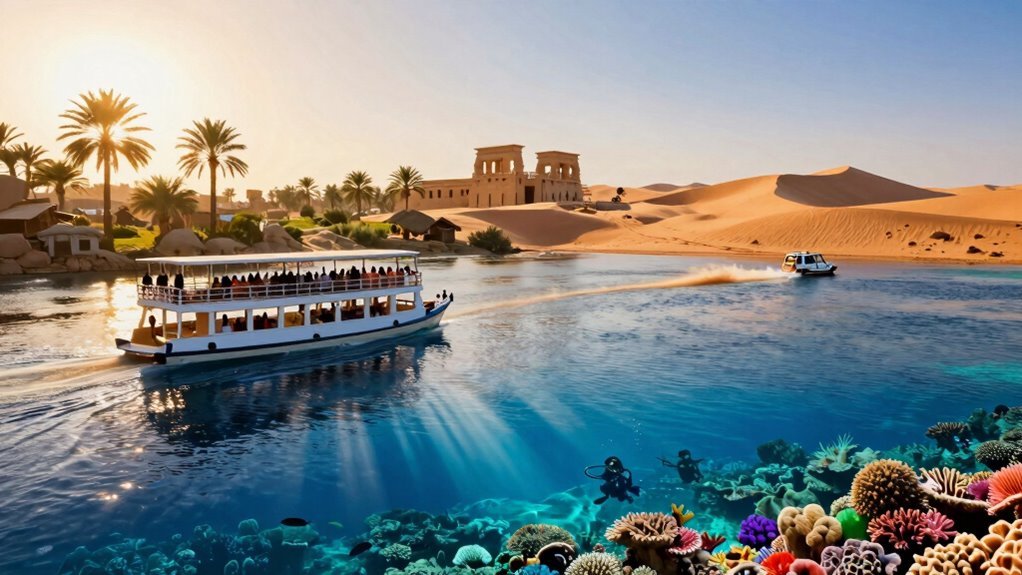
For Nile cruises, aim for October–April — the days are milder and temple visits are more pleasant. If you want to save a bit, try the shoulder seasons in spring or September. Consider booking sunrise excursions like a hot air balloon flight over Luxor for an unforgettable dawn view.
For Red Sea snorkeling or diving, the clearest, calmest water is usually from April to November, so plan then if you want good visibility.
For desert treks and overnight safaris, go in the cooler months (October–April). If you’re traveling in a shoulder season, try to do trips very early in the morning to avoid the extreme heat. Modern Nile cruise ships often have air conditioning and pools to help with the heat, so consider booking one with these amenities air conditioning.
Nile Cruise Timing
Timing your Nile cruise comes down to balancing comfort, crowds, and cost: the true sweet spot is October–April when daytime temps sit around 15–25°C (59–77°F), skies are clear, and sightseeing is easiest, while shoulder months like September and May give you lower fares and fewer people if you can handle slightly warmer weather.
Choose November or February for the smoothest sailing and reliably pleasant days; book early for December holiday departures.
Nights get cool—pack a light jacket for deck etiquette during evening strolls and for sunset photography sessions.
If you tolerate heat, summer offers bargain fares but expect early-morning excursions, sparse crowds, and some operators pausing services in Upper Egypt.
Plan around comfort and availability. October–April is also the best window for milder Nile cruising temperatures and overall sightseeing conditions.
Also consider combining your cruise with nearby desert experiences to add variety and adventure to your itinerary.
Best Diving Months
Often the best time to dive Egypt’s Red Sea depends on what you want to see and how comfortable you like to be: aim for September–November for warm water (25–30°C), excellent visibility, fewer crowds, and top overall conditions; March–May also offers favorable conditions with slightly cooler water and higher visitor numbers; June–August brings the warmest seas and peak shark activity but extreme surface heat, while December–February is quieter with cooler water (22–25°C) that calls for thicker thermal protection. Many divers also combine trips with snorkelling and surface activities to make the most of calm lagoons and coastal reefs snorkeling options. Choose autumn if you want peak comfort and reduced crowds; spring if you want vibrant conditions despite more divers. Summer maximizes shark and whale shark encounters but tests your tolerance for heat. Winter needs better thermal kit and careful equipment maintenance to protect your gear in colder, windier conditions. Liveaboards depart from several hubs, with common options from Hurghada, Port Ghalib and Sharm El-Sheik and more remote sites requiring multi-day trips to reach liveaboard-only.
Desert Trip Seasons
While the Red Sea and Nile have their own seasonal rhythms, desert trips demand you pick your window by activity—Nile cruises, diving-adjacent coastal stops, or inland desert trekking—because each has different temperature, wind, and crowd trade-offs.
For most travelers, October–April is your peak window: October–November balance 25–28°C days, 15–18°C nights, steady northwesterlies and excellent stargazing—great for desert camping, wildlife spotting, and cultural encounters without peak crowds. Planning ahead essential for safety and comfort. The cooler months also align with the best time to visit nearby cities like Cairo and Luxor for comfortable sightseeing and outdoor activities, making combined itineraries easy to plan around optimal season.
March–April warms nights for extended treks and dune walking; watch for Khamsin-driven sand events, though April is ideal for combined Nile cruises and camping.
December–February offer mild days but cold nights and higher prices.
Avoid May–September unless you’re heat-hardened; extreme summer heat and occasional sandstorms make trips risky and uncomfortable.
Egypt Month-by-Month: Temperatures, Crowds, and Risks
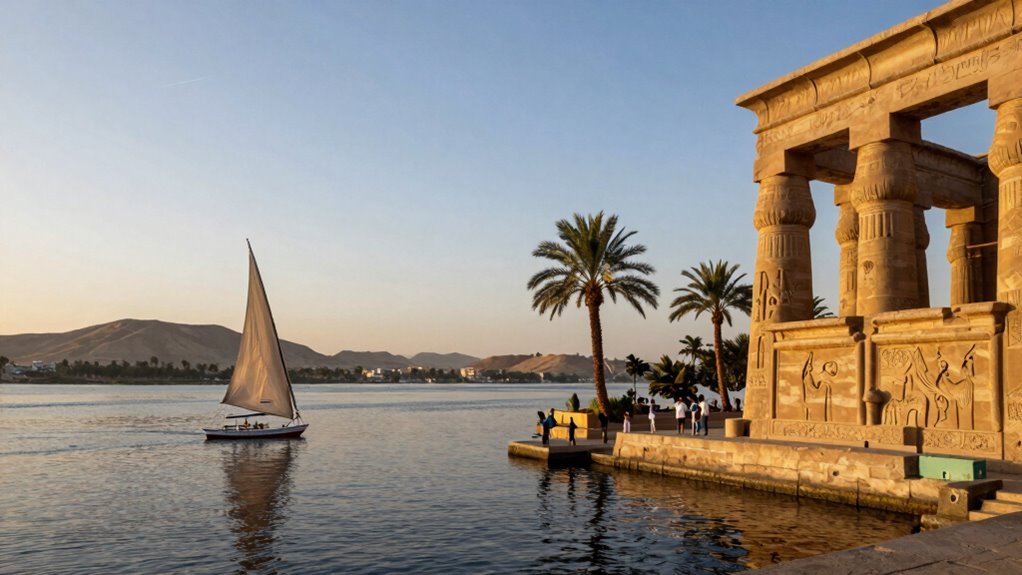
You’ll get a clear month-by-month breakdown of temperatures so you can plan for the heat in Upper Egypt, enjoy milder coastal days, and prepare for big day-to-night swings in winter. Consider combining cooler coastal stays with inland sightseeing to balance comfort and exploration, especially near coastal cliffs and historic shoreline sites.
I’ll flag expected crowd levels and price shifts — when holidays swell visitor numbers and when shoulder months offer savings.
You’ll also get practical risk notes on heat, hydration, and timing outdoor activities so you can keep sightseeing safe and comfortable.
Plan major outdoor excursions in the cooler months, especially September–March, to avoid the worst of the desert heat best overall weather.
Monthly Temperature Overview
Typically, Egypt’s month-by-month temperatures swing dramatically between coastal comfort and inland extremes, so plan each day with location and season in mind.
You’ll find winter (Jan–Feb) pleasantly cool; day highs around 22–24°C, nights near 6–7°C, so bring layered seasonal clothing for chilly evenings and take advantage of nine hours of sunshine for sightseeing and photography golden hour shots. Many visitors combine winter sightseeing with trips to Nile Valley towns for milder conditions and cultural sites.
Spring (Mar–Apr) warms to 29–34°C daytime with mild nights, ideal for daytime exploring.
Summer (May–Sep) brings harsh heat; 38–40°C highs, high humidity on the coast and arid deserts inland, so schedule strenuous activity early or late.
Autumn (Oct–Nov) moderates to 28–34°C with comfortable nights.
Expect large daily ranges; southern cities run 5–10°C hotter than the north. The Nile Valley remains a fertile corridor amid the desert, supporting extensive agriculture and cotton plantations.
Crowd Levels By Month
Often, crowd levels in Egypt change dramatically with the season, so you should plan logistics and bookings around when you’ll visit.
From November to February expect peak-season congestion: Cairo, Luxor, Nile cruises and Red Sea resorts fill fast, especially around December–January holidays, so book tickets and tours early. Consider combining city sightseeing with nearby natural attractions to balance crowds and open-air time.
March–April bring shoulder moderation—comfortable weather and more manageable visitor flows, with March especially favorable.
May to September is low season: attractions quieten, Nile cruises and sites see far fewer people, and you can enjoy off peak attractions and lower prices, though heat rises. July–August are extremely hot, so take precautions against heat-related risk.
September–October are prime shoulder months for fewer crowds and better photography.
Factor in Ramadan and local festivals that shift daily rhythms and operating hours when planning visits.
Travel Risks & Notes
After planning when to go and how crowded sites get, you should also weigh month‑by‑month risks that affect comfort and safety.
You’ll face intense heat June–August (40–45 °C), khamsin dust in March–May, and year‑round marine hazards; adjust plans, hydrate, and avoid long midday exposure. The U.S. Department of State currently advises travelers to exercise increased caution in Egypt due to terrorism, crime, and health concerns. The Red Sea coastline near resort cities also presents seasonal conditions that affect visibility and currents for diving and snorkeling, so check local reports and operators for marine safety.
Security advisories vary; big holidays and crowded sites raise threat levels, and sudden regional tensions can disrupt travel.
- Summer: prioritize air‑conditioned transfers, carry emergency contacts, and avoid long open‑air visits to reduce heat‑related illness.
- Shoulder/winter: watch nighttime crowds for pickpockets and local scams; keep valuables concealed and share itinerary with contacts.
- Sea/activities: use reputable operators, check travel insurance, heed briefings, and follow food safety and dive limits.
Regional Timing in Egypt: Cairo, Luxor/Aswan, Red Sea, Western Desert
While Egypt’s overall best travel windows cluster in the cooler months, timing varies by region, so plan according to where you’ll go: In Cairo, visit October–April for mild days and cool nights; February is especially pleasant, with fewer sandstorms, and don’t miss local festivals while observing cultural etiquette in temples and markets. October–December are the coolest months with higher prices.
For Luxor and Aswan, aim for February–March or early morning and evening activities outside summer; southern highs spike dramatically May–August, so avoid midday outings then.
The Red Sea coast works best late fall through early spring (October–April) with March offering balanced beach conditions; summer brings humidity.
For Western Desert and Siwa, October through March is ideal; Khamsin winds in spring and extreme heat from May demand careful timing and planning.
How Seasons Affect Prices, Crowds, and Logistics
Having picked the best months for each region, you’ll want to factor how seasons reshape prices, crowds, and logistics across Egypt. You’ll see clear cost and service swings: winter peak brings high rates, packed sites, and the need for aggressive seasonal marketing and early bookings; shoulder seasons cut prices and crowds, letting you stretch budgets; summer offers lowest rates, sparse crowds, and faster service but demands sensible routing.
- Peak (Nov–Feb): book early, expect premium pricing, crowded attractions, and tight staffing strategies to handle demand. Midwinter brings pleasant temperatures ideal for outdoor exploration and long days of sightseeing.
- Shoulder (Mar–May, Sep–Oct): balance value and comfort, lower hotel rates (~30% down), easier museum access.
- Off-season (Jun–Aug): cheapest fares, personalized tours, and operational gains from reduced visitor volume.
Weather Hazards and Timing to Avoid (Khamsin, Heat, Ramadan)
Because weather and cultural timing can make or break your trip, plan around Egypt’s three main hazards: Khamsin winds, extreme summer heat, and Ramadan, so you don’t get surprised by canceled plans, health risks, or diminished services.
Plan trips around Khamsin winds, extreme summer heat, and Ramadan to avoid cancellations, health risks, and reduced services.
Khamsin hits mainly March–April (occasionally late Feb or May). Expect sudden temperature spikes, dust haze that ruins photos, and lens-damaging sand. Bring sealed camera cases, goggles, and simple dust mitigation like bandanas or N95 masks. These winds can cause rapid temperature increases.
Summer (June–August) brings extreme heat, especially Upper Egypt. Schedule outdoor sites early, hydrate constantly, wear UV protection, and avoid midday exertion. Coastal areas are generally cooler so consider visiting the Red Sea or Mediterranean if you want relief from inland heat.
During Ramadan, services and opening hours shift. Show cultural sensitivity, eat discreetly in public, and expect slower transport and reduced restaurant availability.
Choose the Right Month: Comfort, Budget, Photo, or Water Activities
If you prioritize comfort, photos, budget, or water sports, pick your month with that goal front and center: October–April gives the friendliest temperatures for sightseeing and Nile cruises, September–November often yields the best value with shoulder-season discounts, February–April is ideal for clear-sky photography and green riverbanks, and April–June (with May as the sweet spot) plus October offer the most reliable windows for Red Sea diving and swimming. The winter months still draw the most visitors, so expect heavier crowds in many popular sites during December–March.
- Comfort: Travel October–April for mild days (January coolest); follow a packing checklist for layers and sun protection.
- Budget: Aim September–November or offseason May–September to snag lower rates and negotiate tours during low demand.
- Photos & Water: Shoot February–April for lush Nile banks and clear skies; plan Red Sea dives in April–May or October, checking local festivals that could affect crowds.
Frequently Asked Questions
What Clothing Should I Pack for Varied Egypt Climates During One Trip?
Pack light layers and breathable fabrics: linen or cotton shirts, long linen pants, and loose-fitting long-sleeved tops.
Bring a light jacket or fleece for cool nights, plus a scarf for mosque visits and extra Sun protection.
Include a wide-brimmed hat, high-SPF sunscreen, sunglasses, and comfortable walking shoes.
Prioritize modest attire covering shoulders and knees in cities and religious sites, while packing swimwear for beach resorts.
Are There Visa Requirements or Entry Rules Travelers Should Prepare For?
Yes you’ll need to meet passport validity rules and prepare entry forms.
Make sure your passport validity is at least six months and has a blank page.
Apply for an e-visa or get a visa on arrival where eligible; some travelers qualify for visa exemptions or arrival permits for Sinai or short resort stays.
Carry proof of accommodation, onward ticket, and any supporting documents to avoid delays at entry.
How Safe Is Solo Travel, Especially for Women, Across Egyptian Regions?
Solo travel in Egypt is generally safe, especially in main tourist areas, but you should stay alert.
Solo safety improves by following cultural norms: dress modestly, keep confident body language, and avoid deserted spots at night.
Use tracked rides (Uber/Careem), stick to recommended neighborhoods, carry emergency contacts, and use offline maps.
Verbal harassment and petty scams happen, but most women travel problem-free when they plan and stay cautious.
Can I Use Credit Cards and ATMS Widely, or Bring Lots of Cash?
About 99% of Egyptian ATMs accept Visa and Mastercard, so you can rely on credit card acceptance in cities but should plan for cash emergencies.
You’ll find abundant bank ATMs in Cairo and Alexandria; smaller towns and remote areas need advance cash planning.
Use bank-owned machines (lower fees, higher limits), decline DCC, carry some Egyptian pounds, and stagger withdrawals to minimize foreign and local ATM fees during your trip.
What Vaccinations or Health Precautions Are Recommended Before Travel?
You should update routine vaccines (MMR, Tdap, polio, varicella, influenza) and get hepatitis A; consider typhoid and hepatitis B, and rabies if you’ll have animal contact.
Carry travel insurance, proof of vaccinations, and seek a polio booster if at risk.
Practice strict food hygiene, use bottled/sterilized water, and avoid raw produce.
Use mosquito precautions (repellent, nets) for vector-borne disease prevention.
Conclusion
Pick the month that matches your priorities—comfort, budget, photos, or water fun—and you’ll get the most from Egypt’s treasures. Go in cooler shoulder months for sightseeing, winter for comfortable Nile cruising, or late spring for Red Sea diving, but steer clear of khamsin winds and extreme summer heat. With planning and flexibility, you’ll beat the rush and hit the jackpot—getting unforgettable light, quieter sites, and smoother logistics for your trip.
0 Comment