
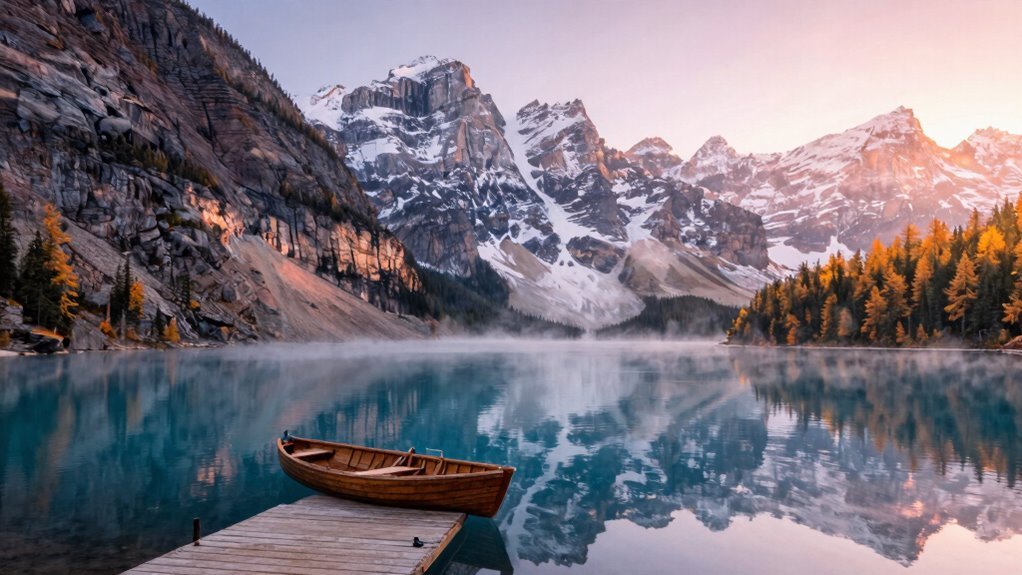

You’ll find Canada’s most beautiful places waiting to be explored: hike jagged Rockies and drive the Icefields Parkway past turquoise glacier lakes, stand on Gros Morne’s rust-orange Tablelands, and follow the Cabot Trail along wind-swept ocean cliffs.
Paddle glassy fjords at Western Brook Pond, watch whales and extreme tides in the Bay of Fundy, and stroll Victoria’s coastal gardens or Vancouver’s seawall.
Pack layers and a camera, keep going to uncover more spot-on tips and routes.
Key Takeaways
- The Canadian Rockies (Banff, Jasper, Icefields Parkway) offer glacier-carved peaks, turquoise lakes, and dramatic alpine vistas.
- The Cabot Trail and Gros Morne showcase coastal cliffs, otherworldly geology, and scenic ocean drives.
- Lake Louise and Western Brook Pond feature mirror-like turquoise waters framed by glaciers and towering fjord cliffs.
- Cape Breton, the Bay of Fundy, and Nova Scotia provide whale watching, extreme tides, and rugged island lighthouses.
- Vancouver, Victoria, Banff, and Yellowknife combine urban comforts with immediate access to mountains, gardens, and aurora-lit wilderness.
Western Canada : Rockies & The Icefields Parkway
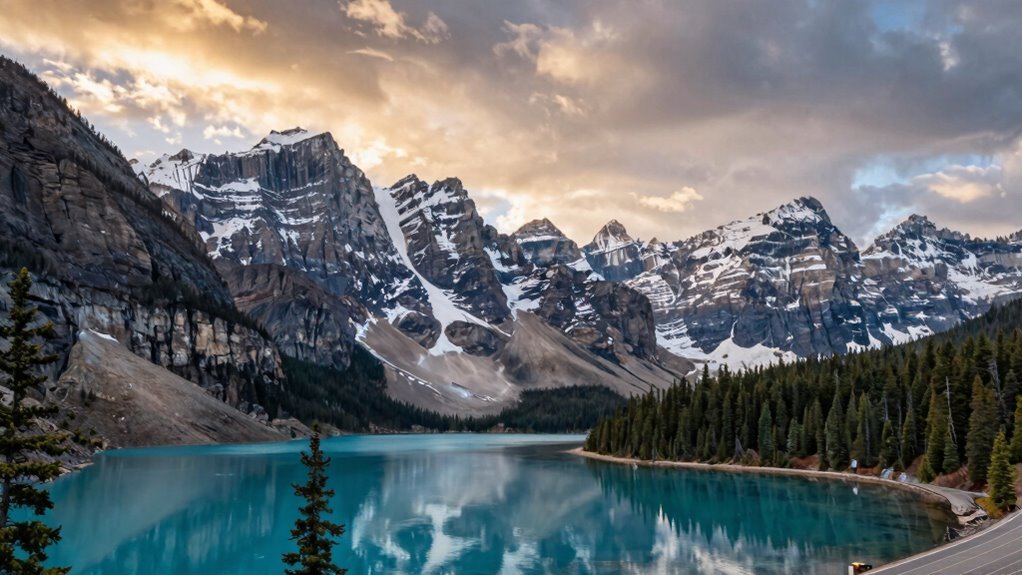
Glacier-carved peaks and turquoise lakes define the Canadian Rockies, and driving the Icefields Parkway lets you experience that grandeur up close.
You’ll feel small beside serrated summits and expansive icefields, where ancient glaciers left glacial moraines that sculpt valleys and shorelines.
Pull over at viewpoints to watch meltwater stain lakes the color of gemstones, then hike trails that climb through forests into meadows thick with resilient alpine flora.
You’ll photograph dramatic vistas, pause for wildlife sightings, and find solitude on lesser-used paths.
The route connects Banff and Jasper, giving you access to iconic sites like Lake Louise and remote glaciers without sacrificing comfort.
Trust the road to deliver vivid memories and convincing reasons to return.
Many travelers plan stops at Lake Louise to take in the classic alpine scenery and recreational opportunities.
Atlantic Coast Gems : Gros Morne, Cabot Trail & Peggy’s Cove
Along Newfoundland and Nova Scotia’s rugged shorelines, you’ll find a trio of coastal wonders: Gros Morne’s otherworldly fjords and Tablelands, the Cabot Trail’s sweeping ocean cliffs, and Peggy’s Cove’s iconic granite lighthouse that show how dramatic geology and sea-swept culture shape Canada’s Atlantic identity. You’ll hike Tablelands’ orange slopes, boat past fjords, and feel wind off the Gulf as you scan for whales. Drive the Cabot Trail’s panoramic hairpins, stop in quaint fishing villages, and catch sunset light that rewards lighthouse photography. At Peggy’s Cove, the lighthouse perches on sculpted granite, a perfect subject framed by foam and sky. This trio convinces you that Atlantic Canada pairs raw natural drama with intimate coastal charm. Enjoy reliable travel connections and scenic journeys via scenic rail & boat to experience more of the region.
| Place | Highlight | Tip |
|---|---|---|
| Gros Morne | Tablelands | Boat trips |
| Cabot Trail | Cliffs | Skyline hike |
| Peggy’s Cove | Lighthouse | Golden hour photos |
Iconic Lakes & Fjords : Lake Louise, Western Brook Pond & Saguenay
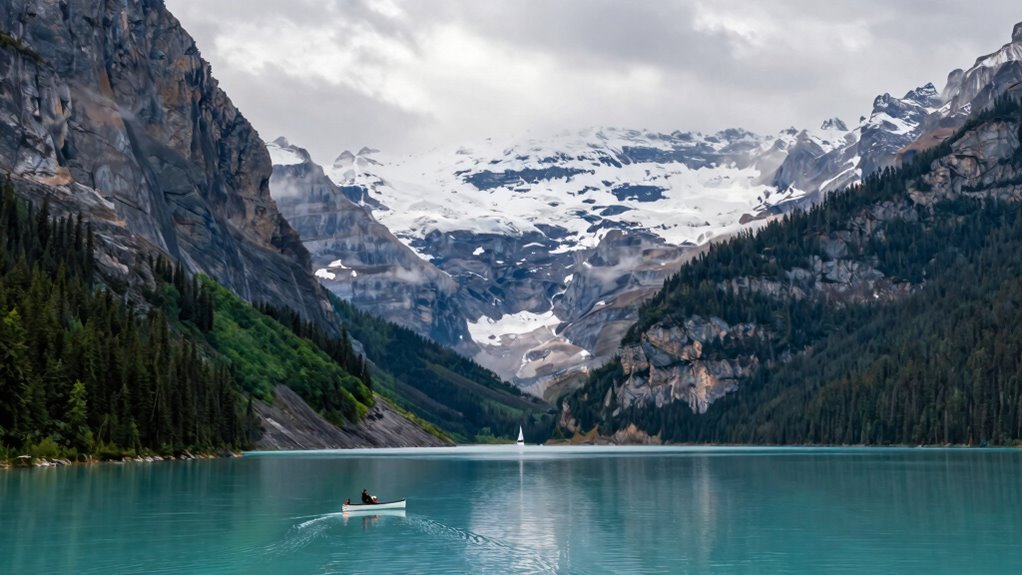
Stand before the turquoise mirror of Lake Louise, glide through the glassy calm of Western Brook Pond, and feel the raw vertical drama of Saguenay’s fjords—each offers a distinct way to experience Canada’s water-sculpted landscapes.
You’ll read the light like a map at Lake Louise, where glacial optics paint unreal blues and mirror the Victoria Glacier, pulling you into alpine quiet.
On Western Brook Pond, a landlocked fjord, you drift beneath towering cliffs and sense ancient geology in every ripple.
In Saguenay, fjord acoustics amplify gulls and distant waterfalls, turning silence into a curated soundtrack.
Wander, paddle, or boat—each approach convinces you these aren’t just views but immersive, elemental encounters.
These places also reward patience and respect for nature, much like New Zealand’s commitment to pristine environments, which helps preserve their dramatic beauty.
Coastal Islands & Whale Watching : Cape Breton, Bay Of Fundy & Nova Scotia
From the alpine hush of Lake Louise and the vertical hush of Saguenay’s cliffs, turn your gaze seaward where salt air, crashing tides, and migrating giants run the show.
You’ll follow the Cabot Trail’s wind-swept ledges into Cape Breton’s headlands, where lighthouse beacons and cetacean spouts punctuate the horizon.
In the Bay of Fundy you’ll feel the planet move beneath your feet as tides reshape coastlines; try tidal bore kayaking for a thrilling, intimate encounter with that force.
Nova Scotia’s harbors hum with lobster fishing boats unloading scarlet catches. Join a morning haul to meet local life.
Whale-watching trips put you face to fluke with humpbacks and minkes, and island coves invite quiet reflection after the day’s spectacle.
Explore nearby the Norwegian Fjords for comparable dramatic coastal scenery and towering cliffs.
Cities That Meet The Wild : Vancouver, Victoria, Banff & Yellowknife
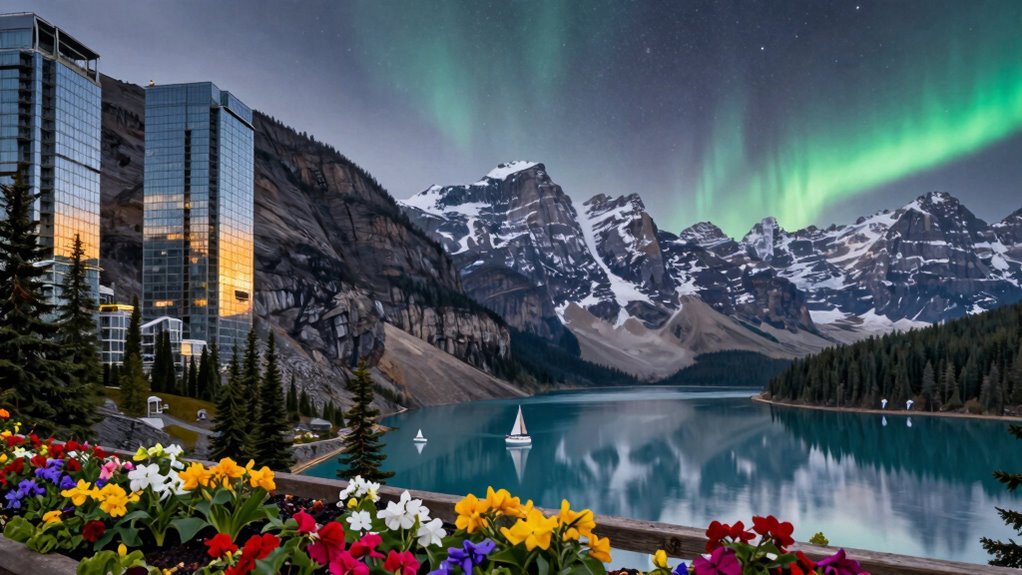
When city lights give way to spruce and skyline peaks, you’ll find places where urban life and untamed wilderness collide—Vancouver’s seawall frames snow-capped ranges, Victoria’s gardens meet ocean spray, Banff wraps a bustling townsite in glacier-fed lakes, and Yellowknife opens directly onto aurora-lit tundra.
Where city lights yield to spruce and peaks, urban streets blur into wild waterfronts, mountains, and aurora.
You’ll stroll waterfront trails in Vancouver and Victoria, where sea breezes and curated parks invite both commuters and kayakers.
In Banff you’ll trade cafés for ridge hikes within minutes, spotting elk and other urban wildlife meandering through town.
Yellowknife turns evenings into a celestial show, the aurora visible from lakeside paths.
Each city convinces you that modern comforts and raw nature don’t just coexist—they enhance every visit.
Springtime brings its own spectacle, with vibrant tulip fields and blooming gardens adding a seasonal splash of color to parks and promenades.
Frequently Asked Questions
Can I Drive These Routes Year-Round or Are Some Seasonal Closures Common?
You can’t drive all routes year-round; some have seasonal closures and restrictions.
You’ll encounter spring roadworks, winter snow closures, and sections closed for avalanche risk, especially on mountain passes and Icefields Parkway.
Plan around posted schedules, check Parks Canada and provincial alerts, and carry emergency gear.
You’ll enjoy dramatic scenery when open, but you should be flexible; delays or detours are common and safety takes priority during high-risk seasons.
What Are the Best Months for Seeing the Northern Lights Near Yellowknife?
You’ll get the best months for seeing the northern lights near Yellowknife from mid-August through April, with prime timing in late September to March when nights are longest and skies are darkest.
You’ll find clearer cold air boosts visibility, and you’ll want to plan for Aurora photography around new moons and during geomagnetic activity peaks.
Bring warm layers, a sturdy tripod, wide-aperture lens, and patience to capture vivid, dancing displays.
Are There Guided Multi-Day Hiking/Camping Trips Available in the Rockies?
Yes — you’ll find guided expeditions and wilderness courses across the Rockies that run multi-day hiking and camping trips.
You’ll trek glacier-fed valleys, sleep under starlit peaks, and learn backcountry skills from expert guides.
Operators vary from rustic backpacking to skill-focused wilderness courses teaching navigation, safety, and Leave No Trace.
Book early for summer and shoulder seasons; you’ll come away more confident, connected to the mountains, and keen for more.
Which Parks Allow Dogs on Trails or in Campgrounds?
Parks’ pet policies vary, but you’ll find many that permit dogs on trails and in campgrounds.
Playful Preamble: picnic-perfect parks permit pups.
In Banff and Jasper dogs must be leashed in most areas and aren’t allowed on some trails; provincial parks often allow leashed dogs and may offer pet friendly cabins or nearby off leash beaches.
Always check specific park rules, leash laws and campsite regulations before you plan your pup’s provincial or national park stay.
Do I Need Permits or Reservations for Backcountry Camping in These Areas?
Yes — you’ll usually need permits and often reservations for backcountry camping. Permit requirements vary by park: some require online permits, campfire bans, or group-size limits.
Reservation windows open seasonally and can fill fast, so book early. You’ll want to check each park’s site for fees, map-linked sites, and cancellation rules.
Planning ahead guarantees a spot, protects fragile habitats, and keeps your wilderness trip legal and safer.
Conclusion
You’ll find Canada’s beauty woven into every horizon, calling you to explore mountains, coasts, lakes and cities that pulse with wild grace.
As you stand beneath glacier-blue skies, you’ll feel the land’s quiet insistence, like a heartbeat, reminding you that travel changes you.
Let the Rockies, rugged islands, glassy fjords and vibrant towns guide your curiosity; return home altered, with memories that echo long after you leave.
Pack light, bring wonder, and go.
0 Comment